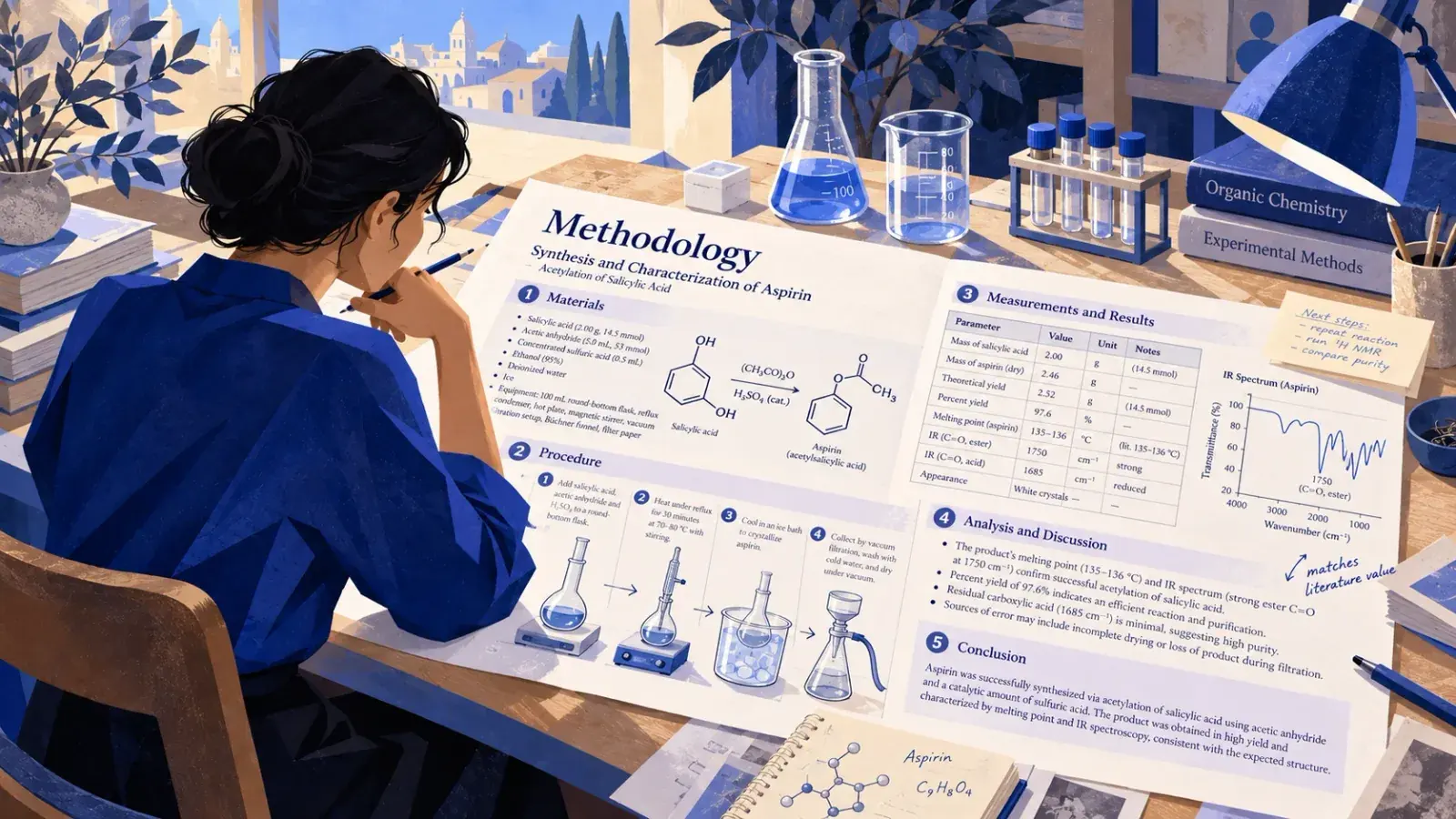
To write a dissertation, work in stages rather than chapters. Settle one research question, get a proposal approved, read and collect data with a reference manager running from day one, then draft in working order: methodology and results first, introduction and abstract last. Revise in passes with your supervisor, format to your school's rules, submit and defend. Almost every dissertation shares one spine: introduction, literature review, methodology, results, discussion and conclusion.
Find the rules before you write
The word itself changes with geography. In the US, the dissertation is the doctoral project and a thesis belongs to a master's degree. In the UK and much of the Commonwealth the terms swap: a PhD produces a thesis, and the dissertation is the long project at the end of an undergraduate or taught master's degree. The stages below work for all of them. The rules come from your institution.
Those rules differ between universities, sometimes sharply. The University of Manchester says a PhD thesis must not normally exceed 80,000 words of main text, footnotes included. The University of Edinburgh asks for a lay summary beside the abstract, and a declaration at the front that covers any use of generative AI. Before you draft anything, find these answers in your handbook or thesis guide:
| What to find out | Where it usually lives |
|---|---|
| What to find outThe word or page limit, and what counts toward it | Where it usually livesDegree regulations |
| What to find outRequired front matter: abstract, declaration, lay summary | Where it usually livesThesis format guide |
| What to find outMargins, font, spacing and page numbering | Where it usually livesThesis format guide |
| What to find outThe citation style | Where it usually livesDepartment handbook or your supervisor |
| What to find outWhether a thesis by publication is allowed | Where it usually livesDegree regulations |
| What to find outRules on AI tools, and whether to declare them | Where it usually livesUniversity AI policy |
| What to find outDates for format review, submission and the defense | Where it usually livesGraduate school calendar |
Treat that page as your style guide and add small decisions as you make them: how you spell key terms, how figures are numbered, whether the people you studied are participants or respondents. Deciding once saves a week of fixes at the end.
The standard dissertation structure
Empirical dissertations in the sciences and social sciences mostly follow an expanded version of the IMRaD pattern used in journal articles. Humanities dissertations keep the introduction and conclusion but organize the middle by argument, period or theme. A thesis by publication wraps journal papers in an introduction and conclusion. Manchester calls three to five papers typical.
| Part | Its job |
|---|---|
| PartFront matter | Its jobTitle page, abstract, declaration, acknowledgements, contents, lists of figures and tables |
| PartIntroduction | Its jobThe problem, the gap, your question and a map of the chapters |
| PartLiterature review | Its jobWhat is known, where scholars disagree, and the gap your question fills |
| PartMethodology | Its jobWhat you did, and why it is a sound way to answer the question |
| PartResults or findings | Its jobWhat you found, organized by sub-question or theme |
| PartDiscussion | Its jobWhat the findings mean against the literature, and their limits |
| PartConclusion | Its jobThe answer, your contribution and what to study next |
| PartReferences and appendices | Its jobEvery source you cited; instruments, transcripts, extra tables |
How the question shapes each chapter
Every chapter should be able to say, in one sentence, what it does for the main question. Here is an invented project traced through its chapters.
Main question: Why do community gardens in mid-sized US cities close within five years of opening?
- 1. Introduction. The problem (closed gardens waste years of volunteer work), the gap (studies of how gardens start, few of why they end) and the question.
- 2. Literature review. Three bodies of work: urban agriculture, volunteer organizations and land tenure. Each predicts a different cause of closure.
- 3. Methodology. Twelve gardens in four cities, six closed and six still open, compared through interviews with organizers and city land records.
- 4–6. Findings. One chapter per explanation: land tenure, volunteer turnover, funding.
- 7. Discussion. Short leases explain more closures than money does, which matters for how cities write garden agreements.
- 8. Conclusion. The answer in a paragraph, what the study cannot show and what to study next.
When a section cannot say how it serves the question, it belongs in an appendix or a later paper. The dissertation outline template gives you this skeleton to fill in, and these research question examples help if the question itself is still loose.
The stages, from question to defense
This is the order in which the work gets done, not the order in which it is read. The stages overlap: you will still be reading while you analyze.
- Narrow the question until you can answer it
A workable question names a population, a place or body of texts, and a time span, and you can say what evidence would answer it. Try it on your supervisor first. If they cannot picture the method, you still have a topic, not a question.
- Write the proposal
The proposal (a prospectus in many US programs) states the question, why it matters, a short literature review, the method, a timeline and any ethical issues. Often a committee must approve it. If you work with human participants, you also need ethics approval, from an institutional review board (IRB) in the US, before you collect any data.
- Read with a system
Set up a reference manager on day one. Zotero is free and works inside Word and Google Docs. For each source, write a few lines in your own words: the claim, the evidence, and how it bears on your question. Kept as an annotated bibliography, those notes become the literature review. Because they are already in your own words, you also avoid a paraphrase that sits too close to the original.
- Collect and analyze your data
Keep a methods log as you go: dates, decisions, changes of plan and the reasons for them. The methodology chapter is mostly that log, rewritten. Draft it while the details are fresh. This methodology section example shows the finished shape.
- Draft in working order
Write the methodology, then the results, then the discussion. Update the literature review to fit what you found, write the conclusion, and only then the introduction, because now you know what it introduces. Get a whole rough draft down before you polish any single chapter.
- Revise in passes
Structure first: write a reverse outline, one line per paragraph, and check that each chapter's sections follow from the question. Then argument and evidence, then paragraphs and sentences, then references and figures. One job per pass is faster than fixing everything on every page.
- Format, check and submit
Apply your school's format guide, generate the table of contents from heading styles, and check citations both ways: every citation is in the list, and every entry in the list is cited. Write the abstract and the acknowledgements last. Some graduate schools review the format before the final deadline, so find out that date early.
- Prepare for the defense or viva
Reread the whole thesis in one or two sittings. Write a three-sentence summary of your contribution, list the ten questions you least want to hear, and answer them aloud. In the UK the viva is usually a private oral exam with two examiners. In the US you defend before your committee. Either can end with corrections to make before the degree is awarded.
Plan backward from the deadline
Start from the submission date and work back. Block out the format review, a buffer, your supervisor's reading time and the revision after each round of comments. What remains is your drafting time, and it is shorter than it felt in the first month. One way to divide the time:
| Stage | PhD, final 12 months | Undergraduate or master's, 9 months |
|---|---|---|
| StageQuestion and proposal | PhD, final 12 monthsApproved earlier | Undergraduate or master's, 9 monthsMonths 1–2 |
| StageReading and literature review | PhD, final 12 monthsUpdate in month 1 | Undergraduate or master's, 9 monthsMonths 1–4 |
| StageData collection and analysis | PhD, final 12 monthsMonths 1–4 | Undergraduate or master's, 9 monthsMonths 3–5 |
| StageFirst draft of every chapter | PhD, final 12 monthsMonths 3–8 | Undergraduate or master's, 9 monthsMonths 5–7 |
| StageFull draft to your supervisor | PhD, final 12 monthsEnd of month 8 | Undergraduate or master's, 9 monthsStart of month 8 |
| StageRevision | PhD, final 12 monthsMonths 9–10 | Undergraduate or master's, 9 monthsMonth 8 |
| StageFormatting, proofreading and checks | PhD, final 12 monthsMonth 11 | Undergraduate or master's, 9 monthsFirst half of month 9 |
| StageBuffer and submission | PhD, final 12 monthsMonth 12 | Undergraduate or master's, 9 monthsSecond half of month 9 |
Measure output rather than hours: a weekly target in words or pages tells you by week three whether the schedule works. And give every chapter a "done for now" date, after which it waits for feedback while you start the next.
Working with your supervisor
Your supervisor, or committee chair, is your most useful reader and probably your busiest. Agree early on how often you meet, how long they need to read a chapter, and whether they want rough or polished drafts.
Send every draft with a short note that says what it is, what state it is in and what you want to know. Specific questions get specific answers. "Any thoughts?" gets comments on commas.
Subject: Chapter 4 draft (land tenure), comments by March 14?
Hi Dr. Okafor,
Attached is a full draft of Chapter 4, about 9,000 words. The argument and evidence are in place, but the prose is rough, so please skip sentence-level comments for now.
Three questions:
- Does section 4.2 convince you that lease length, not funding, explains most of the closures?
- Is the comparison table on page 12 enough, or should the interview excerpts come forward?
- Should the Riverside garden case stay here or move to Chapter 6?
If March 14 doesn't work, tell me what does and I'll plan around it.
Maya
After each meeting, send a three-line summary of what you agreed. Keep a feedback log: each comment, what you did about it and where. When two committee members ask for opposite things, take both comments to your supervisor instead of quietly picking one. If you fall behind, say so early. For drafts your supervisor has no time for, a writing group or a critique partner from your cohort fills the gap.
Mistakes that cost months
- A topic instead of a question. "Social media and politics" can never be finished. A question with a population, a place and a time span can.
- A literature review that lists. Summaries one author at a time read like a reading log. Group sources by the claim they support or dispute, and end on the gap.
- Going quiet. Avoiding your supervisor when work stalls turns a two-week problem into a two-month one. A supervisor can rearrange a schedule, but not one they hear about the week before a deadline.
- Formatting at the end. Use heading styles and automatic figure numbers from the first draft. Fixing 250 pages by hand is a poor use of the last week.
- One copy of the file. Keep earlier versions, and a backup somewhere other than your laptop.
Writing a dissertation in Strokes
Strokes is a desktop editor for macOS and Windows that keeps documents as files on your own machine. One project can hold a document per chapter beside your proposal, methods log and feedback log. Page view shows real pages with margins and page numbers, and chapters export to Word or PDF when your graduate school wants a file. Strokes does not manage citations, so keep those in your reference manager.
Version history saves versions automatically and on demand, so you can save one before each draft goes to your supervisor and later see what changed. The AI Assistant works best as a second reader: add a chapter and your notes to a chat and ask whether every claim in the discussion is backed by a result. In Agent mode it shows each step, and you accept each edit yourself. Read your university's AI policy first.
Frequently asked questions
How long is a dissertation?
It depends on the degree and the university. The University of Manchester, for example, sets a normal maximum of 80,000 words of main text for a PhD thesis and 50,000 for an MPhil. Undergraduate and taught master's dissertations are much shorter. Your regulations give the exact limit.
How long does it take to write a dissertation?
An undergraduate or master's dissertation usually fits within one academic year or less, on dates the course sets. A doctorate takes years: in the US, the National Science Foundation's 2022 data put the median time from starting graduate school to the doctorate at 6 years in mathematics and the physical sciences, nearly 9 in the social sciences, and about 10 in fields outside science and engineering.
What is the difference between a dissertation and a thesis?
Mostly geography. In the US, the dissertation is the doctoral project and the thesis is the master's. In the UK the terms are reversed. The process is the same, but the length and rules differ.
Which chapter should I write first?
Usually the methodology, because it describes work you have already done and the details fade fast. Write the introduction and abstract last, when you know what you found.
Can I use AI to write my dissertation?
Your university decides, so read its policy before you start. Some now ask you to declare any generative AI use in the thesis. Whatever the policy, the argument, data and sources must be your own, and any reference an AI suggests needs checking.