A short story is usually 1,000 to 7,500 words long: below about 1,000 most editors call it flash fiction, and from 7,500 it is a novelette. If you're drafting with no market in mind, write the length the story needs; between about 2,500 and 4,000 words it fits the length limits of all eleven markets listed below, as of November 2026. The 7,500-word line is a classification the Nebula and Hugo awards use for their ballots, not a submission rule: magazines set their own limits, and literary journals often stop well below it.
Market limits change, so check the current guidelines before you submit. For writing the story itself, see how to write a short story.
Short story length at a glance
| Form | Words | Manuscript pages | Reading time |
|---|---|---|---|
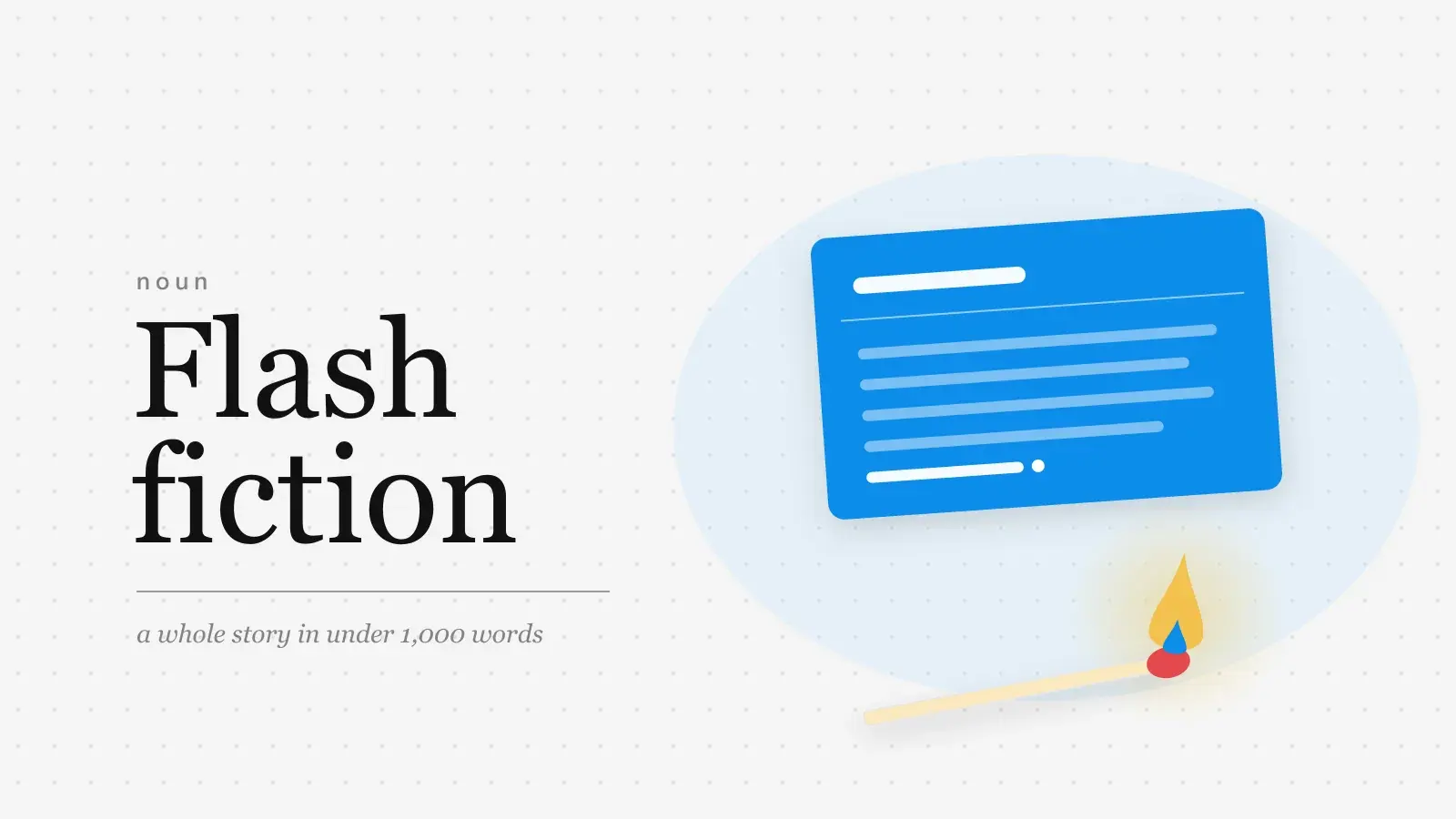
| FormFlash fiction | WordsUnder 1,000 | Manuscript pagesUnder 4 | Reading timeUnder 4 minutes |
| FormShort story | Words1,000 to 7,499 | Manuscript pages4 to 30 | Reading time4 to 29 minutes |
| FormNovelette | Words7,500 to 17,499 | Manuscript pages30 to 70 | Reading time29 to 67 minutes |
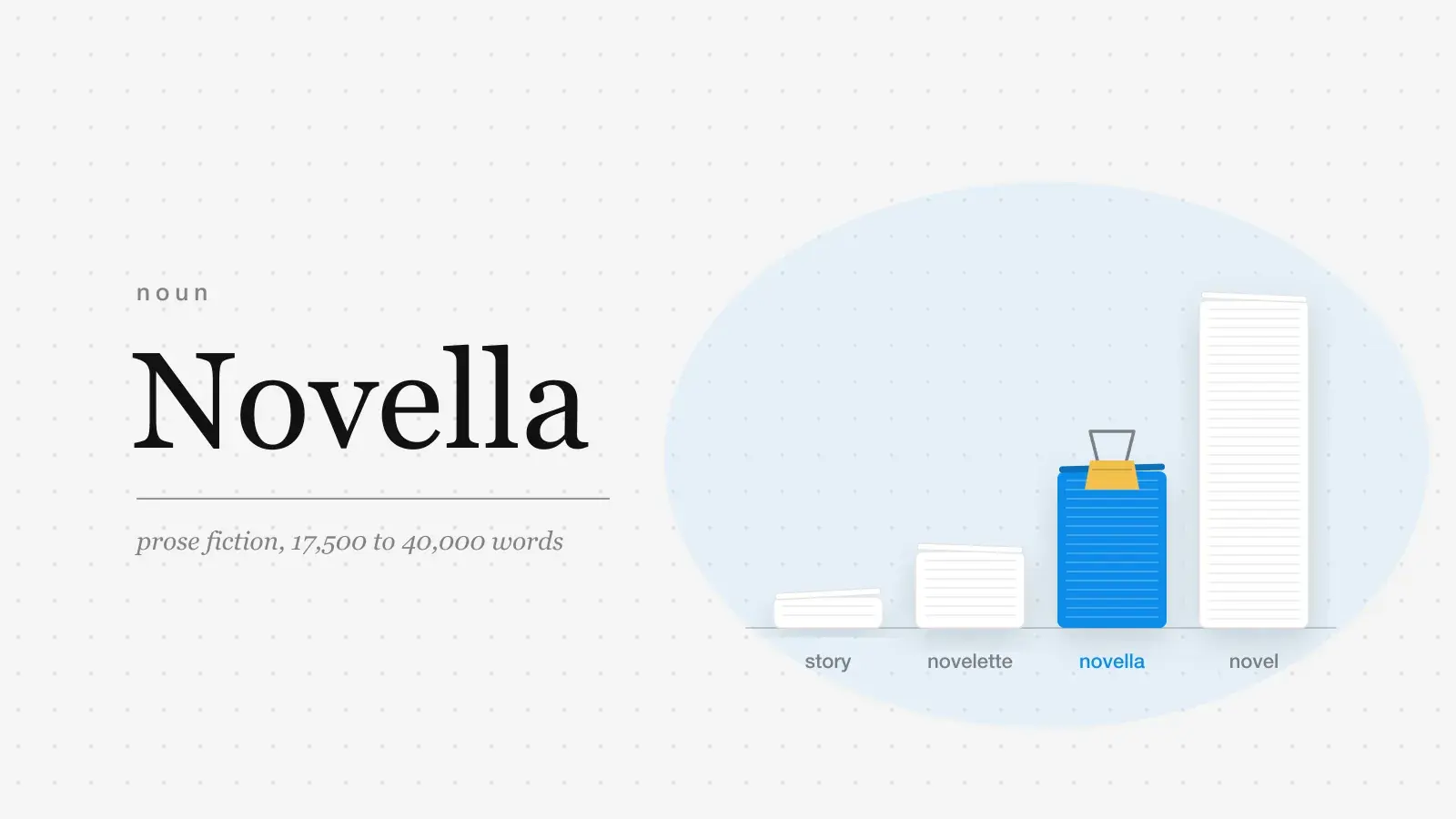
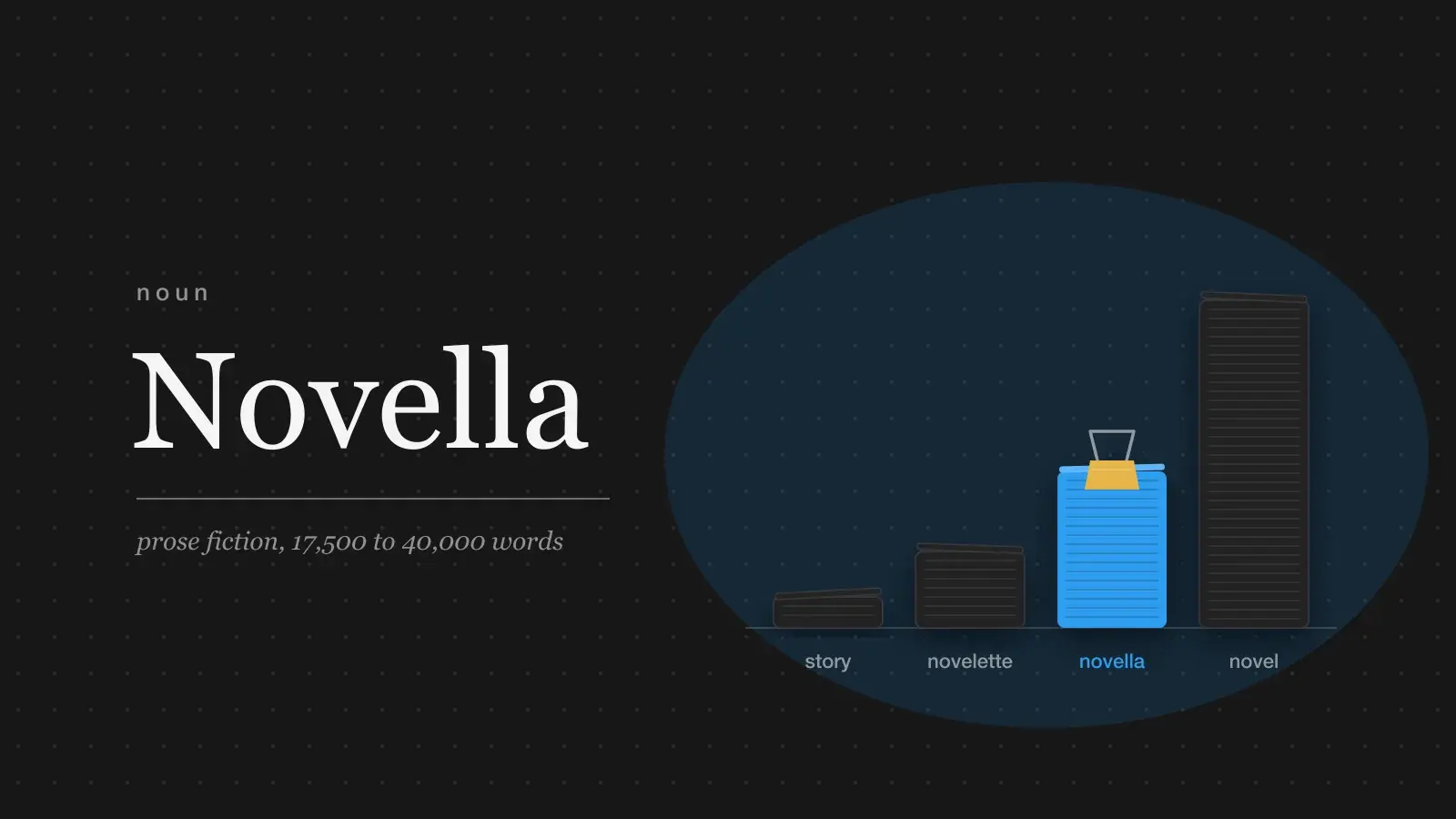
| FormNovella | Words17,500 to 39,999 | Manuscript pages70 to 160 | Reading time67 minutes to 2½ hours |
| FormNovel | Words40,000 and up | Manuscript pages160 and up | Reading time2½ hours and up |
Flash fiction has smaller named forms of its own, from the 100-word drabble down to the six-word story, and its page lists them with the markets that publish them. At the long end, the novella page covers novelettes and novellas, and the novel word count guide takes over at 40,000.
Where the 7,500-word line comes from
There is no single official definition of a short story. The clearest ones in print belong to science fiction's two main awards, and writers in every genre borrow them. The Nebula Awards, presented by SFWA, set the categories out in their rules:
- Short story: fewer than 7,500 words
- Novelette: at least 7,500 words but fewer than 17,500 words
- Novella: at least 17,500 words but fewer than 40,000 words
- Novel: 40,000 words or more
The Hugo Awards use the same lines in section 3.3 of the WSFS Constitution, with one difference at the edges. Section 3.2.10 lets the convention's committee move a story into a more appropriate category if its length is within 20 percent of that category's limits, so a 7,600-word story could, in principle, appear on the ballot as a short story. And for translators: the Nebula rules count a translated work by its English word count. These categories decide which ballot a story competes on. They say nothing about what a magazine will buy, which the market table below covers.
Poe's single sitting
The older test is time, not words. Reviewing Nathaniel Hawthorne's Twice-Told Tales in 1842, Edgar Allan Poe defined the tale by how long it takes to read:
We allude to the short prose narrative, requiring from a half-hour to one or two hours in its perusal.
Of the novel, he added: "As it cannot be read at one sitting, it deprives itself, of course, of the immense force derivable from totality." At 260 words a minute, half an hour to two hours is roughly 7,800 to 31,000 words. Poe's tale starts about where today's award rules end the short story, and runs through the novelette into the novella.
What magazines and contests accept
Each market sets its own limit, and the limits vary far more than the award bands. These are eleven markets' published limits in November 2026, from the shortest ceiling to the longest:
| Market | Publishes | Length limit |
|---|---|---|
| MarketThe Threepenny Review | PublishesLiterary fiction and memoir | Length limitStories of 4,000 words or less; reads January 1 to April 14 |
| MarketStrange Horizons | PublishesSpeculative fiction | Length limitUp to 5,000 words, a firm limit |
| MarketCommonwealth Short Story Prize | PublishesContest | Length limit2,000 to 5,000 words |
| MarketPloughshares | PublishesLiterary fiction | Length limitUp to 6,500 words, or 15,000 in a longform category; reads June 1 to November 15 |
| MarketEllery Queen's Mystery Magazine | PublishesMystery and crime | Length limitPrefers 2,500 to 8,000; less likely under 700 or over 20,000 |
| MarketUncanny | PublishesSpeculative fiction | Length limit750 to 10,000 words |
| MarketAlfred Hitchcock's Mystery Magazine | PublishesMystery and crime | Length limitPrefers no more than 12,000 words |
| MarketWriters of the Future | PublishesContest for new science fiction and fantasy writers | Length limitUnder 17,000 words |
| MarketAsimov's Science Fiction | PublishesScience fiction | Length limitSeldom buys under 1,000 or over 20,000 words |
| MarketAnalog | PublishesScience fiction | Length limitShort fiction up to about 20,000 words; serials 40,000 to 80,000 |
| MarketClarkesworld | PublishesScience fiction and fantasy | Length limit1,000 to 22,000 words, no exceptions |
Literary journals run shortest: a story over 6,500 words rules out every literary market here except the Ploughshares longform category. Mystery magazines state a preferred range rather than a hard ceiling. The three science fiction magazines take the longest stories, well into novelette length, and the genre's awards give the novelette a category of its own. A 4,000-word story fits every market in the table.
Sending one story to several markets at once is a separate rule. Clarkesworld, Asimov's, Analog, Strange Horizons and The Threepenny Review say no. Ploughshares and Alfred Hitchcock's Mystery Magazine say yes, as long as you tell them at once if the story is taken elsewhere. Ploughshares also wants simultaneous submissions marked as such, and Hitchcock's asks you not to send the same story to its sister magazine, Ellery Queen's, at the same time.
To check a market's current limit and reading period, ask the Strokes Assistant to look it up; it browses the web and answers beside your draft. Confirm the figure on the market's own guidelines page before you cut a word.
Famous stories by length
Award categories are a quick guide to a famous story's length, because the category fixes the band, give or take the Hugo's 20 percent. Word counts for the older books are from the Standard Ebooks editions.
| Work | Length or award | Form |
|---|---|---|
| WorkKate Chopin, “The Story of an Hour” (1894) | Length or awardAbout 1,000 words | FormFlash fiction or short story |
| WorkUrsula K. Le Guin, “The Ones Who Walk Away from Omelas” (1973) | Length or award1974 Hugo, Best Short Story | FormShort story |
| WorkTed Chiang, “Exhalation” (2008) | Length or award2009 Hugo, Best Short Story | FormShort story |
| WorkHarlan Ellison, “The Deathbird” (1973) | Length or award1974 Hugo, Best Novelette | FormNovelette |
| WorkSuzanne Palmer, “The Secret Life of Bots” (2017) | Length or award2018 Hugo, Best Novelette | FormNovelette |
| WorkTed Chiang, “Story of Your Life” (1998) | Length or award1999 Nebula, Best Novella | FormNovella |
| WorkRobert Louis Stevenson, Strange Case of Dr Jekyll and Mr Hyde (1886) | Length or award25,664 words | FormNovella |
| WorkCharles Dickens, A Christmas Carol (1843) | Length or award28,626 words | FormNovella |
| WorkMartha Wells, All Systems Red (2017) | Length or award2018 Hugo, Best Novella | FormNovella |
| WorkF. Scott Fitzgerald, The Great Gatsby (1925) | Length or award48,465 words | FormNovel |
“Story of Your Life,” the basis of the 2016 film Arrival, is a novella by the award rules, and All Systems Red came out as a book of its own. The Great Gatsby, under 50,000 words, is a novel, if a short one.
How to count your words
- Use your word processor's count, unless the market names a different tool or method.
- Check whether the title counts. Some flash markets leave it out, and their guidelines say so.
- Round on the manuscript, not against the limit. The first page carries the count rounded to the nearest hundred, such as "about 4,200 words," as the manuscript formatting guide explains. A maximum is exact: Clarkesworld's 22,000 means 22,000.
- Don't pad or squeeze to fit a band. Write the story to the length it needs, then choose markets that take that length.
Fixing a story's length
- Too long for what it does. Two scenes deliver the same beat, the opening explains how everyone got here, or the story keeps going after its turn. Start later, merge the repeated scenes, end sooner.
- Too short to be felt. The change happens off the page or in a summary. Give it a scene.
- Two stories in one. A second turn, a second viewpoint and a timeline of years point to a novelette, or to the start of a novel.
Choose the venue before you cut
Say your story runs 5,600 words and the market you had in mind stops at 5,000. Before you cut the ending to get there, check the table: at 5,600 words the story already fits Ploughshares, Ellery Queen's, Uncanny, Alfred Hitchcock's and the three science fiction magazines. Cut only if the market you want most is the one below your length, and take the words from the opening and from scenes that repeat a beat, not from the ending that makes the story work. A few hundred words over is a line edit, and the filler words list is a good place to start.
Practice: name the form
Name the form for each length by the Nebula rules. Answers below.
- 950 words
- 7,499 words
- 7,500 words
- 17,499 words
- 39,999 words
- 40,000 words
Answers. 1: a short story to the Nebulas, which have no flash category, and flash fiction to most markets. 2: short story. 3: novelette, since a short story is fewer than 7,500 words. 4: novelette. 5: novella. 6: novel, at 40,000 words or more.
Frequently asked questions
How many pages is a short story?
In standard manuscript format about 250 words fit on a double-spaced page, so a short story runs about 4 to 30 manuscript pages: a 3,000-word story is about 12 pages and a 7,500-word story about 30. In a printed magazine or book it takes fewer pages, depending on the page size and the type.
Is 10,000 words a short story?
By the award rules it is a novelette, the band from 7,500 to 17,499 words, though many readers would still call it a long short story. As of November 2026 it fit markets with high ceilings, such as Uncanny, Asimov's, Analog and Clarkesworld, but not those that stop at 5,000 or 6,500 words. Check each market's guidelines before you submit.
What is the minimum word count for a short story?
There is no official minimum. Stories under about 1,000 words are usually called flash fiction, and smaller forms such as the 100-word drabble have names of their own. Some magazines set a floor for what they buy: in November 2026 Clarkesworld's range started at 1,000 words and Uncanny's at 750.
How long does it take to read a short story?
At 260 words a minute, the average silent reading speed for fiction, a 1,000-word story takes about 4 minutes and a 7,500-word story about 29. Edgar Allan Poe argued in 1842 that a tale should take half an hour to two hours, which at that speed is roughly 7,800 to 31,000 words.