Flash fiction is a complete story told in very few words, usually under 1,000. It has what a longer story has, a character, a situation that changes and an ending, but it leaves most of the world offstage and trusts the reader to supply it.
You will also see it called the short-short story, sudden fiction or, at the smallest sizes, microfiction. Sudden Fiction was the title of a 1986 anthology edited by Robert Shapard and James Thomas. The label flash fiction caught on after 1992, when Thomas, Denise Thomas and Tom Hazuka edited Flash Fiction: 72 Very Short Stories, none of them much over 750 words. The form is far older. Aesop's fables are flash fiction in everything but name, and in the 1920s American readers knew it as the "short short story," a form associated with Cosmopolitan magazine.
How long is flash fiction?
There is no single cutoff. Most definitions, and many of the magazines that publish flash, put the ceiling at 1,000 words. Some stretch it to 1,500, and plenty of contests ask for far less. Below flash, the shorter forms have names of their own, and some of them are exact.
| Form | Length | Notes |
|---|---|---|
| FormSix-word story | Length6 words | NotesA whole story implied in one line |
| FormMini-saga | LengthExactly 50 words | NotesBrian Aldiss and The Daily Telegraph's contests. Fan writers call it a dribble |
| Form55 fiction | Length55 words or fewer | NotesFrom a 1987 contest run by New Times in San Luis Obispo |
| FormDrabble | LengthExactly 100 words | NotesNamed for a joke game in Monty Python's Big Red Book (1971) |
| FormMicrofiction | LengthUp to about 300 words | NotesA loose term. Some editors mean 100 or fewer |
| FormFlash fiction | LengthUp to 1,000 words | NotesSome definitions allow 1,500 |
| FormShort story | LengthAbout 1,000 to 7,500 words | NotesThe Nebula Awards count under 7,500 as a short story |
What markets ask for
| Market | Length limit |
|---|---|
| MarketSmokeLong Quarterly | Length limit1,000 words or fewer, title not counted |
| MarketThe Southeast Review, World's Best Short-Short Story Contest | Length limit500 words |
| MarketBath Flash Fiction Award (UK) | Length limit300 words |
| MarketFish Flash Fiction Prize (Ireland) | Length limit300 words, title not counted |
| Market100 Word Story | Length limitExactly 100 words, title not counted |
The Southeast Review contest began in 1986 as Jerome Stern's World's Best Short-Short Story Contest at Florida State University, for stories under 250 words. The first winner, Michael Martone, received $100 and a crate of Florida oranges. The limit has since doubled.
Count the way the market counts. Some include the title, most don't, and 100 Word Story goes by Microsoft Word's tally, which counts a hyphenated word such as well-known once. Hit an exact limit by cutting, not by gluing words together with hyphens. Editors notice.
Flash fiction examples
The first three are old enough to quote. The last two are described.
"Free! Body and soul free!" she kept whispering.
Louise Mallard, who has heart trouble, is told her husband has died in a railroad accident. Alone in her room, she finds she is relieved. Then he lets himself in at the front door, unhurt, and she dies. The doctors call it heart disease, "joy that kills," and the reader knows better. Chopin gives the whole history of the marriage two short sentences: she had loved him sometimes, and often she had not. The hour carries the rest.
They shot the six cabinet ministers at half-past six in the morning against the wall of a hospital.
It rains. One minister is sick with typhoid and can't stand, so he is sitting in a puddle when the first volley comes. Hemingway reports and never comments: the wet leaves and the sick man do the judging. The Paris edition was made of nothing but pieces like this, 18 of them, numbered as chapters.
For sale: baby shoes, never worn.
It is usually credited to Hemingway, written to win a bet. Quote Investigator found a 1906 classified in a Michigan paper offering a baby carriage, "never been used," and no evidence that Hemingway wrote any version. The attribution first appears in a 1989 play, nearly 30 years after his death. The six words last because they borrow a form, the classified ad, and use one object to open a gap the reader can't help filling.
A mother's instructions to her daughter, on washing, cooking, sewing, how to smile and how not to become the kind of woman the mother fears she is turning into, run as a single sentence held together by semicolons. The daughter gets two lines in. The plot is the relationship, and the story never states it. A list of chores does the work.
One sentence in Spanish: someone wakes up, and the dinosaur is still there. The word for "still", todavía, implies everything before it: a dinosaur, a night, a hope that it would be gone. For decades it was called the shortest story in Spanish, until shorter ones were written to take the title, and Mexican readers have long applied it to the party that held power for seven decades.
In your manuscript
Flash is not a short story with the slow parts removed. It picks one moment that holds the whole story and lets the reader work out the rest. What tends to work:
- Start late. Open after the important thing has begun. In medias res is the default here, and backstory gets a clause, not a paragraph.
- One scene, one turn. Most flash covers minutes or hours and one or two characters. Something must be different at the end: a decision, a realization, a reversal.
- Let an object carry it. Baby shoes, a puddle, a dinosaur. A concrete thing holds more backstory than a summary can, which is show, don't tell at its most practical.
- Borrow a form. A classified ad, a list of instructions, a voicemail, a recipe. The reader already knows how the form works, so you get the structure for free.
- Make the title work. Where it isn't counted, it can set the place, the time or the irony the body has no room for.
- End on the turn. The last line should change what the first lines meant. Cut whatever explains it afterward.
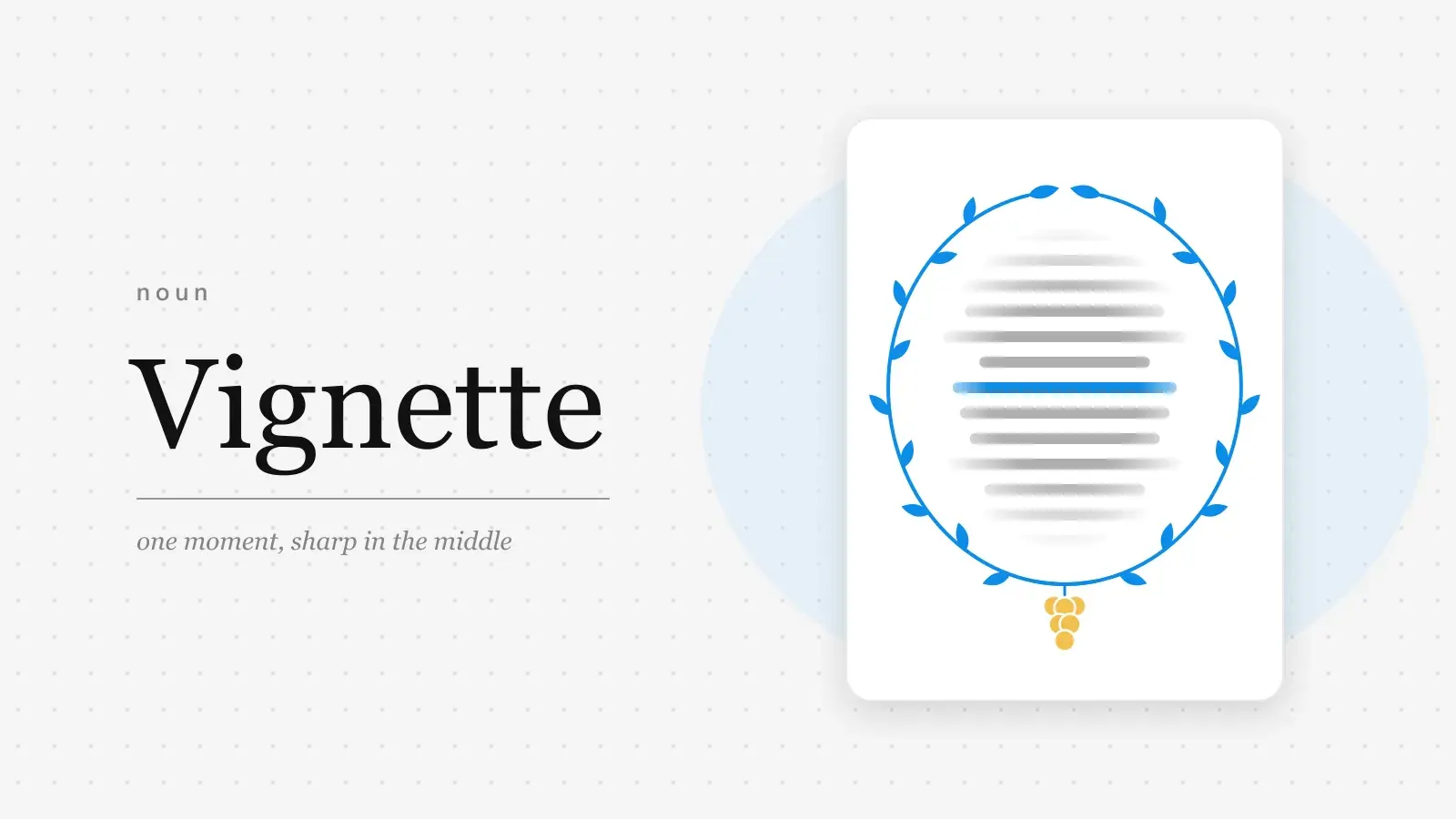
Three drafts fail again and again. The summary tells a novel's plot at speed, with no scene in it. The joke exists for its punchline and is spent after one reading. The sketch is a lovely moment where nothing changes: that is a vignette, a fine thing, but not a story.
Draft one, the summary. Ruth had kept the lighthouse museum open for thirty years, ever since her father, the last keeper, died. She loved it more than anything. When the town council voted to close it, she was devastated. On the last day she climbed the tower one more time and thought about everything she had lost. Then she locked the door and went home.
Draft two, the story. The council sent a boy for the keys at five. Ruth sold him a ticket first. Three dollars, same as anyone.
He got the full tour: the logbook her father kept in pencil, the brass he polished every Sunday, the window where he watched the fog for four days in 1979 without sleeping. The boy wrote it all down, as if there would be a test.
At the top he asked whether the lamp still worked.
"Nobody's asked me that in thirty years," she said, and threw the switch.
The beam went once around the bay. On Harbor Street, one at a time, porch lights came on.
She gave him the keys. Then she opened the logbook and, under her father's last entry, wrote the date and one word: Lit.
The second draft is about 130 words. It drops thirty years of backstory to one line of dialogue, gives the loss to objects (the logbook, the brass, the ticket) and spends everything on the one scene where something changes. The first draft says Ruth was devastated. The second never names a feeling.
When you submit, put the word count in your cover note, check whether the title counts and format the manuscript as the market asks. Most accept standard manuscript format, which the guide to manuscript formatting covers.
Flash fiction vs. short story and vignette
| Form | Length | Does something change? |
|---|---|---|
| FormFlash fiction | LengthUnder about 1,000 words | Does something change?Yes: a turn, a decision or a reversal |
| FormShort story | LengthAbout 1,000 to 7,500 words | Does something change?Yes, with room for several scenes and a subplot |
| FormVignette | LengthAny, usually short | Does something change?Not necessarily: a moment or an impression |
| FormProse poem | LengthUsually under a page | Does something change?Not necessarily: led by image and sound |
The useful test is the last line. If cutting it leaves the piece meaning the same thing, you have a sketch. If it changes what the opening meant, you have a story, however short.
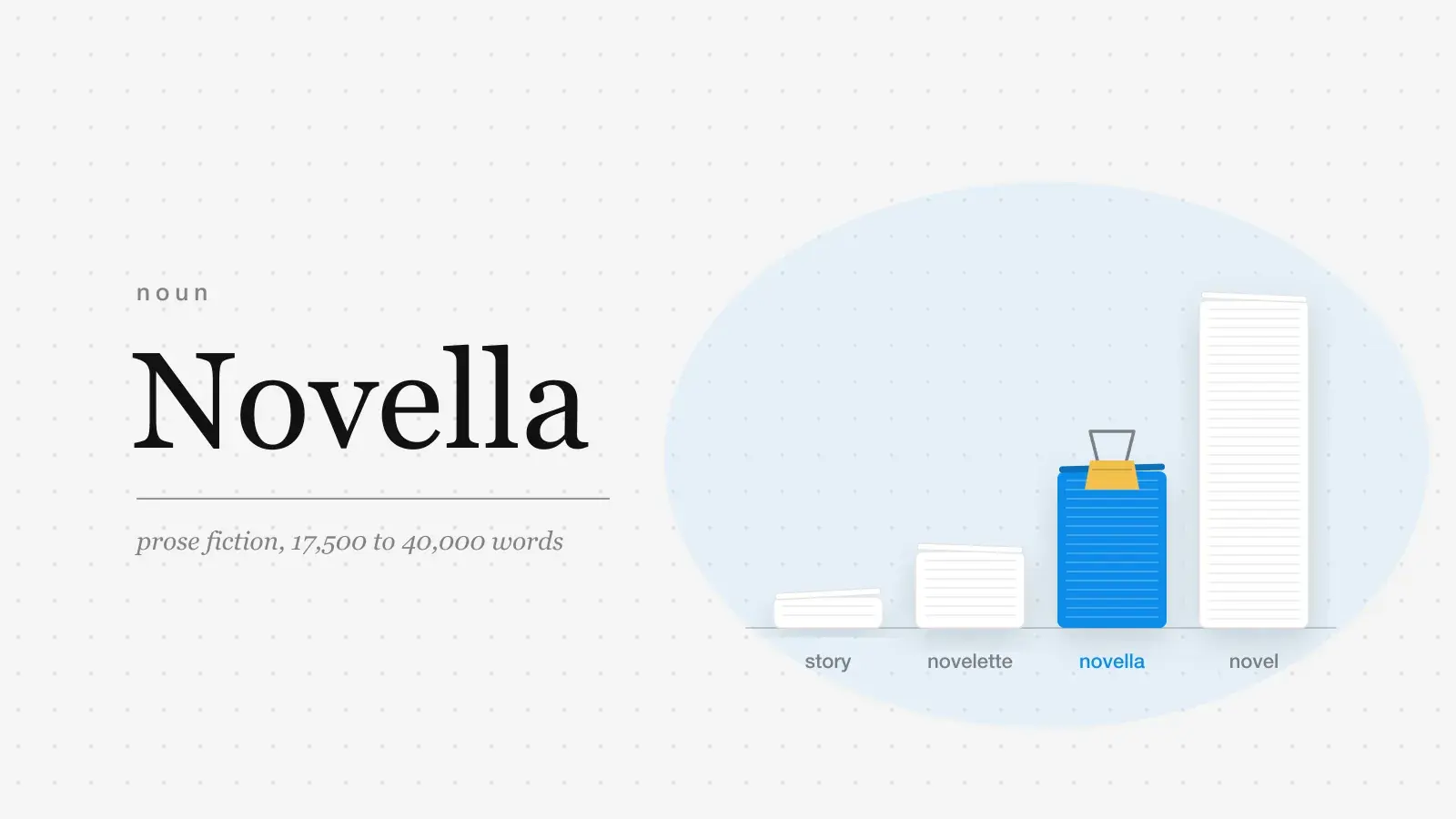
Two neighbors are worth knowing. A novella sits at the other end of the scale, and the denouement is the part of a story that flash usually skips. For a place to start, take one line from our horror writing prompts and give yourself 500 words.