A plot twist is a revelation that changes the meaning of what came before: the ally was the enemy, the narrator did it, the story was never about what it seemed to be about. The 59 plot twist ideas below are grouped by the assumption they overturn, and each comes with one clue you would plant so the twist plays fair. After them come the rules that make a twist fair, where to put it, and famous twists from public-domain classics, with the clues their authors left in plain sight.
| Twist type | The assumption it overturns | Ideas |
|---|---|---|
| Twist typeIdentity | The assumption it overturnsThis person is who they seem to be | Ideas1–6 |
| Twist typeBetrayal | The assumption it overturnsThis ally is on the hero's side | Ideas7–12 |
| Twist typeFalse protagonist | The assumption it overturnsThe person we follow is the lead | Ideas13–18 |
| Twist typeUnreliable narrator | The assumption it overturnsThe narrator's account can be trusted | Ideas19–24 |
| Twist typeTime | The assumption it overturnsEvents happen in the order, and over the span, they seem to | Ideas25–30 |
| Twist typeIt was never about that | The assumption it overturnsEveryone is chasing the real goal | Ideas31–36 |
| Twist typeVictim and villain | The assumption it overturnsThe person who looks like the victim is one | Ideas37–42 |
| Twist typeSecret relationships | The assumption it overturnsThese two people share no hidden bond | Ideas43–47 |
| Twist typeDeath | The assumption it overturnsThe death is what it seems | Ideas48–53 |
| Twist typeWorld and frame | The assumption it overturnsThe world and the storyteller are what they seem | Ideas54–59 |
Each idea gives the setup the reader sees, the twist, and one plant: a detail that looks ordinary the first time and obvious the second. To choose, look at your own draft and find the assumption a reader is most likely to make about it, then pick from the group that overturns that one. The ideas cross genres on purpose, because a twist that works in a thriller can usually be moved into a family saga or a fantasy with the names changed. For complete premises with a protagonist and a turn already built in, see the horror story ideas and fantasy story ideas.
Spoiler warning: three group introductions give away the twists in Psycho, “The Red-Headed League” and The Winter's Tale, and the craft and classics sections after the list give away more, starting with The Murder of Roger Ackroyd.
Identity twist ideas
Someone is not who the story said they were. The fairest identity twists hide the truth in a skill, a habit or a piece of knowledge the false identity couldn't have.
- The novelist's nurse. A biographer spends a summer interviewing a reclusive novelist for an authorized life. Twist: the woman she has been interviewing is the novelist's nurse, who has written the last six books since the novelist lost her sight. Plant: she talks easily about every novel except the first, the only one she didn't write.
- The decoy. A bodyguard is hired to protect a tech heiress from a stalker. Twist: the heiress is a body double, and the real heiress is the quiet assistant who hired him to see whether the stalker would follow the decoy. Plant: at a gala, the “heiress” walks straight past the woman who was her nanny, and her assistant is the one who stops to hug her.
- The brother's name. After a man is found dead at his lake house, his twin helps the police with the case. Twist: the dead man was the brother, and the twin helping the police killed him and took his name, his house and his marriage. Plant: the dead man's dog won't go near him.
- The new intern. An eager intern joins a famous design firm and asks the questions everyone else stopped asking. Twist: she is the firm's founder, back after twenty years abroad, testing whether the place still deserves her name. Plant: on her first day she finds her way to the old fire stairs, behind a door the staff painted over years ago.
- The hermit. A town holds a vigil every year for a boy who vanished in the woods forty years ago, and children are warned about the hermit who lives out there. Twist: the hermit is the boy, who walked into the woods on purpose and stayed. Plant: each year there are fresh flowers at the vigil tree before the first mourners arrive.
- The street artist. A city hunts for the anonymous artist whose murals appear overnight on its most neglected buildings. Twist: the artist is the elderly city inspector who condemned every one of those buildings. Plant: each mural appears the night after an inspection report is filed.
Betrayal twist ideas
Loyalty turns out to be the cover. The plant is usually knowledge: the traitor knows something they could only know from the other side.
- The alibi. When a warehouse burns with a night watchman inside, the protagonist's best friend swears they were together all night. Twist: the friend set the fire, and the alibi covers them both. Plant: she offers the alibi before the detective has asked where either of them was.
- The rescue team. Climbers hiding in a mountain hut from the man they fled are found by a rescue team. Twist: that man sent the rescuers. Plant: the team leader knows there are five climbers, a number nobody gave him.
- The bookkeeper. A family bakery is saved from bankruptcy by its bookkeeper of thirty years, who finds a buyer just in time. Twist: she drove the bakery into debt herself, so that the buyer, her own son, could get it cheap. Plant: the bakery's troubles started the year her son came home from business school.
- The loyal traitor. A young intelligence officer exposes a senior colleague as a mole, and he is arrested. Twist: he was the only loyal man in the section, and her handler, who pointed her at him, is the mole. Plant: the handler knew the mole's code name before it appeared in any intercept.
- The mother who left. A woman walks out on her husband and children with the family savings and isn't heard from for a decade. Twist: she left to draw a dangerous man away from them, and the money went into a trust in the children's names. Plant: every birthday, an envelope from a bank in another state arrives for each child, and their father throws it away unopened.
- The negotiator. A union's lead negotiator steers a long strike at a meatpacking plant. Twist: he has been on the company's payroll from the start, and the strike was built to fail. Plant: he always insists on holding votes on Fridays, when half the night shift is off.
False protagonist twists
The person the story seems to follow isn't its center. Alfred Hitchcock's Psycho (1960) made the move famous by killing its apparent lead before the film was half over.
- The getaway driver. A heist novel follows a charismatic planner as she assembles her crew. Twist: she is killed in chapter four, and the quiet driver, a minor character until then, was the real planner all along. Plant: at the first meeting, the driver asks the one question the plan can't answer.
- The sidekick. A detective series seems to be about a brilliant, famous investigator. Twist: his assistant, who narrates, has solved every case and let him take the credit. Plant: the detective's breakthroughs always come right after his assistant brings the coffee and makes a few idle remarks.
- The wedding planner. A novel opens in the bride's point of view on her wedding morning. Twist: the bride vanishes at the reception, and the wedding planner, in the background of every early scene, becomes the lead because she is the only one who knows why. Plant: she is the only member of staff the bride's mother greets by her first name.
- The mentor. A young knight sets out to defeat a warlord, with his retired mentor along to advise. Twist: the knight dies at the midpoint, and the old mentor, who swore off the fight years ago, has to finish it. Plant: the book's first image is the mentor's scarred hands, not the hero's face.
- The survivor. A disaster novel introduces five people trapped in a collapsed hotel, each with chapters of their own. Twist: the character with the most chapters dies first, and the one with the fewest is the only survivor, telling the story afterward. Plant: hers are the only chapters in the past tense.
- The journalist's son. A thriller follows a reporter closing in on a corrupt senator. Twist: she is killed at the midpoint, and the rest of the book belongs to her teenage son, who finds her notes. Plant: in chapter one it's the son who answers her phone and takes a message from the source she never named.
Unreliable narrator twists
The telling is the trick. Decide whether your narrator lies, misunderstands or leaves something out, because each needs a different clue. The entry on the unreliable narrator covers the types.
- The homecoming. A woman narrates a cheerful visit to her hometown, waving to old friends all along Main Street. Twist: the town drove her out twenty years ago, and the friends she waves to are crossing the street to avoid her. Plant: nobody she greets ever says her name.
- Mom's night friends. A nine-year-old narrator describes the friends who come at night to help her mother be brave. Twist: the friends are hospice nurses, and her mother is dying. The reader understands long before she does. Plant: the friends always carry the same white bag and wash their hands before they go upstairs.
- The travel writer. A columnist files glowing dispatches from a year-long trip around the world. Twist: she hasn't left her apartment in two years, and the dispatches come from library books. Plant: she praises a Lisbon restaurant that closed before her trip began.
- The kind landlord. A young woman narrates, gratefully, how her landlord lowered her rent, fixes everything and checks on her every evening. Twist: he is isolating her, and the reader sees it long before she does. Plant: each favor costs her a friend: the ride that replaces her carpool, the dinner that replaces her book club.
- The seatmate. On a long flight to Sydney, a woman tells the stranger beside her the story of her life, and he is moved. Twist: he is her mark, and the story is the con. Plant: small details of her past shift each time he reacts.
- The two phones. A fourteen-year-old narrates, proudly, his older brother's new job: the cash, the car, the late calls. Twist: the brother is dealing drugs, and the narrator's own account of the last night is the evidence that convicts him. Plant: the boy mentions, admiringly, that his brother never lets anyone else answer either of his two phones.
Time twist ideas
The reader assumes an order, a year or a span of time, and the story lets them. Plant details that only make sense in the true chronology.
- The blue cup. A novel alternates between a girl in 1962 and an old woman in 2022, and readers assume they are grandmother and granddaughter. Twist: they are the same woman. Plant: both strands mention a chipped blue cup that nobody is allowed to throw out.
- The cell. Short italic chapters show a man in a cell, and readers take them for his backstory. Twist: they are the future: the hero, after the ending. Plant: the calendar on the cell wall shows a holiday that falls after the main story's last chapter.
- Seven dates. A romance is told in seven chapters, one per date. Twist: the chapters run backward, so the happy last chapter is the first date and chapter one is the breakup. Plant: in each chapter the couple plans a trip that the chapter before has already described.
- The other loop. A man's wife seems oddly sure of how every day will go. Twist: she is the one stuck in a repeating day, and he is the detail she keeps trying to change. Plant: on the first page she finishes his sentence before he knows how it ends.
- The gray muzzle. A woman's account of getting over a breakup seems to cover a few weeks. Twist: it has been nine years. Plant: her dog's muzzle grays from chapter to chapter, and her niece, a toddler at the start, is learning to drive by the end.
- The oracle's visions. In a fantasy kingdom, an oracle's visions of a coming war guide the queen's every move. Twist: the visions are memories of a war three hundred years ago, which the kingdom is repeating step by step. Plant: the oracle describes weapons nobody has used in living memory.
It was never about that
The goal everyone chased was a decoy. Arthur Conan Doyle's “The Red-Headed League” (1891) is the model: an absurd, well-paid job exists only to get a pawnbroker out of his shop for a few hours a day.
- The retainer. Kidnappers take a senator's teenage daughter and demand a ransom. Twist: she planned it to escape her father, and the ransom will pay for her new life. Plant: her orthodontic retainer is gone from the bathroom, though she has never once remembered it on her own.
- The stolen painting. A crew steals a famous painting from a private gallery. Twist: the theft was meant to be discovered, so the insurance would cover the fact that the painting was sold years ago. Plant: the owner raised the insurance a month before the theft.
- The will. A family gathers at a lake house to find out who poisoned their father. Twist: nobody did. He staged it to see which child would search for the will first. Plant: he asked his lawyer to drive up on the very day he “died.”
- The river. Two kingdoms go to war over an insult to a princess. Twist: the war was always about the river, and the princess arranged the insult so her father would take the dam. Plant: every map in the war room shows the river, not the enemy capital.
- The love letters. A family treasures their grandmother's wartime love letters. Twist: the letters are coded intelligence reports, and the “lover” was her handler. Plant: the letters keep describing the weather in a town the lover never visited.
- The feud. Two chess grandmasters have feuded in public for twenty years. Twist: the feud was staged to sell tickets. They're old friends, and the final match is their joint retirement. Plant: they have the same lawyer.
Victim and villain reversals
The roles swap: the hunted was hunting, the victim planned it. The plant is usually behavior that fits the false role a little too well.
- The stalker. A woman reports that a man has been stalking her for months. Twist: she is stalking him, and he has been trying to get a restraining order. Plant: she knows his schedule better than her own.
- The teller. During a bank siege, the frightened teller who calls the police becomes their best source inside. Twist: she planned the robbery, and the gunmen are hired help she is now negotiating against. Plant: she uses the gunmen's first names before they've said them in front of her.
- The widow's leads. A grieving widow hounds the police to find her husband's killer. Twist: she hired the killer and is pushing the police to make sure they find the wrong man. Plant: every lead she brings points in the same direction.
- The whistleblower. An accountant leaks proof that her firm has been cooking its books. Twist: she invented the fraud to bury her own embezzlement. Plant: the leaked spreadsheets are perfect, with none of the messy corrections real records always have.
- The rescued girl. Police free a teenage girl from a cult's compound in the desert. Twist: she was the cult's leader. Plant: in the hospital, the other members still look at her before they answer a question.
- The farmhouse. A war novel follows a soldier hiding in a family's farmhouse, and readers assume he is fleeing an occupying army. Twist: he is the occupier, a deserter, and the family hiding him are the people his army invaded. Plant: he speaks their language with a textbook accent.
Secret relationship twists
Two characters are bound in a way the story hid: blood, marriage, money or gratitude. These land as revelations more than shocks, so they suit literary fiction as well as thrillers.
- The rival chefs. Two chefs with rival restaurants on the same street have hated each other for a decade. Twist: they are half-sisters, and the same absent father has quietly funded both restaurants. Plant: both signature dishes use a spice from a village neither will admit to knowing.
- The mechanic. For twenty years a small-town mechanic has kept a widow's car running and never sent her a bill. Twist: at seventeen he was the driver who killed her husband, and his name was kept out of the papers because he was a minor. Plant: he'll fix anything she brings him, but he won't drive her anywhere, even when her car is in the shop.
- The umbrella. Two colleagues bicker through an entire office novel. Twist: they have been secretly married for ten years. Plant: they arrive at the office party separately and leave under the same umbrella.
- The donor. A woman finally meets the stranger who donated bone marrow to her when she was a child. Twist: he isn't a stranger. He is her father, who signed away his rights when she was born and has followed her life from a distance. Plant: he knows her childhood nickname, which appears in no medical file.
- The tuition. A scholarship student has never learned who paid her fees. Twist: her best friend's parents did, because her father died saving their son from drowning when the children were small. Plant: her friend's mother sets a place for her at Thanksgiving every year, even the years her friend is away.
Death twist ideas
The dead are alive, the living were dead, or the death was something else. Shakespeare's The Winter's Tale (c. 1611) ends on the most famous version, when a statue of the dead queen Hermione turns out to be Hermione.
- The library card. A man drowns off a fishing boat, and his body is never found. Twist: he faked his death, and his wife has been sending him money. Plant: she renews his library card.
- Already dead. A man is charged with shooting his business partner. Twist: the partner was already dead when the shot was fired, killed an hour earlier by someone else. Plant: the coroner notes how little the wound bled.
- The memoir. A daughter writes a memoir about her mother's death. Twist: her mother is alive and reading it. The “death” was the day she left the family. Plant: the memoir never mentions a funeral.
- The wrong diagnosis. A man told he has six months to live spends them settling every score he has. Twist: the diagnosis was wrong, and now he has to live with what he did. Plant: he blocked his doctor's number the day he got the news, and her calls have gone unanswered ever since.
- The servant. A novel opens with a queen's funeral. Twist: the queen is alive, working as the old servant who has waited on the court for twenty years. Plant: the servant is the only person at court who never bows to the queen's portrait.
- The starred calendar. A detective investigates the stabbing of a quiet bachelor in his own kitchen. Twist: he was the killer the city had hunted for years, and his death was self-defense by the woman he meant to be his next victim. Plant: his kitchen calendar marks the date of every unsolved killing with a small star.
World and frame twists
The setting or the storyteller isn't what it seemed. These are the riskiest twists, because they can cancel everything before them. The fair ones change its meaning instead.
- The battery. Eight castaways survive a year on a deserted island. Twist: the island is a reality-show set, and the producers stopped coming months ago. Plant: one of them digs a nine-volt battery out of the sand and decides it washed ashore.
- The café. A novel about a family's collapse includes, in chapter two, a woman typing in a café. Twist: she is writing the novel, a frame the reader never saw, and she has changed the ending to save herself. Plant: once, in a slip, the narration describes her in the first person.
- The fog. A coastal kingdom has fought the kingdom across the strait for a century. Twist: there is no other kingdom. A magical fog reflects their own coast, and they have been at war with themselves. Plant: the enemy's banners are the same colors as theirs, reversed.
- The quiet town. A family moves to a small town where everyone is unusually private. Twist: every resident is in witness protection, and the protagonist's father, a mild accountant, is the man they all testified against. Plant: nobody in town has a photograph on the wall older than ten years.
- The dollhouse. A novel follows a family through a strange year in a big house, told by a cool, watchful narrator. Twist: the house is a dollhouse, and the narrator is the girl who plays with it, rearranging the family's lives each night after her own parents have finished arguing. Plant: rooms change size between chapters, and nobody in the family ever goes outside.
- Letter to you. A family saga's narrator speaks to “you” from the first line. Twist: “you” is the baby born on the last page, and the book is a letter to be read at eighteen. Plant: the narrator keeps saying “you'll understand when you're older,” which reads like a figure of speech.
What makes a twist fair
Aristotle described the move in the Poetics more than two thousand years ago. In S. H. Butcher's translation, recognition “is a change from ignorance to knowledge,” and “the best form of recognition is coincident with a Reversal of the Situation, as in the Oedipus.” A twist is that moment: a character, and the reader with them, learns something that changes where the story is going.
What makes it fair is that the reader could have got there. A fair twist is two stories told with the same evidence. The reader follows the first, the one that seems natural, while the true one sits underneath, built from the same facts. Every plant has to make sense in both. In idea 3, the dog that won't go near the grieving twin fits grief, since the man hasn't been himself since the death, and it fits a stranger, since the dog has never met him. The first story explains the clue, so the reader stops looking at it.
Detective fiction wrote this down as rules. When Ronald Knox drew up his ten commandments for detective stories in 1929, the first said the criminal must be mentioned early in the story and must not be anyone whose thoughts the reader has been allowed to follow. Agatha Christie had broken the second half three years earlier in The Murder of Roger Ackroyd, and readers still argue about whether it was fair. The guide to writing a mystery novel covers the fair-play tradition in full.
How to set up a twist
- Write the true story first
One sentence: what really happened. “The twin killed his brother and took his life.” You can't hide what you haven't decided, so choose the twist before you draft, or find it in the first draft and plant it in the second.
- Write the story the reader will believe
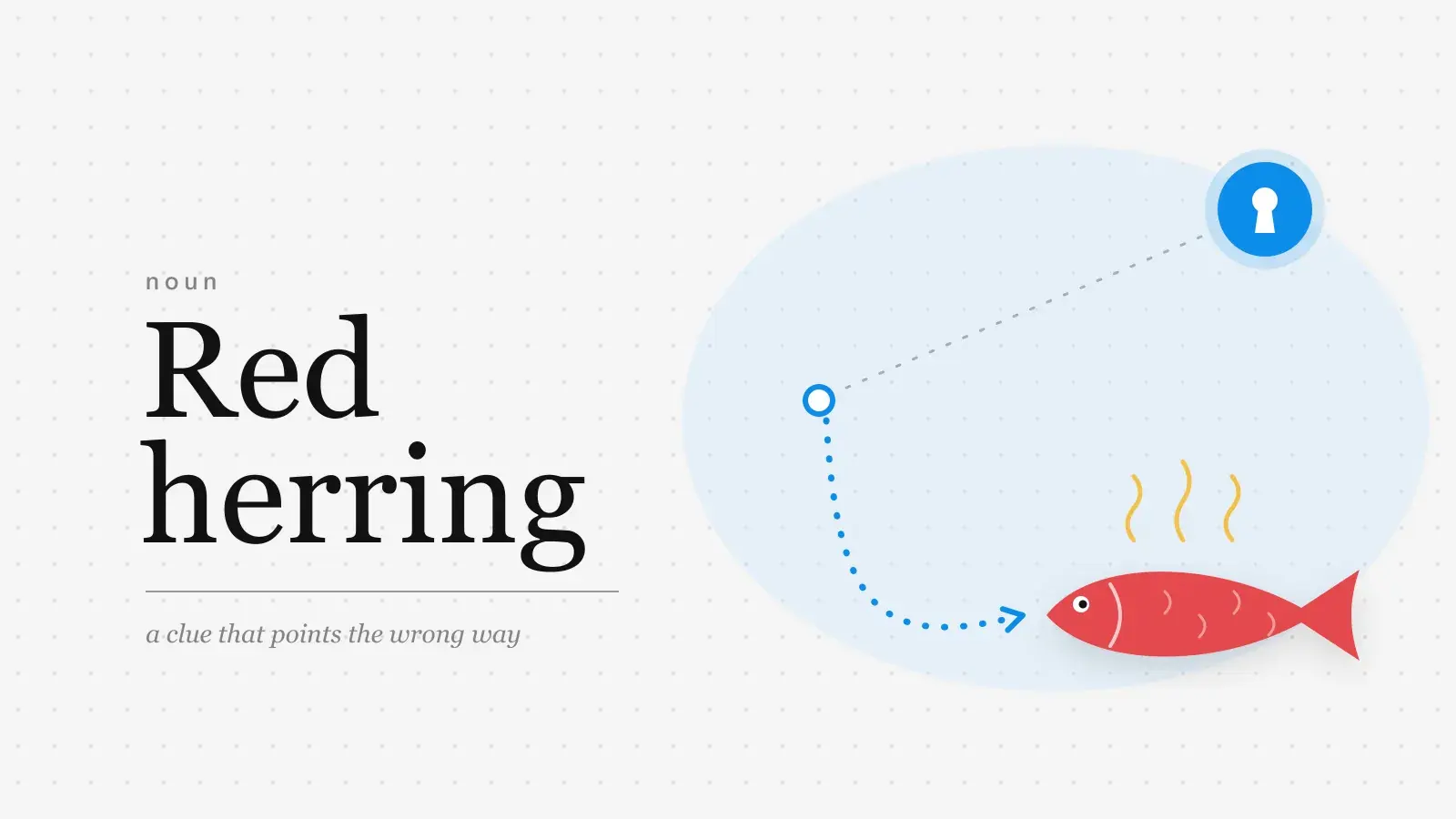
The cover story has to be the more natural reading of the same facts, not a random lie: “the grieving twin wants justice.” It works best when it's what the reader would have guessed anyway, which is how a good red herring works.
- Plant clues that fit both
Two or three are enough for most twists: one physical (the dog), one behavioral (he never sits in his brother's chair), one spoken (he gets the wedding date wrong and laughs it off). Put each in a scene busy with something else. The foreshadowing examples show how the classics hid theirs, and Chekhov's gun is the reminder that each plant must pay off.
- Hide it in the point of view
Many twists live in what the viewpoint character can't see or won't say. Choose the point of view that hides the truth honestly: a witness who wasn't there, a child who doesn't understand, a narrator with a reason to keep quiet. If you have to cheat inside a character's head, the viewpoint is wrong.
- Write what happens next
If the twist comes before the ending, reveal it in a scene where someone acts on it, not in a speech, then show what it changes. A reveal that forces a choice gives the rest of the book a direction. A last-line twist has no next scene, so it has to change what everything before it meant. If it changes neither, you have a surprise, not a twist.
Twists are a cousin of suspense, not a replacement for it. A twist pays off once, at the reveal, while suspense pays off on every page before it. The guide to suspense in writing explains the difference.
Where to put the twist
| Position | What it does | Ideas that fit |
|---|---|---|
| PositionEnd of the first act | What it doesRemoves the apparent lead or the apparent goal, so the real story can start | Ideas that fit13, 15 |
| PositionMidpoint | What it doesChanges the goal for the second half of the book | Ideas that fit16, 18, 31 |
| PositionEnd of the second act | What it doesTakes away the hero's last plan just before the climax | Ideas that fit10, 38, 57 |
| PositionClimax | What it doesDecides who wins, and why | Ideas that fit3, 32, 39 |
| PositionLast line | What it doesMakes the reader reread everything, with no room for an aftermath | Ideas that fit19, 50, 59 |
A midpoint twist gives you half a book to deal with the fallout, which is why it suits novels. A last-line twist suits short stories, where the whole story can be reread in a few minutes. If you're writing toward a twist ending, the guide to ending a story covers the other ways a last page can land.
Famous plot twists in the classics
| Work | The twist | How it plays fair |
|---|---|---|
| WorkSophocles, Oedipus Rex (c. 429 BCE) | The twistThe murderer Oedipus is hunting is Oedipus himself, and the old king he killed was his father. | How it plays fairThe prophet Tiresias tells him so in the first scenes, and Oedipus dismisses it as a political plot. |
| WorkShakespeare, The Winter's Tale (c. 1611) | The twistThe statue of Queen Hermione, dead for sixteen years, is Hermione. | How it plays fairPaulina makes the king swear he will never remarry without her leave. |
| WorkPoe, “The Murders in the Rue Morgue” (1841) | The twistThe killer is an escaped orangutan. | How it plays fairWitnesses heard a shrill voice and can't agree what language it spoke, the killer climbed a route no person could, and a tuft of hair from the room isn't human. |
| WorkDickens, “The Signal-Man” (1866) | The twistThe specter's cry and gesture are the engine driver's in the moments before a train kills the signalman. | How it plays fairThe cry, “Halloa! Below there!”, is the first thing the narrator ever said to him. |
| WorkStevenson, Strange Case of Dr Jekyll and Mr Hyde (1886) | The twistJekyll and Hyde are one man. | How it plays fairA clerk finds Hyde's handwriting and Jekyll's “in many points identical: only differently sloped.” |
| WorkBierce, “An Occurrence at Owl Creek Bridge” (1890) | The twistThe escape happens in Peyton Farquhar's mind before the rope breaks his neck. | How it plays fairHis neck swells, and the stars look “unfamiliar and grouped in strange constellations.” |
| WorkConan Doyle, “The Red-Headed League” (1891) | The twistThe League exists to keep a pawnbroker out of his shop while his assistant tunnels into a bank vault. | How it plays fairThe assistant spends hours in the cellar, supposedly developing photographs, and the knees of his trousers are worn and dirty. |
| WorkConan Doyle, “The Man with the Twisted Lip” (1891) | The twistThe beggar Hugh Boone, held for Neville St. Clair's murder, is St. Clair. | How it plays fairHis wife saw him at the window of Boone's room, and his coat turns up with its pockets full of pennies and halfpennies. |
| WorkTwain, Pudd'nhead Wilson (1894) | The twistThe heir, Tom Driscoll, is the son of Roxy, an enslaved woman who switched him with her master's baby. | How it plays fairWilson's fingerprint collection, a hobby the whole town laughs at, settles it in court. |
| WorkSaki, “The Open Window” (1914) | The twistThe tragedy the niece tells the visitor is invented on the spot, and the “ghosts” are her aunt's husband and brothers coming home from shooting. | How it plays fairBefore she starts, she checks that he knows hardly anyone in the neighborhood. |
| WorkChristie, The Murder of Roger Ackroyd (1926) | The twistThe narrator is the murderer. | How it plays fairEverything he writes is true. The trick is what he leaves out. |
His neck was in pain and lifting his hand to it found it horribly swollen.
…great golden stars looking unfamiliar and grouped in strange constellations.
Both lines sit inside a thrilling escape, so first-time readers take them as the cost of surviving a hanging. On a reread they are the hanging itself, still going on. The final sentence returns to the bridge: “Peyton Farquhar was dead; his body, with a broken neck, swung gently from side to side beneath the timbers of the Owl Creek bridge.” The clues fit both stories, which is the whole trick.
Romance at short notice was her speciality.
The last line rereads the first thing the story tells us about the niece: she is “a very self-possessed young lady of fifteen.” The first time, that sounds like good manners. After the last line, it is the composure of someone who can invent a tragedy without a tremor. Her small talk changes with it. She asks the nervous visitor, “Do you know many of the people round here?” and hears “Hardly a soul.” She dates the tragedy “since your sister's time,” after the one person who might have told him otherwise had left. Only then does she explain the open window. On the reread, both moves are a storyteller making sure her audience can't check the story.
Three more classic twists are taken apart elsewhere on this site: the true source of Pip's fortune in Great Expectations under red herring, the laugh on the third floor of Thornfield in the foreshadowing examples, and the borrowed necklace in Maupassant's “The Necklace” (1884) among the situational irony examples.
Twists that cheat
A twist that plays fair
- It was possible from the first chapter.
- Two or three clues fit both the false story and the true one.
- The viewpoint hides it honestly, and the narrator has a reason to stay quiet.
- It changes what the characters do next, or, on the last line, what the story meant.
- A rereader finds the clues where you left them.
A twist that cheats
- It depends on a fact the reader was never given.
- Earlier scenes turn out to be false, not just misleading.
- A character thinks about everything except the one thing they'd think about most.
- Characters act foolishly so the reveal can happen.
- It changes neither what happens next nor what came before, so it was only a shock.
The best-known cheat is the ending that turns out to be a dream, because it cancels the story instead of changing its meaning. Bierce does something close to it in Owl Creek and gets away with it, because the escape is planted with clues and because the illusion is the point: a dying man's mind clinging to home. The other common cheat is stacking. Each reversal teaches readers to trust the story a little less, and after a few they may stop caring. One big twist and a couple of small ones are plenty for most novels.
Before anyone else reads the draft, write down what really happened and what the reader is meant to believe, and list each plant under both with its chapter number. The story bible template has room for the list.
Then attach that list and ask the Strokes Assistant to review the project against the true story. It tells you what's inconsistent, such as a character who knows something too early or a plant that never comes back.
Frequently asked questions
What is the difference between a plot twist and a surprise?
A surprise adds new information. A twist changes the meaning of information the reader already had. A stranger kicking in the door is a surprise. Learning that the friend who has been helping all along let the stranger in is a twist, because every earlier scene with the friend now reads differently.
Can a story have too many plot twists?
Yes. Each reversal teaches readers to distrust the story, and after a few they may stop investing in anything it tells them. Many novels work best with one major twist and a couple of minor ones. If you stack twists, make sure each one changes what the characters do, not only what the reader knows.
What is the most famous plot twist in literature?
There's no single answer, but a few come up again and again. Oedipus Rex, in which the investigator is the culprit, is the oldest. Jekyll and Hyde is so famous that most readers know the twist before they open the book. The Murder of Roger Ackroyd still starts arguments about whether its narrator trick was fair.