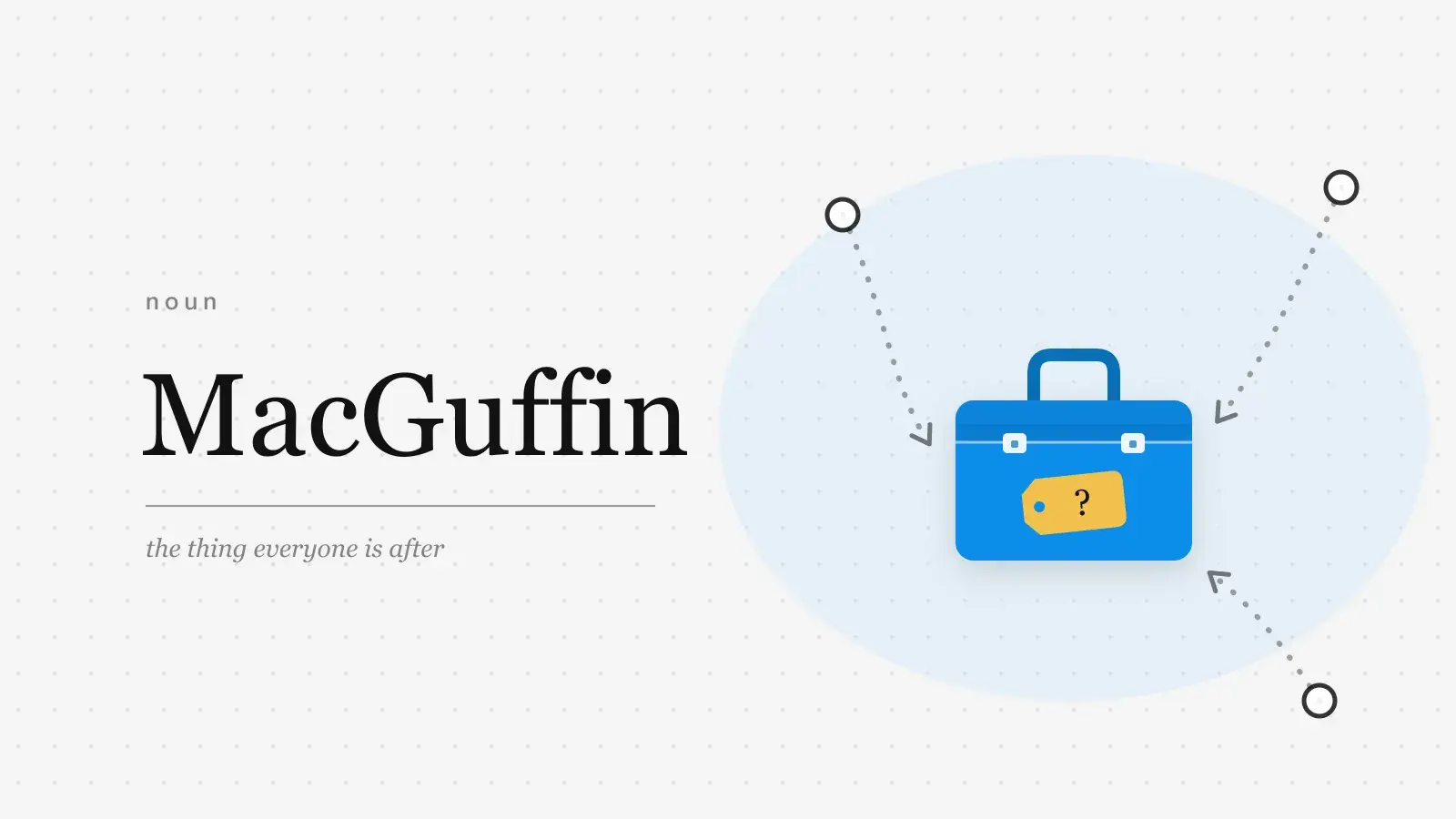
A MacGuffin is the object, secret or goal that everyone in a story is chasing, whose exact nature hardly matters to the reader. A stolen jewel, a set of plans, a locked briefcase. It starts the chase and keeps the characters moving, while the story itself is about the people doing the chasing.
Alfred Hitchcock made the word famous. It is usually credited to Angus MacPhail, a British screenwriter who worked on several of his films. Hitchcock explained it with a joke about two men on a train. One asks what the parcel in the luggage rack is. A MacGuffin, says the other, a device for trapping lions in the Scottish Highlands. But there are no lions in the Highlands. Well, then that's no MacGuffin. The point is that it could be anything, or nothing.
He told the story to François Truffaut in the interviews they recorded in 1962 for the book now known as Hitchcock/Truffaut, and again on The Dick Cavett Show in 1972. His best one, he told Truffaut, was in North by Northwest (1959): the spies are smuggling government secrets, and the film never says which. The device is far older than the name. The Golden Fleece and the Holy Grail drive their stories the same way.
MacGuffin examples
We were both in the photograph.
The King of Bohemia hires Holmes to recover a photograph of himself with the singer Irene Adler before it can wreck his engagement to a Scandinavian princess. Holmes stages a fire alarm to learn where she hides it. When he comes back to collect, she has left for the Continent with her new husband and the photograph. In its hiding place are a picture of her in evening dress and a letter telling Holmes his client may rest in peace. The photograph is never recovered, and the story loses nothing. It was about the woman who beat Holmes.
Bulk of treasure here.
Flint's map turns up in a dead pirate's sea chest and sets everything going: the voyage, the mutiny, the fight for the stockade. When Silver's men finally dig at the marked spot, they find an empty pit, a broken pickaxe and a single two-guinea piece. Ben Gunn, marooned on the island, had moved the gold to his cave long before. The treasure itself turns up only in the last chapters. The book belongs to Jim Hawkins and Long John Silver.
Foreign agents want the design for a silent aircraft engine, and Richard Hannay is chased across Scotland because of it. The design turns out to live in the head of Mr. Memory, a music-hall performer. Shot during his act at the London Palladium, he recites it as he dies. Nobody explains how the engine works. Nobody watching wants them to.
Everyone lies and several people die for a jeweled statuette of a falcon. When it is finally unwrapped, it is a fake, and Gutman is ready to go back to Constantinople and keep hunting. The real question of the ending was never the bird. It is whether Sam Spade will turn in Brigid O'Shaughnessy, and he does.
Jules and Vincent are sent to retrieve a briefcase for their boss. Whoever opens it stares at a golden glow, and the camera never shows what is inside. Tarantino has never said what it holds and has told interviewers he wanted viewers to decide for themselves. Audiences still argue about it, which is the joke working as intended.
How to use a MacGuffin in your manuscript
A MacGuffin gives characters something concrete to want and gives readers a way to keep score. It often arrives with the inciting incident: a stranger dies, and the thing he carried is now someone else's problem.
- Make it easy to name. "The ledger." "Her passport." A reader should be able to say what it is in two words and who has it right now.
- Give every pursuer a reason. The object can be empty. The wanting can't. The thief needs the money, the detective needs the arrest, the widow needs proof her husband was murdered.
- Treat each handoff as a turn. Every time the object changes hands, the balance of power changes. Track who holds it in each chapter, or the reader will catch the gap before you do.
- Decide early whether the box opens. Some stories never show the contents. Others open it at the end and let what is inside change the meaning of the chase. Both work. Deciding in the last chapter is how endings go wrong.
The common failures run the other way. The object gets an info dump, three pages on how the encryption works. Or the ending suddenly depends on a power the object never showed before, which reads as cheating. Or the book becomes a string of fetch quests. The critic Nick Lowe called that last pattern collecting "plot coupons" in his 1986 essay "The Well-Tempered Plot Device": items that exist only to be traded in for the ending.
About the object: The drive held the source code for Halvorsen's pricing engine, four years of work, encrypted with a key that rotated every hour and could only be read on one machine in a basement in Oslo.
About the people: Nadia didn't know what was on the drive. She knew Halvorsen had offered her a year's rent for it, that the man in the gray coat had been on her train since Lyon, and that the envelope it came in had her brother's handwriting on it.
The second version says almost nothing about the drive and everything about what it costs Nadia to carry it.
MacGuffin vs. Chekhov's gun and plot coupons
A quick test for a MacGuffin in Hitchcock's sense: could you swap the object for another one without changing the story? Uranium for diamonds, microfilm for a letter. If you could, it is a MacGuffin. The One Ring in The Lord of the Rings fails the test, because its hold on whoever carries it is what the story is about.
Not everyone wants the object empty. George Lucas thinks audiences should care about the MacGuffin almost as much as about the heroes and villains, Vanity Fair reported in 2008. He has called R2-D2 the MacGuffin of Star Wars and held up the Ark of the Covenant in Raiders of the Lost Ark (1981) as a model, though the Ark's power decides that film's climax. The word now covers both ends, from Tarantino's unexplained case to objects that matter a great deal. What they share is the chase.
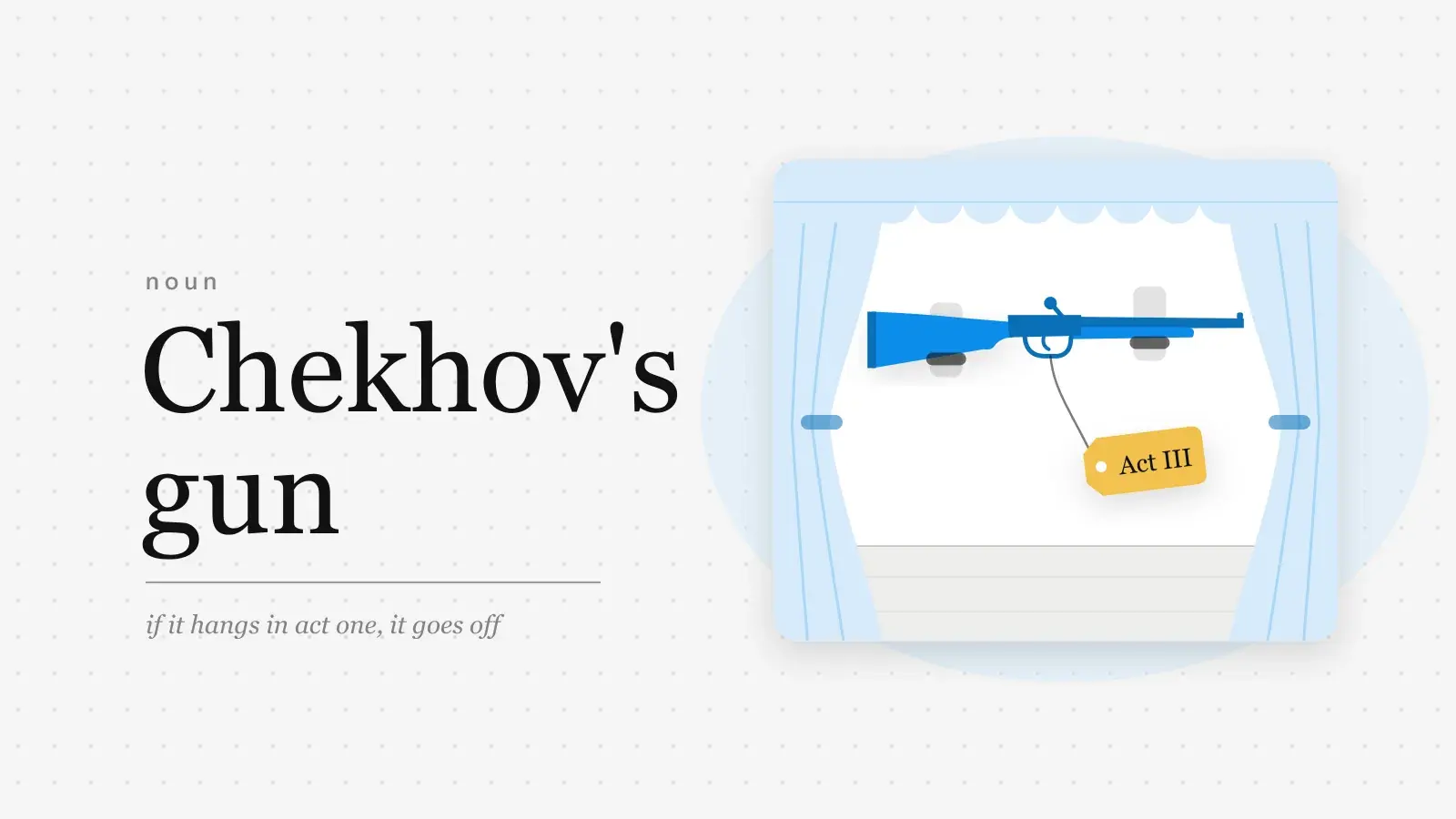
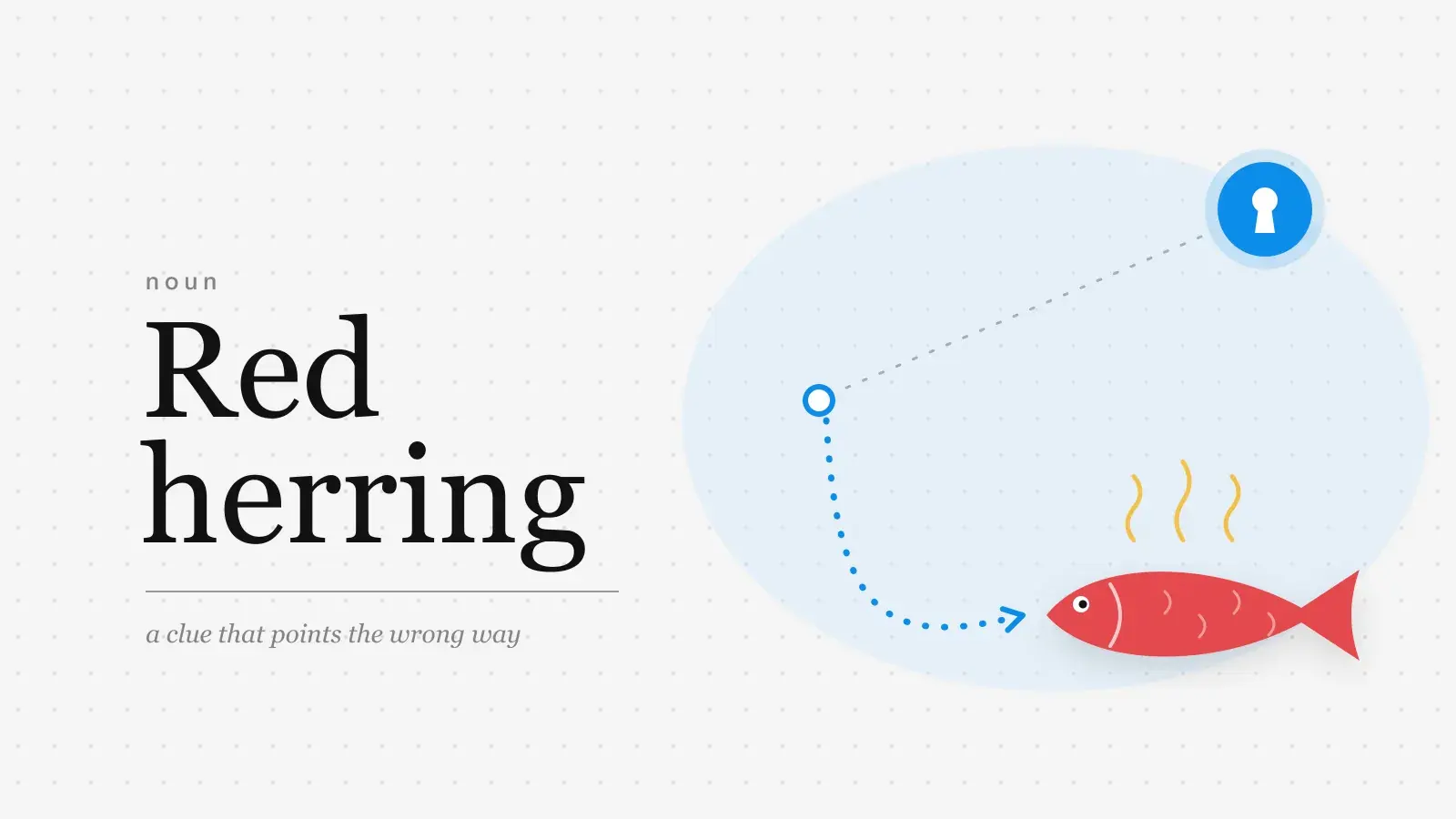
Chekhov's gun makes the opposite promise. A detail you show early has to pay off later. A MacGuffin can stay offstage for most of the book, or turn out to be empty, as long as people keep fighting over it. A red herring exists to mislead the reader. A MacGuffin hides nothing about its job, which is to keep everyone running.
| Device | What it does | Example |
|---|---|---|
| DeviceMacGuffin | What it doesGives everyone something to chase | ExampleThe falcon statuette |
| DeviceChekhov's gun | What it doesA detail shown early that must pay off | ExampleA rifle hung on the wall in Act I |
| DeviceRed herring | What it doesA clue that points the reader the wrong way | ExampleThe spotted headscarves in The Speckled Band |
| DevicePlot coupon | What it doesOne of several tokens collected to unlock the ending | ExampleThe shards of a broken crown in a quest fantasy |
Related terms: Chekhov's gun, red herring, inciting incident and trope. To keep track of who holds the object in every chapter, use the story bible template. To plan the chase before you draft it, read How to outline a novel.