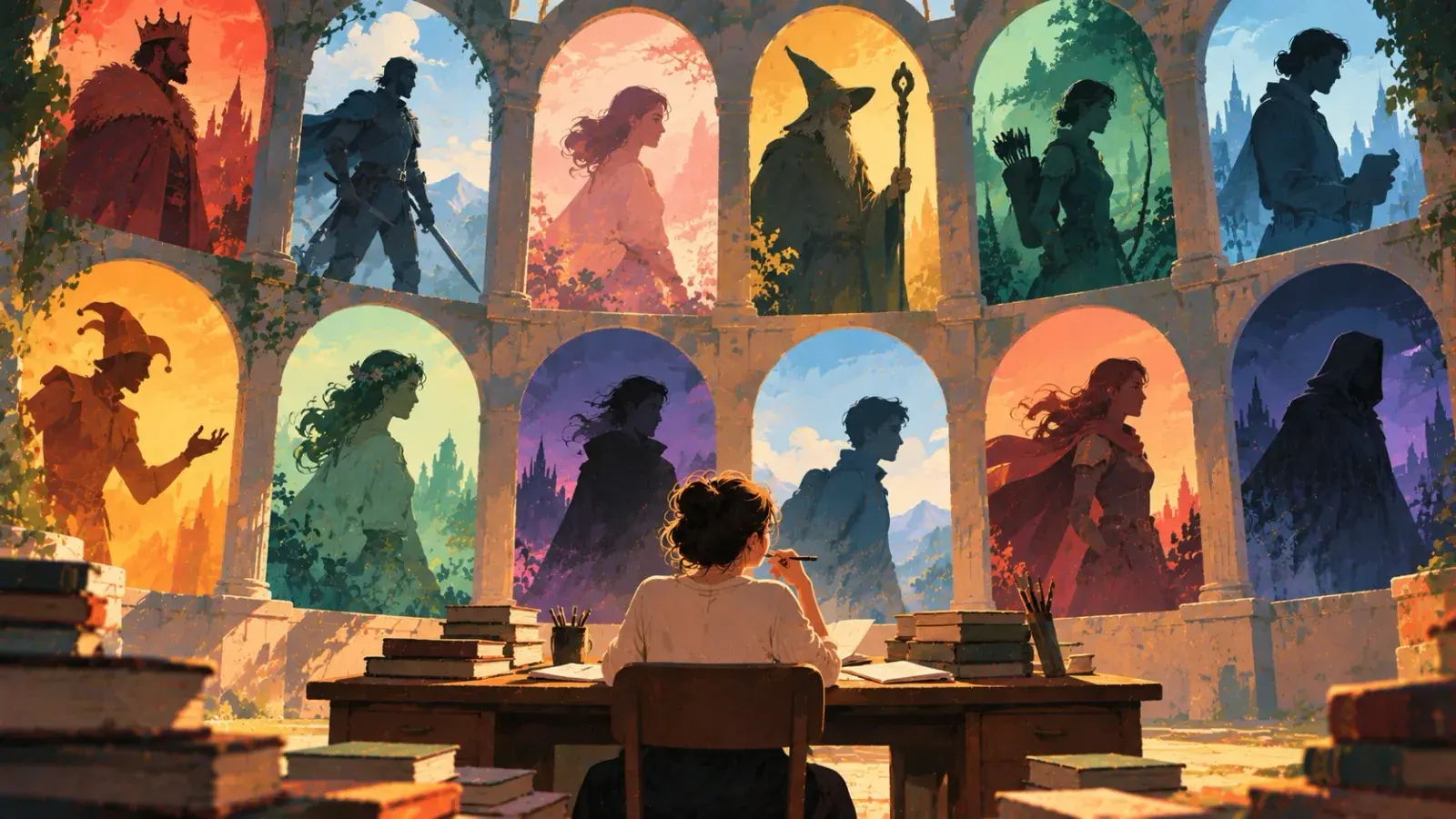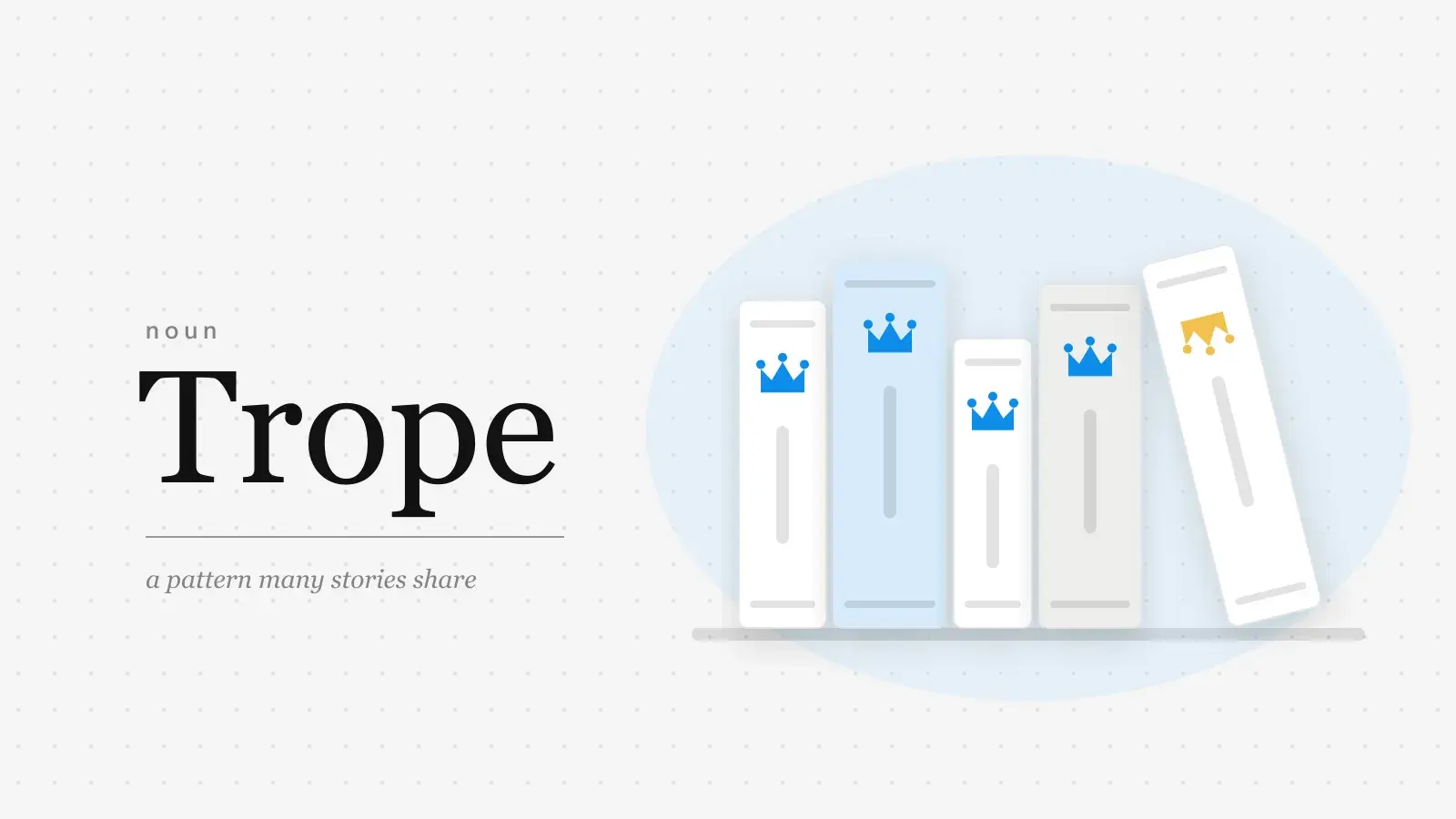
A trope is a pattern that recurs across many stories: a kind of plot, character, situation or setting that readers recognize on sight, such as enemies who fall in love or the chosen one. A trope is neither good nor bad. Repeated without a fresh turn, it becomes a cliché.
The word is older than its storytelling sense. In rhetoric, a trope is a figure of speech that turns a word away from its literal meaning, and the Greek tropos means "a turn." "It is the east, and Juliet is the sun" is a trope of that kind, a metaphor. The critic Kenneth Burke called metaphor, metonymy, synecdoche and irony the four master tropes. Rhetoric sets tropes against schemes, which play with the order or sound of words rather than their meaning, the way alliteration does.
Writers, editors and readers mostly mean the story pattern, the sense the fan wiki TV Tropes has cataloged since 2004. So does the rest of this page.
Trope examples in literature
She is tolerable: but not handsome enough to tempt me…
Darcy's first remark about Elizabeth Bennet is an insult she overhears, and the rest of the novel turns it into a proposal she can accept. Shakespeare had used the pattern two centuries earlier in Much Ado About Nothing (1600), where Beatrice and Benedick carry on "a kind of merry war" until their friends trick them into admitting love. Romance readers now ask for the trope by name.
Now, in my opinion, Dupin was a very inferior fellow.
Edgar Allan Poe's "The Murders in the Rue Morgue" (1841) gave detective fiction C. Auguste Dupin, a brilliant amateur, and an admiring friend who tells the story. Doyle kept the pattern for Holmes and Watson, then had Holmes sneer at his predecessor. The pairing lasts because the friend asks the questions the reader would ask, and the genius gets to hold back the answer until the end.
…the beauty of the dream vanished, and breathless horror and disgust filled my heart.
Victor Frankenstein works for nearly two years to bring a body to life, then rushes out of the room as soon as its eye opens. The abandoned creature comes back for him. Many stories about artificial intelligence, from The Terminator to Ex Machina, run on the same pattern: someone makes a mind, and the mind does not stay grateful.
In the 1812 first edition of the Grimms' collection, the queen who wants Snow White dead is her own mother. The 1819 second edition made her a stepmother, a change usually explained as softening the tale for children. Cinderella already had one. The revision moved Snow White into a pattern readers knew, which is how many tropes harden: each retelling sands the story toward the familiar version.
Lara Jean's private letters to the boys she once loved are mailed to all of them, including Josh, her sister's ex-boyfriend. To show Josh she is over him, she kisses another recipient, Peter Kavinsky, and says they are together. Peter wants his ex-girlfriend back, so they agree to keep up the act. Readers who pick up a fake-dating romance know how it ends. They read for the rules of the arrangement and the moment those rules stop being the point.
At a party, the horror fan Randy explains the rules for surviving a horror movie: no sex, no drinking or drugs, and never say you'll be right back. Sidney, the heroine, breaks the first rule that same night and survives. Once a character has spelled out the rules, the audience knows the writer knows them too, and every scene after that is a bet on which rule holds.
Common tropes by genre
| Genre | Tropes readers know by name |
|---|---|
| GenreRomance | Tropes readers know by nameEnemies to lovers, fake dating, second chance, forced proximity, grumpy and sunshine |
| GenreFantasy | Tropes readers know by nameThe chosen one, the dark lord, the quest, the mentor who dies, the magic school |
| GenreMystery | Tropes readers know by nameThe locked room, the detective's narrating friend, the gathering of suspects |
| GenreHorror | Tropes readers know by nameThe final girl, the haunted house, the creepy child, splitting up to search |
| GenreScience fiction | Tropes readers know by nameFirst contact, the AI that turns on its makers, the time loop, the generation ship |
| GenreThriller | Tropes readers know by nameThe ticking clock, the mole inside the agency, one last job |
| GenreLiterary fiction | Tropes readers know by nameThe return to the hometown, the summer that changed everything, the deathbed reunion |
Tropes in your manuscript
A trope is a promise. Enemies to lovers promises friction that turns into respect. A locked room promises a solution the reader could have reached. Readers, romance readers especially, use trope names to find books, so naming yours plainly in a pitch tells the right reader what you are offering. In genre fiction, one or two can go in a query letter next to your comp titles, as long as the agent's guidelines don't say otherwise.
Keep the promise and change something else: the people, the setting, the cost. With one trope, the mentor who dies, the main options look like this:
- Play it straight. The mentor dies before the final battle, and the hero finishes alone. It works when the loss costs the hero something specific, such as the one skill only the mentor had.
- Subvert it. Set it up and withhold it. The mentor survives the ambush, and the hero has to finish the quest beside someone who no longer believes in it.
- Invert it. Swap the roles. The student falls, and the old mentor has to finish what the student started.
- Lampshade it. Let a character notice the pattern, as Randy does in Scream. Someone remarks that mentors in stories never make it to the end. The wink buys goodwill once. A second one is usually too many.
A trope turns into a cliché when it arrives with the stock details attached: eyes meeting across the room, a prophecy in rhyming verse, a villain explaining the plan. Readers rarely object to the pattern. They object to the version they have already read. The fix is a reason that only your characters could have.
Stock: Their eyes met across the conference table. He was arrogant, infuriatingly handsome and the last man she would ever agree to work with.
Specific: Nadia had read Tom Hale's report on the bridge before she met him, and she had marked forty-one errors in red. He had read her markup too. He opened the meeting by thanking her for forty of them and asking, with real interest, how she had gotten the forty-first so wrong.
The second version keeps the trope, two people who can't stand each other and have to work together, and gives the friction a cause in their jobs. It also shows he is fair, which the reader will need to believe when the turn comes.
Once a draft exists, ask a reader, human or AI, to list the tropes they spot in your first three chapters. If their list matches yours, the promise is clear. If they name one you didn't intend, decide whether to keep it or cut the stock details that suggest it. In Strokes you can add those chapters to an AI Assistant chat as context and ask.
Trope vs. cliché, motif and archetype
| Term | What it is | Example |
|---|---|---|
| TermTrope | What it isA pattern shared across many works | ExampleEnemies to lovers |
| TermCliché | What it isA trope or phrase worn flat by unchanged repetition | ExampleIt was all a dream |
| TermMotif | What it isAn image or idea that recurs inside one work | ExampleThe green light in The Great Gatsby |
| TermArchetype | What it isA basic character or story type found across cultures | ExampleThe mentor, the trickster |
| TermConvention | What it isA trope a genre's readers require | ExampleThe hopeful ending of a romance |
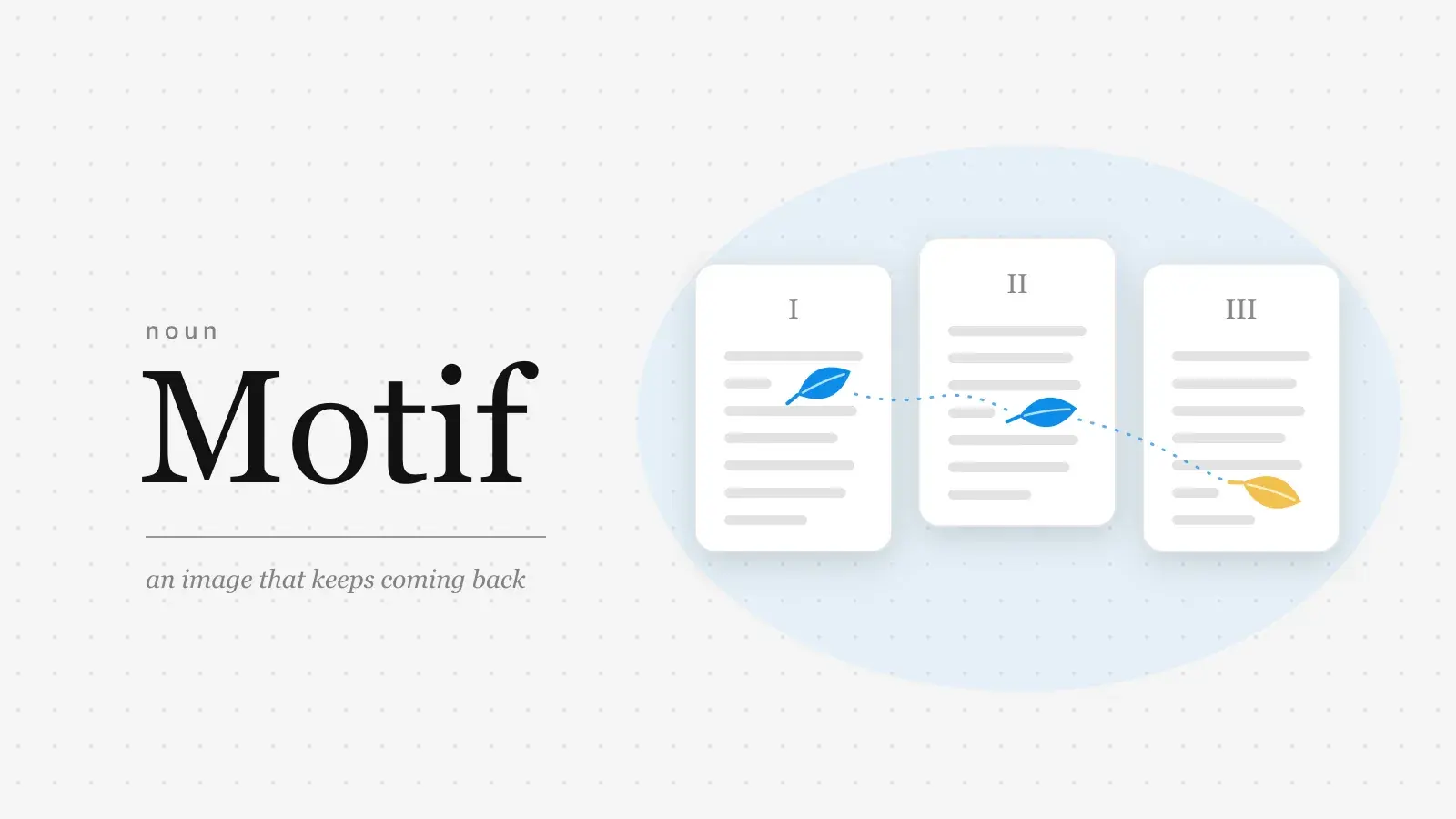
The line that matters most is between trope and cliché. A trope is a tool. A cliché is the same tool used without thought, often down to the wording. Motif is a question of scope: a motif belongs to one book, a trope to a whole shelf. Archetypes are older and broader, the figures Carl Jung and Joseph Campbell described, and a trope is often an archetype put in a particular situation. The mentor is an archetype. The mentor who dies before the last battle is a trope. A convention is a trope the genre can't do without: a romance ends in HEA or HFN, and a mystery ends with a solution.
Related terms: motif, red herring, Chekhov's gun and comp titles. For the character types many tropes are built on, read Character archetypes: the 12 types and how to write them. If you write love stories, How to write a romance novel covers the beats and tropes readers expect.