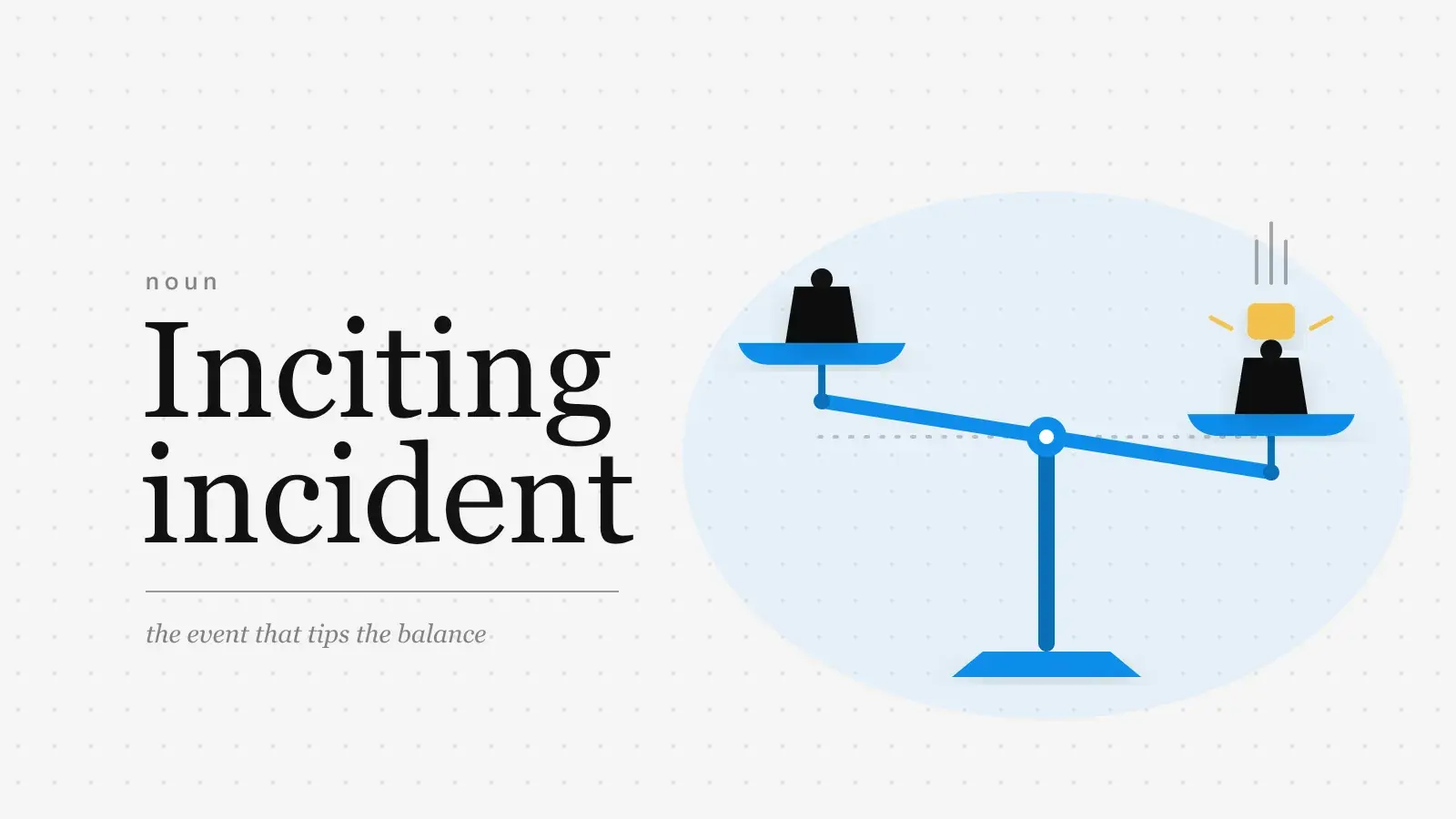
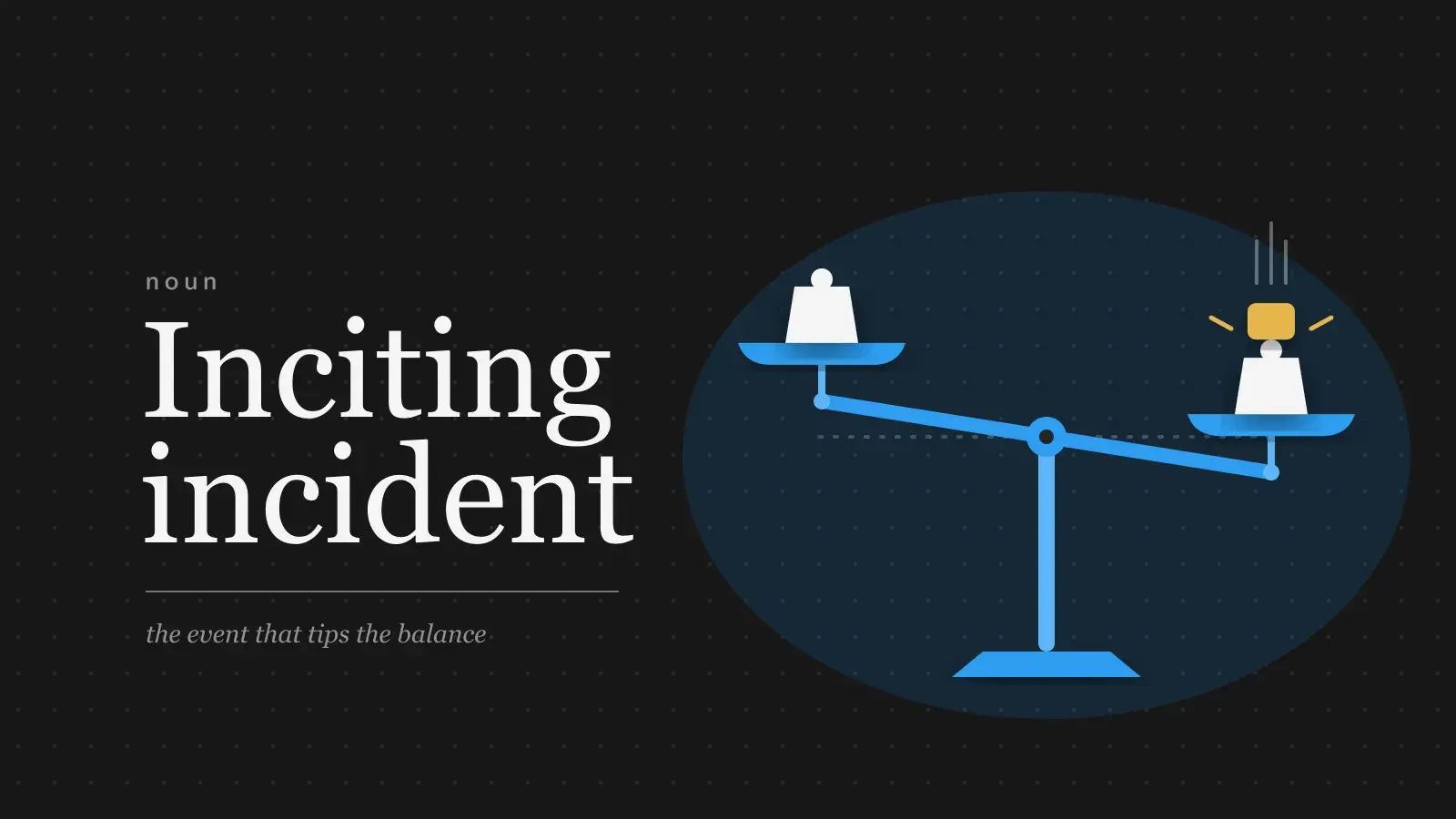
An inciting incident is the event that upsets a protagonist's ordinary life and sets the main conflict of a story in motion. It comes early, usually within the first act, and it can't be ignored. Everything the character does afterward is a response to it.
Robert McKee's screenwriting book Story (1997) gives the best-known definition: the inciting incident "radically upsets the balance of forces" in the protagonist's life. The idea is much older than the name. Gustav Freytag's 1863 study of drama calls it the "exciting force" in its English translation, Joseph Campbell's hero receives a "call to adventure," and novel-writing guides often say inciting event.
Inciting incident examples
…have you heard that Netherfield Park is let at last?
A rich single man has taken the big house nearby, and Mrs. Bennet has five unmarried daughters. Nothing dramatic has happened. The incident is a piece of gossip, and it opens the question the novel answers: who will marry whom, and on what terms. Some readers place it two chapters later, at the assembly where Darcy refuses to dance with Elizabeth.
Revenge his foul and most unnatural murder.
Old Hamlet died before the play begins, so his murder can't start this story. What starts it is the Ghost telling his son who did it: the brother who now wears his crown. The revelation turns Hamlet's grief into a duty, and the rest of the play is his delay in carrying it out.
It was on a dreary night of November that I beheld the accomplishment of my toils.
Victor brings the creature to life and runs from it. The disaster is his own doing, which makes it what Shawn Coyne's Story Grid calls a causal inciting incident (one that follows from a choice) rather than a coincidental one. It also arrives late: four letters from Robert Walton and three chapters of Victor's childhood and studies come first.
The book opens on the morning of the reaping, and the incident is pure chance: the girl's name drawn for District 12 belongs to Prim, Katniss's twelve-year-old sister. Katniss volunteers to take her place. The draw upsets her world. The volunteering is her answer, and it tells the reader who she is in a single act.
A young woman swims out at night and is pulled under. Her remains wash up the next morning. Notice who it happens to: the victim is a stranger, and the disruption lands on Chief Brody, who wants to close the beaches and is talked out of it by a mayor worried about the summer trade. Thrillers and horror often open on the incident, because the genre has promised danger and the audience came for it.
Where the inciting incident goes
Early, though not always on page one. Most structure frameworks put it in roughly the first tenth of the story. In a 90,000-word novel that is about 9,000 to 11,000 words in, somewhere in chapters two to four depending on how long your chapters run.
| Framework | Its name | Where it falls |
|---|---|---|
| FrameworkFreytag's pyramid (1863) | Its nameExciting force | Where it fallsEnd of the introduction |
| FrameworkSave the Cat! (Blake Snyder, 2005) | Its nameCatalyst | Where it fallsPage 12 of a 110-page script |
| FrameworkSave the Cat! Writes a Novel (Jessica Brody, 2018) | Its nameCatalyst | Where it fallsAbout 10% |
| FrameworkMichael Hauge's six-stage structure | Its nameOpportunity | Where it fallsAbout 10% |
| FrameworkK.M. Weiland's story structure | Its nameInciting Event | Where it fallsAbout 12%, mid–act one |
Published stories range much wider. Alice's Adventures in Wonderland sends the White Rabbit past Alice on the first page. A frame story can push it many chapters in, as Frankenstein shows. Late is fine if the pages before it build the balance the incident is about to upset.
How to write an inciting incident
Start from the ending. The inciting incident raises the question your climax answers. Will the Bennet sisters marry well? Will Hamlet avenge his father? If you can state that question in one line, you have probably found the real incident, and the line belongs in your logline.
- Put it in a scene. Readers need to watch the balance tip. A letter, a phone call or a body on the beach all work. "That spring, the business failed" in summary does not.
- Make it impossible to shrug off. If ignoring it costs the protagonist nothing, it's a complication, not the incident.
- Demand a reaction. McKee insists the protagonist must react. Refusal counts, as long as refusing costs something.
- Use coincidence here, not later. Readers accept chance that gets a character into trouble. They resent chance that gets one out of it.
Two failures turn up in drafts again and again: three chapters of routine and family history while the writer warms up, and a dramatic opening that happens to someone we haven't met yet. A thriller can get away with the second. Most stories can't.
Draft: Chapter 1 follows Nadia through a Tuesday at the bakery she runs with her father. Chapter 2 covers her divorce in flashback. Chapter 3 is her sister's birthday dinner. Halfway through chapter 4, a letter arrives: the building has been sold, and the bakery has ninety days to leave.
Revised: Chapter 1 opens at 4 a.m., with Nadia shaping the first loaves while her father, who was supposed to retire last spring, argues with the oven. On the last page of the chapter, the new owner tapes a ninety-day notice to the door. The divorce comes out in one line at the birthday dinner, when her sister asks whether she can afford to fight.
The revision keeps the ordinary world (the hours, the father, the money worry) but fits it into one chapter.
Inciting incident vs. hook vs. first plot point
| Beat | What it does | Usually |
|---|---|---|
| BeatHook | What it doesMakes the reader want to keep going | UsuallyThe first line, page or scene |
| BeatInciting incident | What it doesUpsets the protagonist's ordinary life | UsuallyAbout 10–12% in, sometimes page one |
| BeatFirst plot point | What it doesCommits the protagonist to a path with no way back | UsuallyAbout 20–25% in, the end of act one |
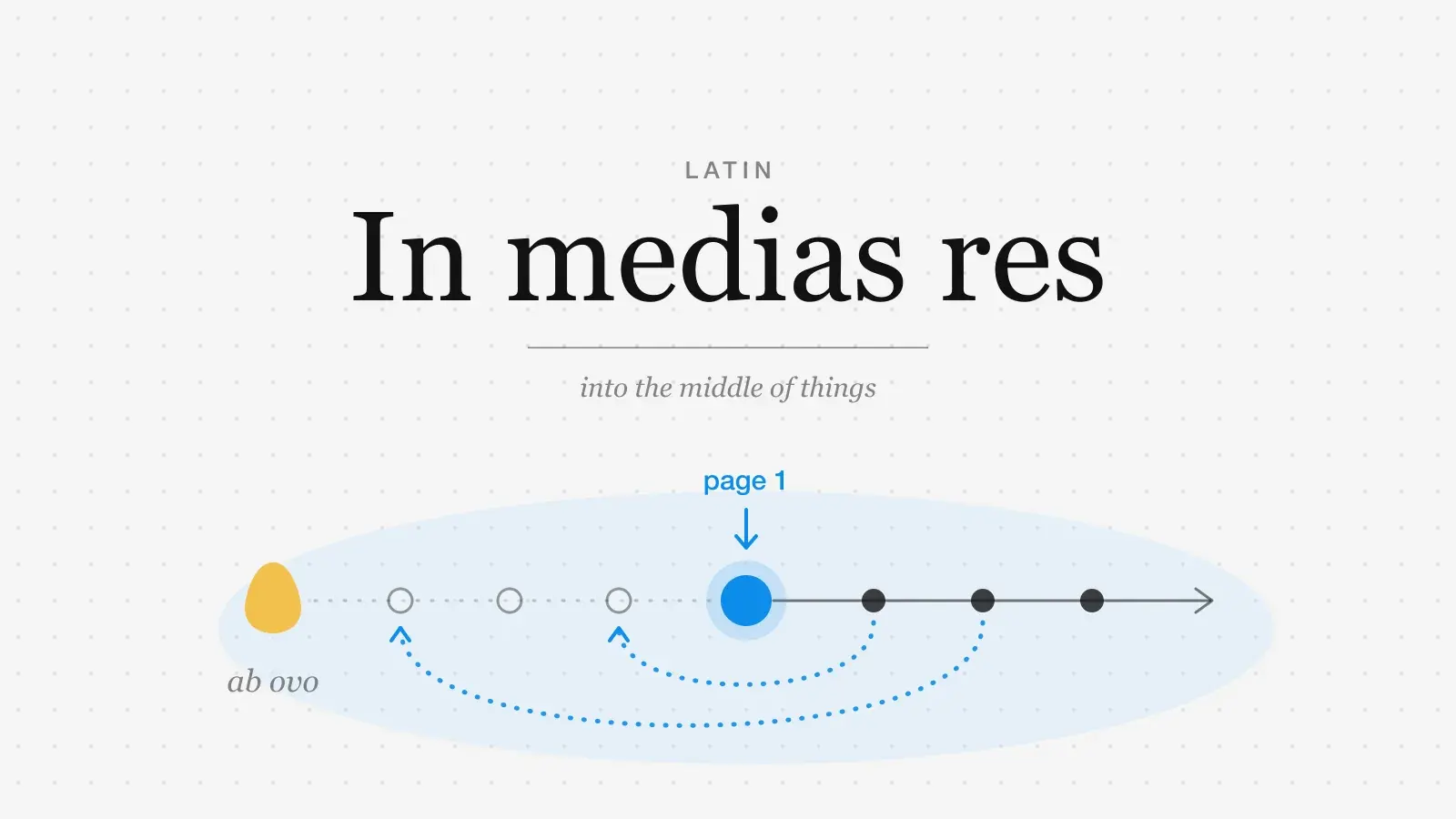
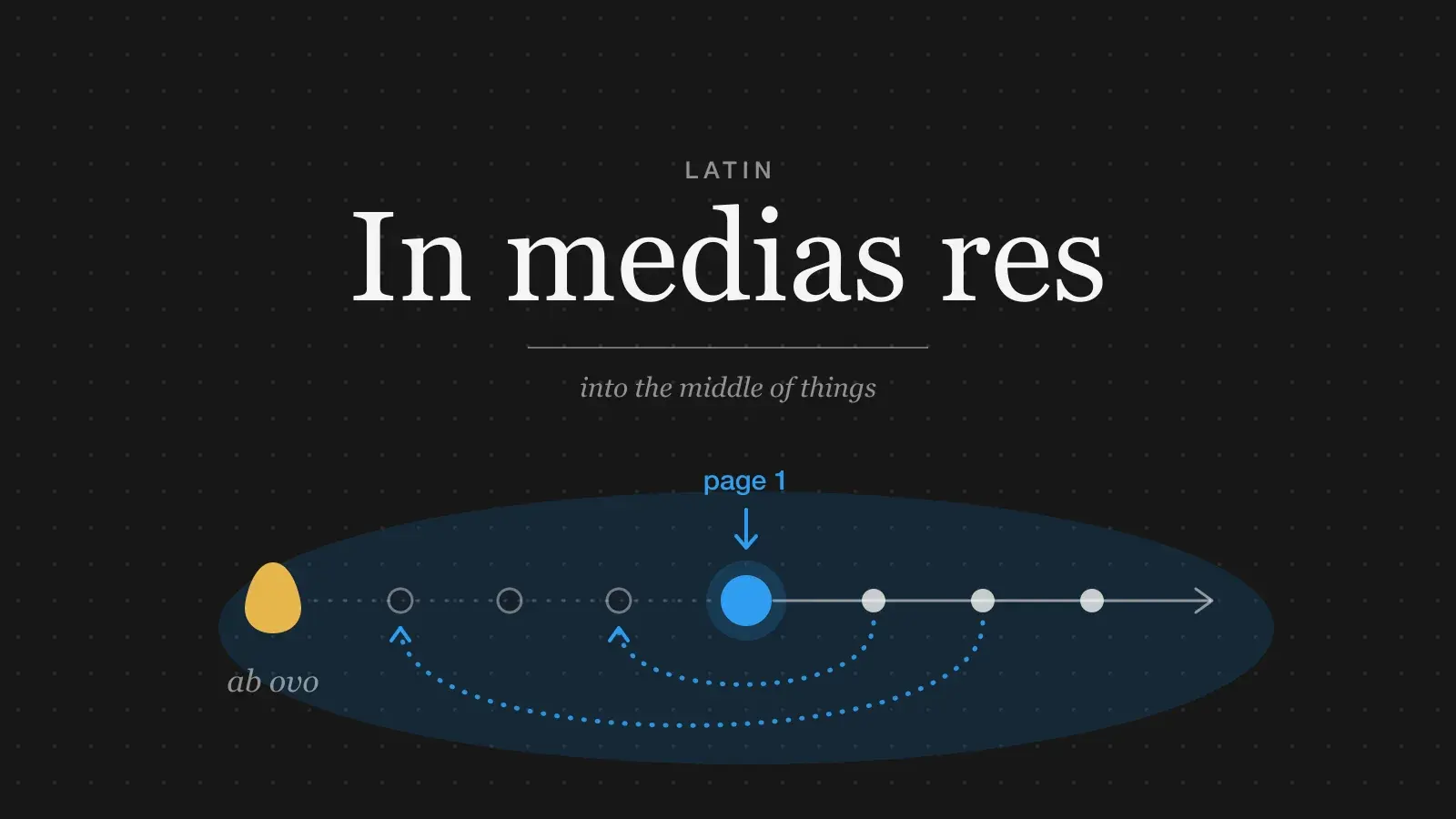
The hook can be the inciting incident, as in Jaws, but it doesn't have to be. Austen's hook is her famous first sentence, a joke about rich bachelors, and the news about Netherfield follows a few lines later. The first plot point comes after the incident, when the protagonist's reaction hardens into a commitment. Nadia's notice is the incident. Her refusal to move out, which sets her against the new owner for good, is the plot point. Opening in medias res is a separate choice: a story can open in the middle of an action that has nothing to do with the main conflict and reach its inciting incident pages later.
Related terms: midpoint, denouement. To place the incident among the other turning points, fill in the three-act structure template or work through How to outline a novel.