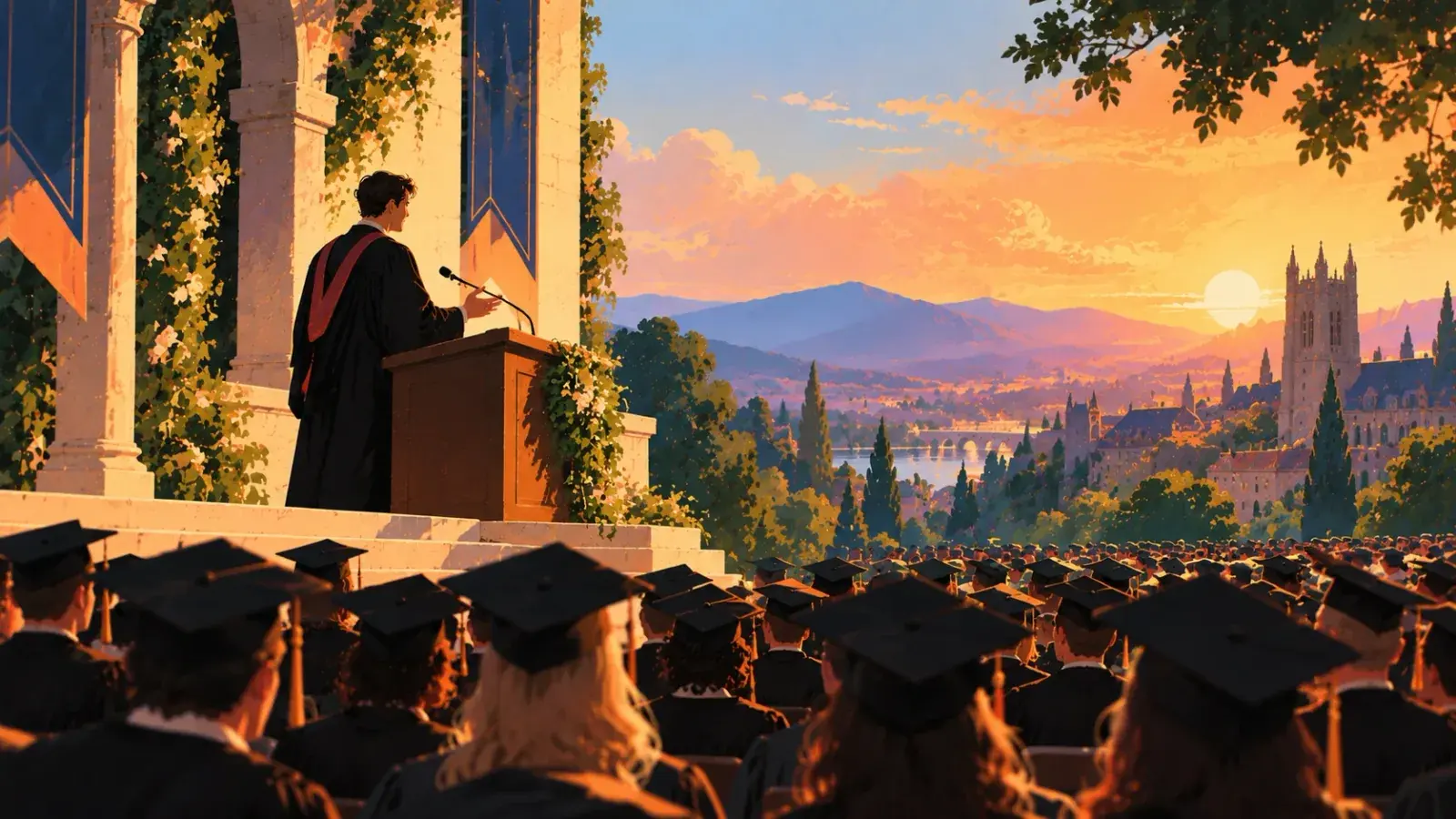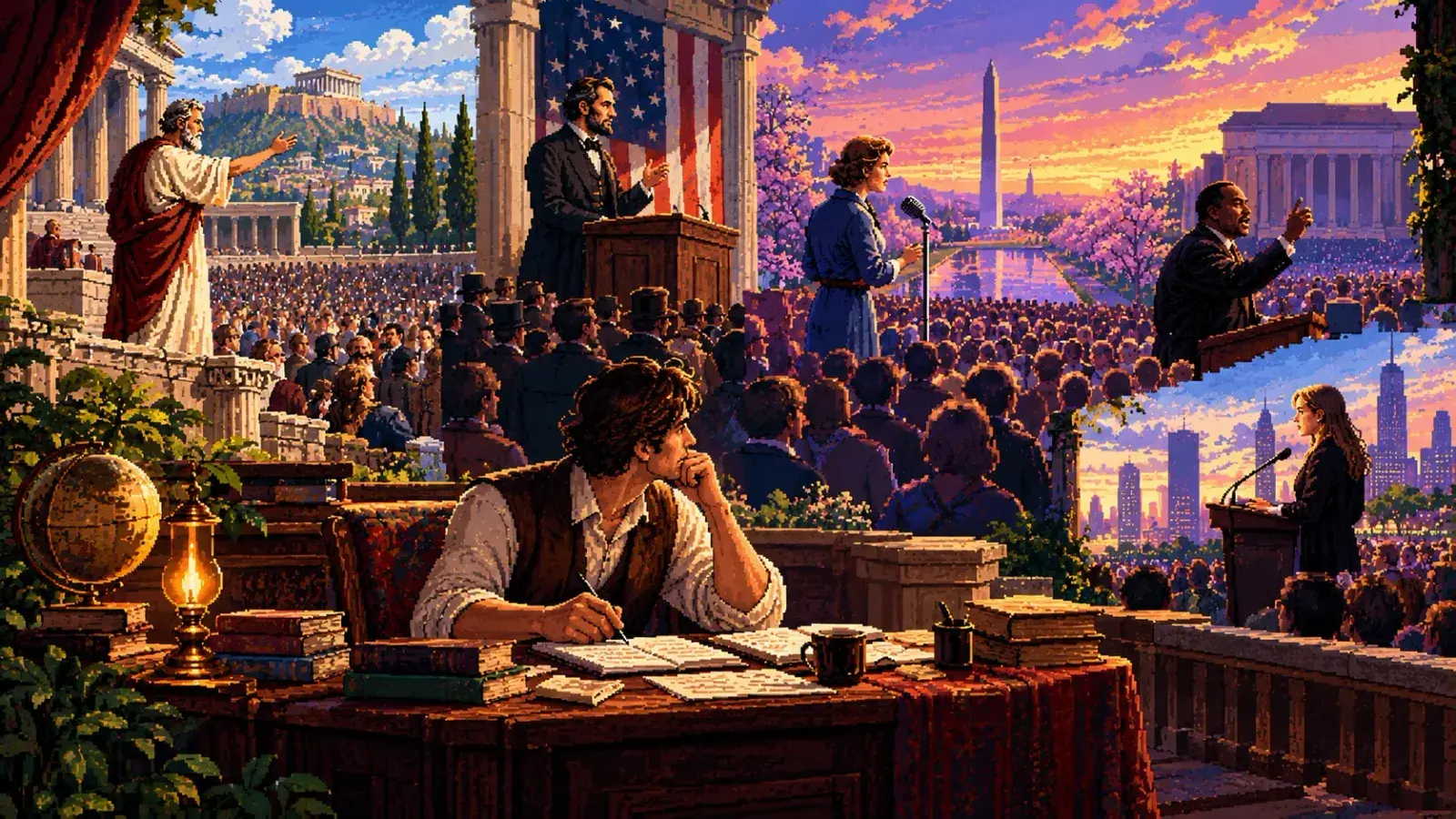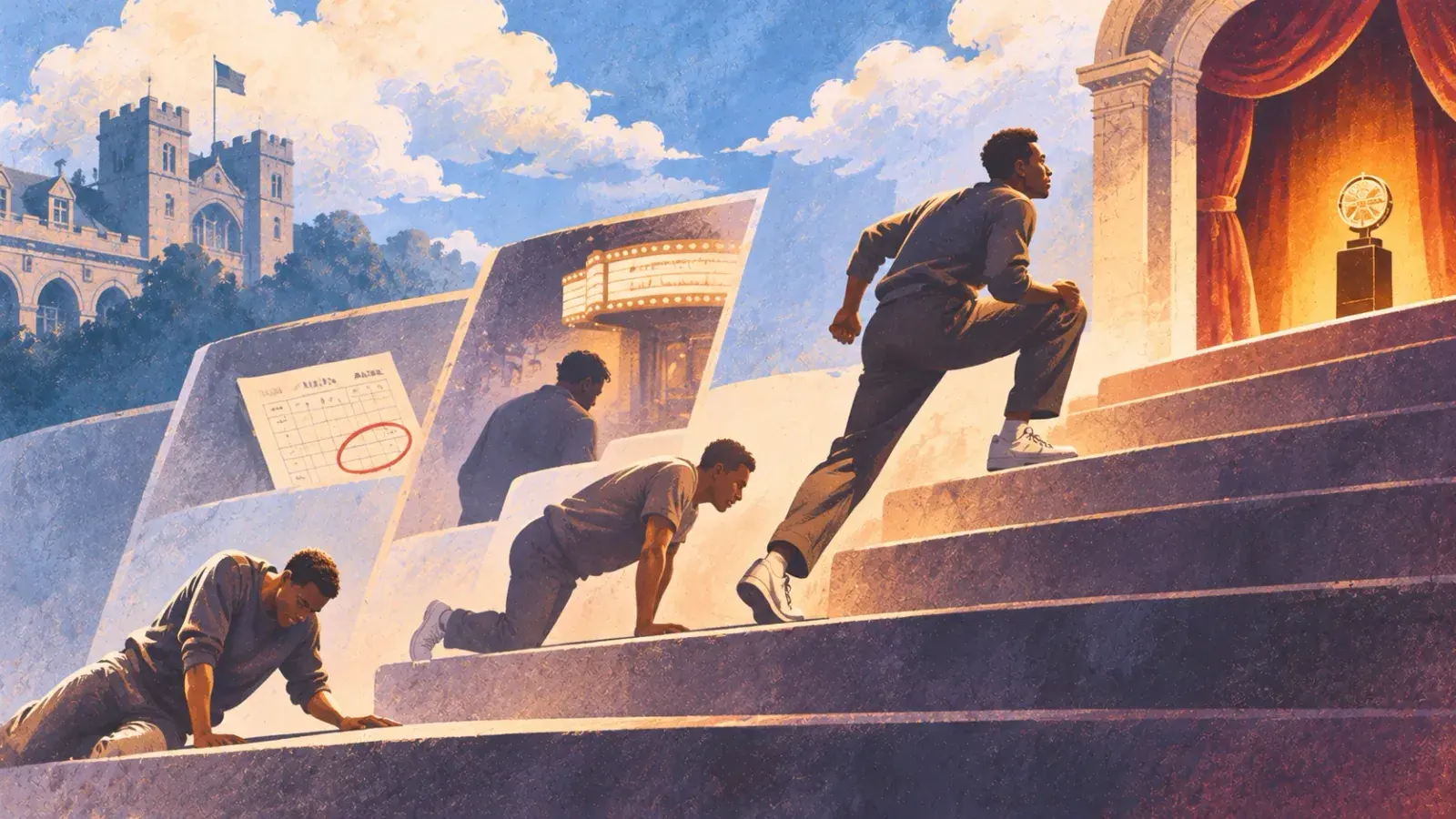
Fall forward is the advice Denzel Washington gave the University of Pennsylvania's class of 2011 in his commencement address. Failure is coming, he told the graduates, so when you fall, fall toward where you were headed instead of back onto a safety net: “At least I figure that way I'll see what I'm about to hit.” The one thing he says he would fall back on is his faith.
The speech is built as three reasons to take risks, each with a story from his own life, told out of order so that it ends with how his career began. Penn's Almanac prints the full text of the address. This post paraphrases it, so keep that text open if you want to compare as you read.
The speech at a glance
| Fact | Detail |
|---|---|
| FactDate | DetailMonday, May 16, 2011 |
| FactPlace | DetailFranklin Field, University of Pennsylvania, Philadelphia |
| FactOccasion | DetailPenn's 255th Commencement |
| FactSpeaker | DetailDenzel Washington, the Academy Award and Tony Award winner, father of a Penn student who had played on its basketball team |
| FactTitle | Detail“Fall Forward,” as printed in Penn's Almanac on May 24, 2011 |
| FactShape | DetailA long warm-up, a thesis about risk, three reasons to take risks, a three-part send-off |
| FactBig idea | DetailFail toward your goal, not back onto a fallback plan |
What fall forward means
The phrase arrives early, as Washington's answer to a piece of advice he says he never understood: have something to fall back on. To him a fallback is a plan to retreat. If he's going to fall, he would rather fall forward, toward the thing he was trying to do, because then he can at least see what's coming.
He illustrates the idea with other people's failures before he gets to his own. Reggie Jackson, he says, struck out about 2,600 times, the most in baseball history, on the way to his home runs. Thomas Edison, in the version of the story Washington tells, ran a thousand failed experiments before the light bulb worked on the 1,001st. Neither example is new. Both are quick, and both make failure sound like part of the record of success rather than its opposite.
Then he says it outright, as a list: three reasons to take risks. First, you will fail at some point, so accept it. Second, if you aren't failing, you aren't trying anything new. Third, failure shows you where you're supposed to go, because the road is rarely straight. Each reason gets a story, and from here on the stories are his own.
In Washington's metaphor, a fallback plan is a plan to retreat. His advice is to fail in the direction you were already going.
How the speech is built
| Part | What happens | What it does |
|---|---|---|
| Part1. Warm-up | What happensThanks, then jokes: his son's playing time, his Yankees cap in Philadelphia, his nerves in front of a crowd he can see, gossip he won't share, campus food trucks and squirrels | What it doesPuts him in the stands as a parent before he steps up as a star |
| Part2. The thesis | What happensNothing worthwhile comes without risk; the safety net rejected; the first fall forward; Reggie Jackson and Edison | What it doesStates the idea, gives it a physical image, and illustrates it twice with famous failures |
| Part3. Reason one: you will fail | What happensA failed Broadway audition, a comparison with waiting in a barbershop, a Tony won in the same theater | What it doesHis own failure, paid off by a callback |
| Part4. Reason two: no failure, no trying | What happensA saying of his wife's, a deathbed scene he credits to Les Brown, the world's needs, a moving truck behind a hearse | What it doesRaises the stakes from one career to what a life leaves behind |
| Part5. Reason three: failure shows the way | What happensFordham and a 1.8 grade point average, a prophecy in his mother's beauty shop, a camp talent show, the film Philadelphia | What it doesTells how his career began, as a chain of failures |
| Part6. Send-off | What happensA three-part mission, a champagne joke, one last fall forward, a blessing | What it doesTurns the idea into instructions and ends on a laugh |
Two things stand out. The warm-up is long: six short passages before the first idea. For a famous actor that's a choice, not padding. Most of the crowd came for their own graduation, and the jokes about his son's playing time, his nerves and the campus squirrels put him on their level before he asks them to listen. In the terms of ethos, pathos and logos, he builds ethos by giving up status.
And the stories run backward. The Tony comes in the first reason; the beauty shop in 1975 comes in the last. The speech starts with where his career got to and ends with how it began, so the final story lands as an origin rather than a boast.
The failure stories he tells
The audition he lost
Early in his career, he says, he auditioned for a Broadway musical, though he can't sing. He sang the Temptations' “Just My Imagination,” and the director stopped him after the first verse; in the acting part of the audition his scene partner overplayed the scene, and he didn't get the role. He kept auditioning and kept failing, and he compares it to a barbershop: wait long enough and you get your haircut. About 30 years later he won a Tony for Fences in the same theater. He adds that this time he didn't have to sing.
This is a failure story told from the far side, and it has a classic shape: a small humiliation as the setup, the same building decades later as the payoff, and a punch line that undercuts the triumph before it can sound like boasting.
The grade point average
The third reason gets the most personal story. Washington started at Fordham as a pre-med student, failed a course whose name he jokes he still can't pronounce, tried pre-law, then journalism. One semester his grade point average was 1.8, and the university politely suggested he take some time off. He was 20.
On March 27, 1975, working in his mother's beauty shop in Mount Vernon, New York, he was approached by an older woman from his mother's church who told him he would travel the world and speak to millions of people. At the time he was worried about getting back into college that fall. That summer, as a counselor at a YMCA camp in Connecticut, he took part in a talent show, and another counselor told him he should think about acting. Back at Fordham he changed his major for the last time.
The date is the device. Naming the day makes a family anecdote precise and vivid, and it leaves the audience to notice that a prediction about speaking to millions is, in a sense, coming true as he speaks. The student with the 1.8 is the one at the microphone in Franklin Field.
Borrowed lines, credited
Washington names his sources, which lets him use big images without claiming them. The darkest image in the speech, which he credits to the motivational speaker Les Brown, is a deathbed surrounded by the ghosts of the ideas and talents you never used, telling you that you will now go to the grave together. The moving truck that never follows a hearse makes the same point about possessions: you can't take anything with you, so spend your time, talent, prayers and money on other people. Both arrive under the second reason, where the speech turns from one career to the world outside it, with mentions of his recent filming in South Africa and of the Middle East, Japan and Philadelphia itself.
Rhetorical devices at a glance
| Device | Where it appears | What it does |
|---|---|---|
| DeviceSelf-deprecating humor | Where it appearsHis nerves, his singing, his grades | What it doesMakes a star approachable and his advice easier to take |
| DeviceA governing image | Where it appearsFalling forward against falling back | What it doesGives an abstract idea a body the audience can picture |
| DeviceEnumeration | Where it appearsThree reasons to take risks; a three-part mission | What it doesTells the crowd where they are in a long speech |
| DeviceExamples from famous lives | Where it appearsReggie Jackson, Edison | What it doesFamiliar illustrations from other people before his own |
| DeviceCallback | Where it appearsThe failed audition and the Tony in the same theater | What it doesTurns an old humiliation into the punch line of a triumph |
| DeviceA precise date | Where it appearsMarch 27, 1975 | What it doesMakes an anecdote vivid and specific |
| DeviceProverb | Where it appearsThe moving truck behind the hearse | What it doesCompresses an argument about giving into one picture |
| DeviceReturn to the opening tone | Where it appearsThe champagne joke at the end | What it doesCloses the frame: he starts and ends on a laugh |
The close repeats the speech's shape in miniature. He gives the graduates a mission in three parts: never be discouraged, never hold back, give everything you have. Then he imagines them falling, after a night of champagne as much as in life, and tells them one last time which way to fall. The joke and the instruction arrive together, the way the speech began.
What to borrow for your own speech
- Find one governing image. “Fall forward” is advice with a body in it. A listener can picture a fall, which is more than they can do with “persevere.”
- Illustrate it with someone else, then with yourself. Two quick famous examples, then your own story at length. The famous ones show that the idea reaches beyond you; yours shows what it meant in one life.
- Tell failure from the far side. Set up the humiliation, pay it off years later, and undercut the payoff with a joke.
- Date a story when the date matters. Use a specific date when it matters and you can verify it. Otherwise a clear place, event or relationship can orient the listener.
- Give the room a job at the end. Three short instructions are easier to carry out of a stadium than a summary. The guide on how to end a speech covers other closings.
Borrow the framing with care. “Fall forward” is one persuasive way to talk about risk to a stadium of graduates. It isn't an argument against keeping a practical fallback plan, and your audience may need to hear about both.
Every cook learns one rule before any other: taste as you go. Don't wait for the plate to tell you the sauce is wrong. My first week at Marchetti's on Grand Avenue, I sent out forty bowls of risotto without tasting the stock, and every bowl came back. The owner didn't fire me. She handed me a spoon and said she'd rather I burned my tongue than her reputation.
So taste as you go. Taste your first job before you sign a lease near it. Taste a partnership before you put your name on the door. And when something comes back to the kitchen, taste it yourself before you decide whose fault it was.
One image carries the whole passage: a story that earns it, then three uses that carry it from the kitchen into the rest of the graduates' lives.
If you draft a speech like this in Strokes, ask the Strokes Assistant whether each reason you give has a story behind it, and whether every callback you set up gets paid off.
For a commencement address built on three stories of setback told in a quieter voice, read our analysis of Steve Jobs's Stanford speech, and for ten more compared by structure, commencement speech examples. If you are the student speaker, start with graduation speech examples.
Frequently asked questions
When and where did Denzel Washington give the Fall Forward speech?
On Monday, May 16, 2011, at the University of Pennsylvania's 255th Commencement, held at Franklin Field in Philadelphia. Washington, whose son was a Penn student, opened with jokes about his son's basketball playing time. Penn's Almanac printed the address under the title “Fall Forward” in its issue of May 24, 2011.
Is “Put God first” from the Fall Forward speech?
No. The phrase does not appear in the text Penn printed. Faith does come up in the 2011 speech, as the one thing Washington says he would fall back on, and he closes with a blessing. If a video credits a line to this speech, check it against Penn's printed text before you quote it.
What is Denzel Washington's U-Haul quote?
In the Penn speech he says you will never see a moving truck following a hearse, his way of saying that you can't take anything with you when you die. He uses the image to ask the graduates what they will do with what they have, and to urge them to spend their time, talent, prayers and money on other people.
Who is the Les Brown that Denzel Washington mentions?
Les Brown is an American motivational speaker. Washington credits him with the speech's darkest image: a person on their deathbed surrounded by the ghosts of the ideas and talents they never used, which tell them they will now go to the grave together. Washington uses it for his second reason to take risks, that if you aren't failing, you aren't trying.