When to use it
- Solo and narrated episodes, where most of the words are read from the page
- Interview episodes: the guest introduction and the questions in order, with the set pieces written out
- Co-hosted shows that need a run sheet saying who leads each segment
- Sponsored episodes, where every ad read has to fit its slot and cover the sponsor's points
- Handing an episode to an editor, with every clip logged by its first and last words
How to use this template
- Write the promise, then the run sheet
Finish the sentence next to Promise before you touch anything else. It is the episode's logline, and both the intro and the outro will say it. Then fill in the run sheet: a start time for every part, and whether it is read word for word or spoken from an outline. Use start times, not only lengths. In the studio, one glance at the clock against the run sheet tells you whether you're early or late.
- Script the set pieces word for word
Write the intro, every bridge, every ad read and the outro in full, even on a loose conversation show. They're short, they come back every week, and they're where hosts ramble when nothing is on the page. Keep the parts that never change, such as the show line and the credits, in a standing copy you paste in each week.
- Fill the segments for your format
Give each segment one job and a lead. A solo host writes the segments out. An interviewer fills the question list and the likely follow-ups. Co-hosts name who carries each part. The table below shows what to keep and what to cut. Add an "If running long" line to every segment now, so you don't decide what to drop with the microphone on.
- Log the tape, read it aloud, then cut
Fill the cue log from the raw recordings: the file, the timecode, the first and last words, the length. Then read the whole script aloud with a timer. If it runs long, cut a point or a question rather than planning to talk faster. The guide on how to write a podcast script covers drafting for the ear in detail.
Fit it to your show's format
The template holds everything an episode might need, and few shows use all of it. Decide by format what gets written in full and what you delete.
| Format | Word for word | From an outline | Change in the template |
|---|---|---|---|
| FormatSolo | Word for wordIntro, segments, ads, outro | From an outlineAsides and stories you know well | Change in the templateDelete the interview questions |
| FormatInterview | Word for wordIntro, guest intro, first question, ads, outro | From an outlineThe conversation | Change in the templateAdd follow-ups under each question |
| FormatCo-hosted | Word for wordCold open, intro, ads, outro | From an outlineThe segments | Change in the templateFill in Leads, and agree who reads the ads |
| FormatNarrative or documentary | Word for wordAll narration | From an outlineNothing | Change in the templateThe cue log becomes the editor's map |
| FormatVideo podcast | Word for wordAs for the audio format | From an outlineAs for the audio format | Change in the templateAdd what the camera shows |
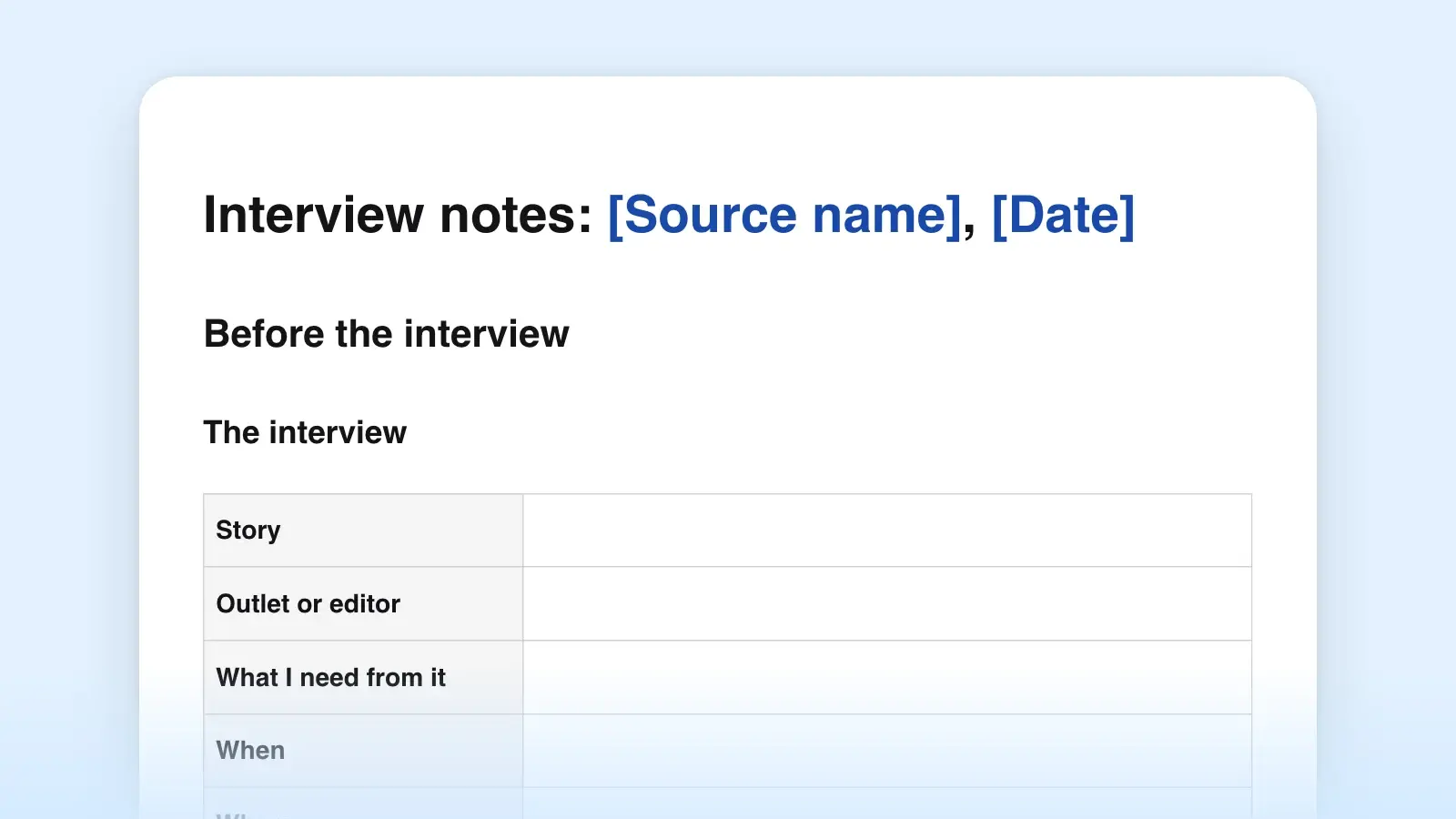
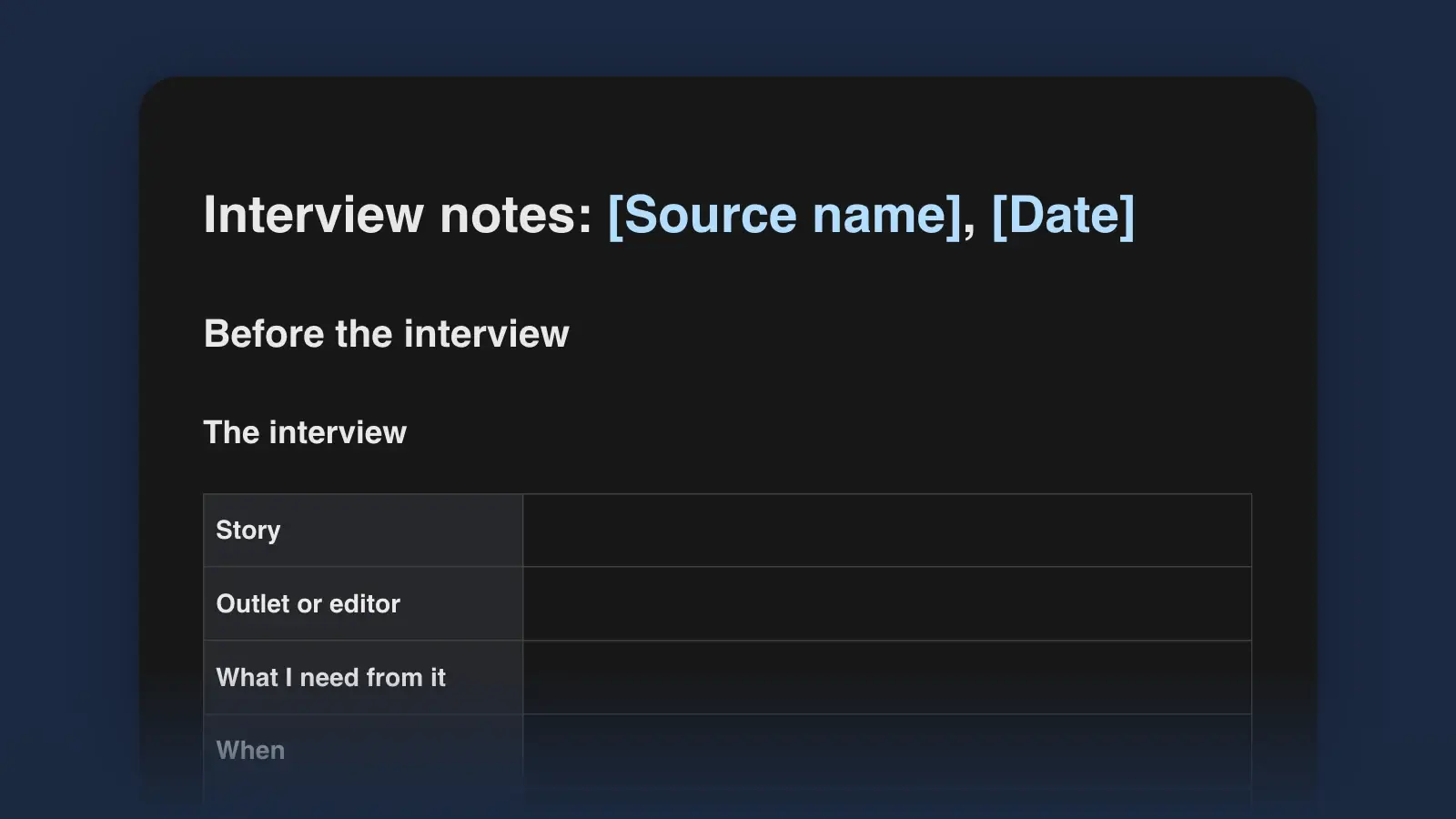
For a video podcast with B-roll or screen recordings, the two-column A/V script template puts what viewers see beside what they hear. If you book guests, do your research in interview notes first and carry only the questions into the script.
How long each part runs
The National Center for Voice and Speech puts average conversational American English at about 150 words a minute. Hosts vary a lot, so plan on 130 to 150 and replace that with your own number after one timed read. These are the lengths to aim for:
| Part | Length | Words at 130–150 a minute |
|---|---|---|
| PartCold open | LengthUnder 0:30 | Words at 130–150 a minuteUp to about 75 |
| PartTheme and intro | Length0:30–1:00 | Words at 130–150 a minute65–150 |
| PartPre-roll or post-roll ad | Length0:15–0:30 | Words at 130–150 a minute35–75 |
| PartMid-roll ad | LengthAbout 1:00 | Words at 130–150 a minute130–150 |
| PartOutro and credits | Length0:30–1:00 | Words at 130–150 a minute65–150 |
| Part20-minute episode, all scripted | Length20:00 | Words at 130–150 a minute2,600–3,000 |
Interview episodes don't scale this way. The guest supplies most of the words, so the script stays at a few pages of set pieces and questions whether the conversation runs twenty minutes or sixty. Put the time into the run sheet instead, segment by segment.
Writing the ad reads
There are two kinds of podcast ad, and they change what goes in the script. A host-read ad is recorded into the episode, so it lives in your script word for word. A dynamically inserted ad is added by the hosting platform when the episode is downloaded or streamed, and it can change later, even in old episodes. For those, the script only marks the break, and your back-from-break line has to work whatever ad played before it. "So. Forty pages, gone in a weekend" works. "Great product, right?" doesn't.
Sponsors send either talking points or a finished script, often with a promo code and a web address. Turn talking points into your own sentences, time the read at the slot length and send it back for approval if the sponsor asks. Say that it's an ad, out loud, at the start. In the US, the FTC's endorsement guidance puts it plainly: "If the representation is made audibly, the disclosure should be made at least audibly." For videos, it advises putting the disclosure at the start rather than the end, and the same logic holds for an ad read. Rules change and differ by country, so check the current guidance where you publish.
A read that works
- “This episode is sponsored by…” in the first line
- One true detail from your own use
- The code and the address said twice, slowly
- Timed to the slot before recording
A read that doesn't
- The disclosure at the end, or nowhere
- The sponsor's feature list, read aloud
- A web address said once, fast
- Ad-libbed, and running ninety seconds
Example: a filled-in interview episode
Here is the template filled in for a 24-minute interview episode. The show is The Second Draft, an interview show about revision. In episode 14, host Leah Brandt talks to the novelist Tomás Ferro, who cut the first three chapters of his third novel after his editor had already read them.
| Starts | Part | Length | Written as |
|---|---|---|---|
| Starts0:00 | PartCold open: Tomás on deleting chapter one | Length0:25 | Written asTape |
| Starts0:25 | PartTheme and intro | Length0:45 | Written asWord for word |
| Starts1:10 | PartSegment 1: The draft that wouldn't start | Length7:30 | Written asQuestions 1–3 |
| Starts8:40 | PartMid-roll: Fernlow Notebooks | Length1:00 | Written asWord for word |
| Starts9:40 | PartSegment 2: Forty pages in a weekend | Length9:00 | Written asQuestions 4–6 and a reading |
| Starts18:40 | PartSegment 3: A test for your own opening | Length4:30 | Written asQuestions 7–8 |
| Starts23:10 | PartOutro and credits | Length0:50 | Written asWord for word |
HOST: This is The Second Draft, the show about what happens after the first one. I'm Leah Brandt. / My guest today is the novelist Tomás Ferro. His third book went to his editor with forty pages that aren't in it anymore: the first three chapters. // By the end of this episode, you'll know why he cut them, how he decided, and one test you can run on the opening of your own draft. //
MUSIC: Theme out under the last line
HOST: This episode is sponsored by Fernlow Notebooks. / Fernlow makes hand-sewn notebooks that lie flat on the desk, so you can write with one hand and keep the other on a coffee cup. / I've been drafting this season's interview questions in one since June, and it's the first notebook in years I've filled instead of abandoning at page thirty. // Every one is stitched by hand in small batches, and the paper takes a fountain pen without the ink coming through the other side. They come in three sizes and four cloth colors, and if a binding ever comes loose, they repair it for free. / Use the Fernlow link in the show notes and the code DRAFT for fifteen percent off your first order. / That's Fernlow Notebooks, code DRAFT. //
HOST, back from the break: So. Forty pages, gone in a weekend. Tomás, walk me through it.
- Job: hear exactly how he made the cut, so the listener can picture doing it.
- Q4: What did you do first, that Saturday morning? Likely follow-up: did you print it, or cut on screen?
- Q5: What survived from the forty pages? Likely follow-up: where did it end up?
- TAPE: Tomás reading the old first page, 0:40 · IN “The ferry was late again…” · OUT “…and nobody on the dock looked up.”
- Q6: Hearing it now, what do you notice?
- If running long: skip the follow-up to Q5.
- Bridge, word for word: “That's how he cut it. Next, how to tell whether your own opening has the same problem.”
HOST: Tomás cut forty pages, and now his book starts where the story does. / That's the test: find the first page where something changes, and ask whether everything before it is there for you or for the reader. // Try it on your own opening this week, and if you cut something, write and tell us what. The address is in the show notes. / Next time: a poet who revised one line for eleven years. // The Second Draft is hosted by me, Leah Brandt, and edited by Sam Okoye. Thanks for listening.
MUSIC: Theme up, then out
Read the intro and the outro one after the other and you can hear the episode's shape: the intro promises a reason, a method and a test, and the outro delivers the test in two sentences. The ad read announces itself in its first line. The back-from-break line restarts the story instead of commenting on the ad, and the cold open does the work a greeting can't, dropping the listener in medias res, at the moment chapter one is deleted.
Tips
- Write the cold open last. You won't know the episode's best twenty seconds until the interview is recorded and logged.
- Decide the cuts in advance. Every segment's "If running long" line turns a panicked decision into a planned one. It's also how a 30-minute episode survives a guest who arrives ten minutes late.
- Name a lead for every part. On co-hosted shows, two people who both think they're reading the ad will talk over each other, and two who both think the other one is will leave a silence.
- Fill the show notes while the script is open. The links, credits and sponsor code are already on the page. Only the timestamps need updating after the edit.
- Keep last week's script. Your next intro, outro and ad read start as copies of this week's, and the cue log is proof of which clips you've already used.
Frequently asked questions
What should a podcast script include?
A one-sentence promise, a run sheet with start times, the intro, each segment with its cues and a bridge, the ad reads, the outro, and a log of every clip and music cue with its first and last words. Show notes and a pronunciation list save time after the recording.
How long is a podcast script?
A fully scripted episode runs at about 130 to 150 words a minute, so 20 minutes is roughly 2,600 to 3,000 words once music and tape are taken out. An interview script is much shorter: the set pieces and the questions fit on a few pages however long the conversation runs.
Do I need a script for an interview podcast?
You need the parts that go wrong without one: the intro, the guest introduction, the first question, the ad reads and the outro. The conversation itself works best from an ordered question list with likely follow-ups, so you can listen instead of reading.
How do co-hosts share one script?
Put a name in the Leads column for every part, label each word-for-word line with who says it, and agree who reads each ad. Do one read-through together before recording so each of you hears where the other comes in.