When to use it
- News and feature interviews, in person, by phone or on video
- Profiles, where scene and detail matter as much as the quotes
- Book research: interviewing experts, witnesses or family for nonfiction and memoir
- Podcast and radio interviews you will later cut into a script
- Sources who speak on background or without their name, when the terms must be on paper
How to use this template
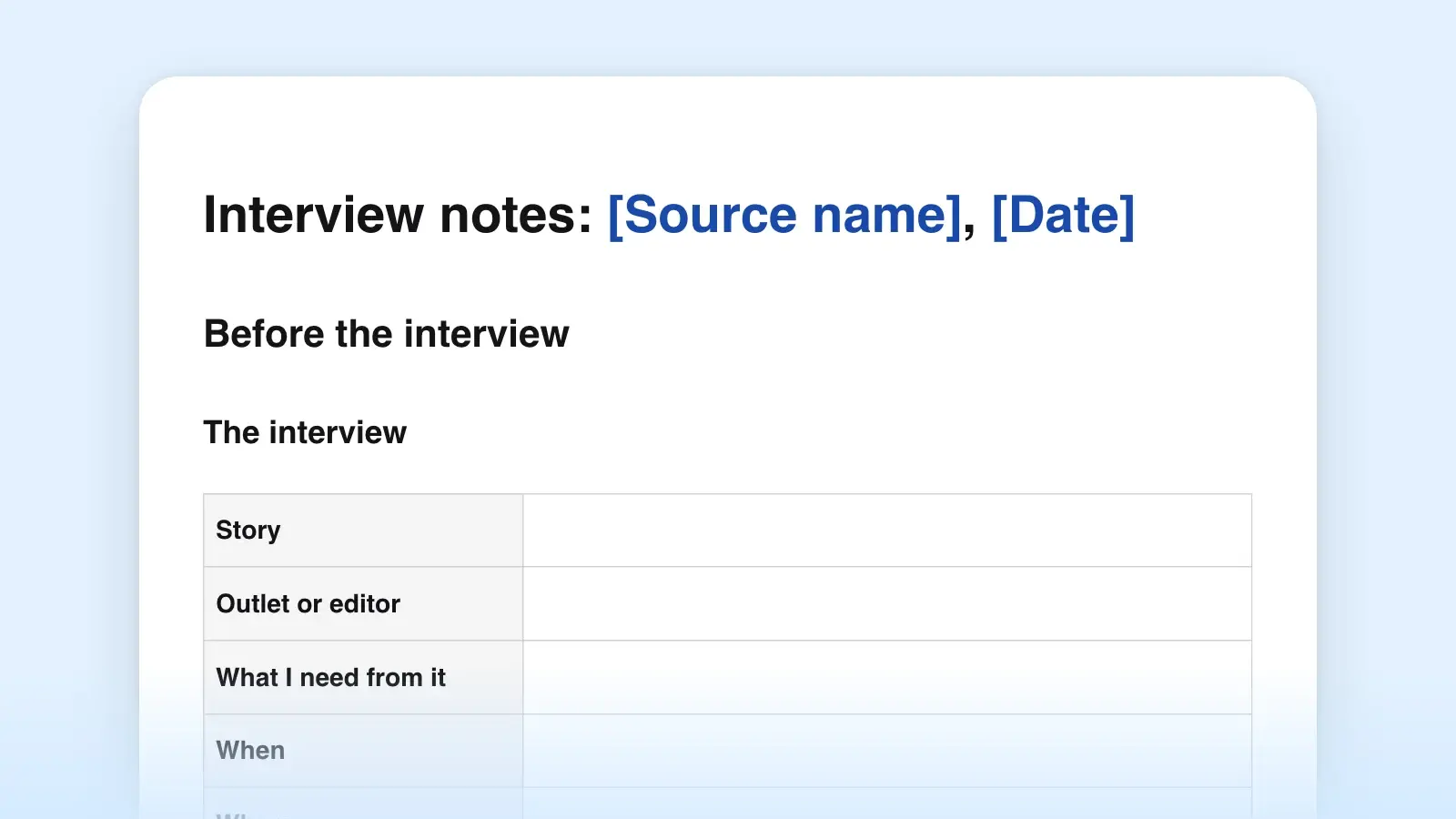
- Fill in the top half before you call
Complete the source details and write the one question only this person can answer. If you can't fill in "Why them", you may have the wrong source, or the wrong question. Keep the list short: the follow-ups you can't predict are usually the better ones.
- Settle the ground rules first
Say who you are and what the story is, ask to record, and agree on attribution before the source tells you anything. Write the terms in plain words, not only a label. "Describe me as a nurse on the night shift, no name" is an agreement. "On background" is a phrase two people can hear differently.
- Timestamp as you go
Glance at the recorder and write the time beside anything you might quote or need to check. After an hour-long interview, 14:05 in the margin is the difference between a ten-second search and replaying the whole file.
- Clean up within the hour
Copy the quotes into the table word for word from the recording, and list every number, date and name under "Facts to check". Write the scene details while you still remember them, then send the thank-you with a line saying you may call back.
Ground rules, in plain words
Attribution terms are the part of interview notes that matters most later, and the easiest part to leave in your head. The labels are not standard. Newsrooms and countries define them differently, and "deep background" in particular means different things to different editors. Treat the table as common US usage, then write down what you and the source actually agreed.
| Term | What you can publish | How the source appears |
|---|---|---|
| TermOn the record | What you can publishEverything, quoted directly | How the source appearsBy name and title |
| TermNot for attribution | What you can publishDirect quotes | How the source appearsA general description you agree on |
| TermOn background | What you can publishThe information, usually not direct quotes | How the source appearsA general description |
| TermDeep background | What you can publishOften nothing: it guides your reporting. Some editors allow use with no attribution | How the source appearsNot at all |
| TermOff the record | What you can publishNothing. Don't publish it or repeat it | How the source appearsNot at all |
Two habits prevent most disputes. Agree on terms before the information is given. If a source asks afterward to take something back, that is a negotiation, and your editor should hear about it. And when a source says "off the record", ask what they mean. Plenty of people mean "don't use my name", which is a different deal.
What good interview notes look like
A fictional example: part of a reporter's notes from an interview with a bakery owner about closing on Sundays. Note the times, the quotation marks around exact words only, and the flag on a number that still needs checking.
Source: Marisol Reyes, owner, Reyes Bakery (Marisol with an s, spelled back). On the record. Consent to record at 00:12.
08:40 Q: Why stop opening Sundays? Tried for months to hire weekend bakers; no applicants for the 4 a.m. shift.
14:05 ★ "I can make bread six days a week, or bad bread seven."
16:30 Staff down from nine to five since 2024? CHECK: payroll summary she offered to email.
21:30 Follow-up: call Dan Okafor, head baker (number from Marisol). She asked to see the story first; told her I'll read back the facts about her, not the draft.
When you write the piece, the starred quote and the scene notes compete for the opening, and the checked numbers hold up the nut graf. The guide to writing a news article picks up from there.
Habits that keep notes usable
- Quotation marks mean exact words. If your notes say roughly what they meant, it is a paraphrase, and it stays one in the story.
- Mark what you're unsure of. A question mark beside a figure you may have misheard costs nothing. A wrong figure in print costs a correction.
- Ask the last two questions every time. "What didn't I ask?" often turns up the detail you didn't know existed, and "Who else should I talk to?" hands you the next source.
- Keep one document per source. A story with eight sources gets eight notes files in one folder, each with its own terms attached. In Strokes, a project per story keeps them together as files on your own machine.
Frequently asked questions
Should I record the interview or take notes by hand?
Both, when the law and the source allow it. The recording keeps the exact words. The notes tell you where to look in it and capture what audio misses, such as the room and the source's face when they answered. If a recorder would make a nervous source clam up, take notes and read the key quotes back before you leave.
Can a source go off the record after saying something?
Only if you agree. Terms are normally set before the information is given, but requests after the fact are common, and how to handle one is a call for you and your editor. Either way, note the request and the time under Ground rules.
Do I have to show the source my notes or the story before it runs?
Many newsrooms do not let sources review stories or approve quotes, though reporters often read back facts or technical passages to check accuracy. Follow your outlet's policy, and tell the source in advance what you will and won't share.
Can I use this template for job interviews?
Not as it is. This template is built for reporting, where the goal is accurate quotes and a source you can call back. For hiring, use a candidate scorecard that rates each answer against the role's requirements.