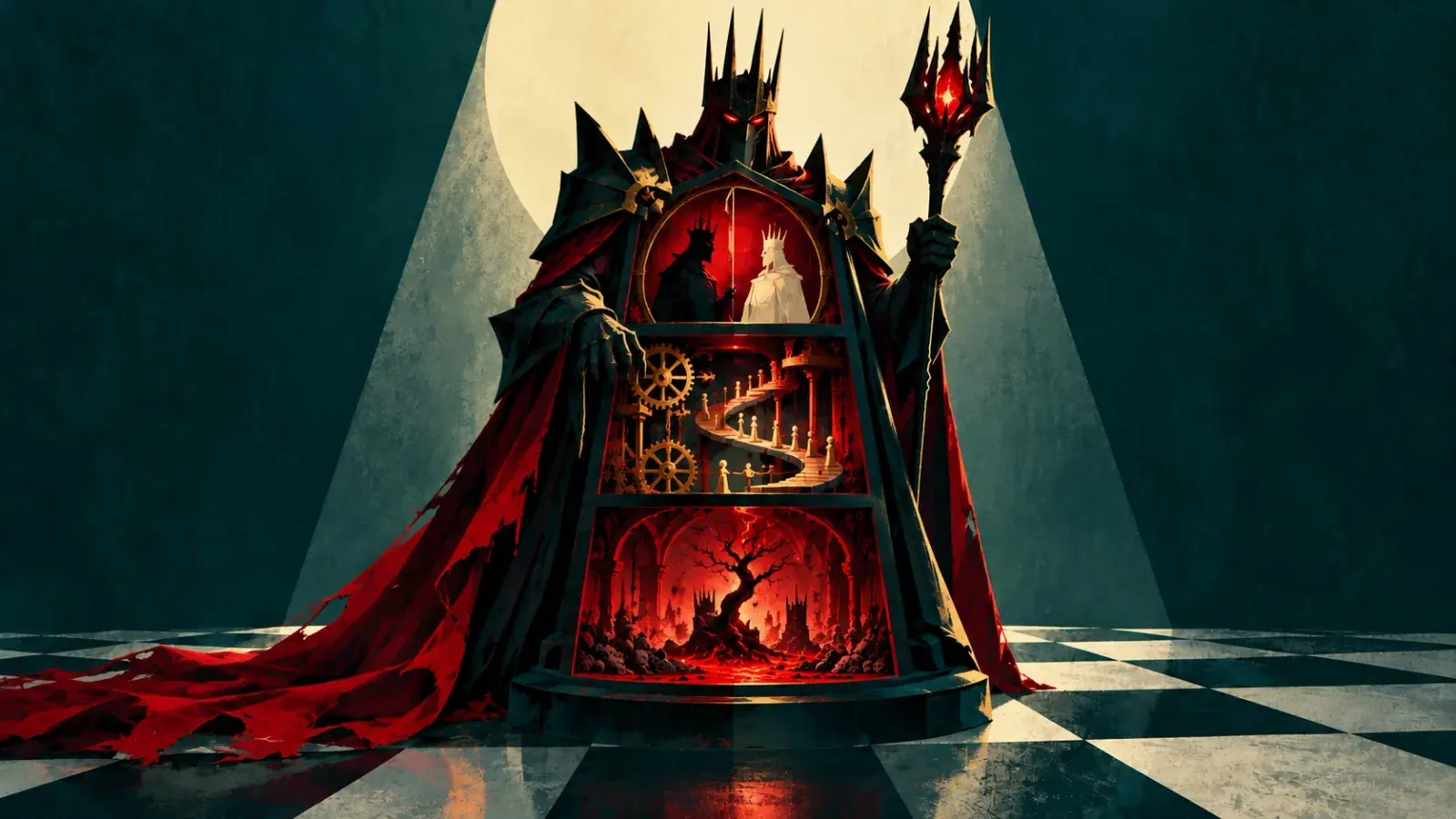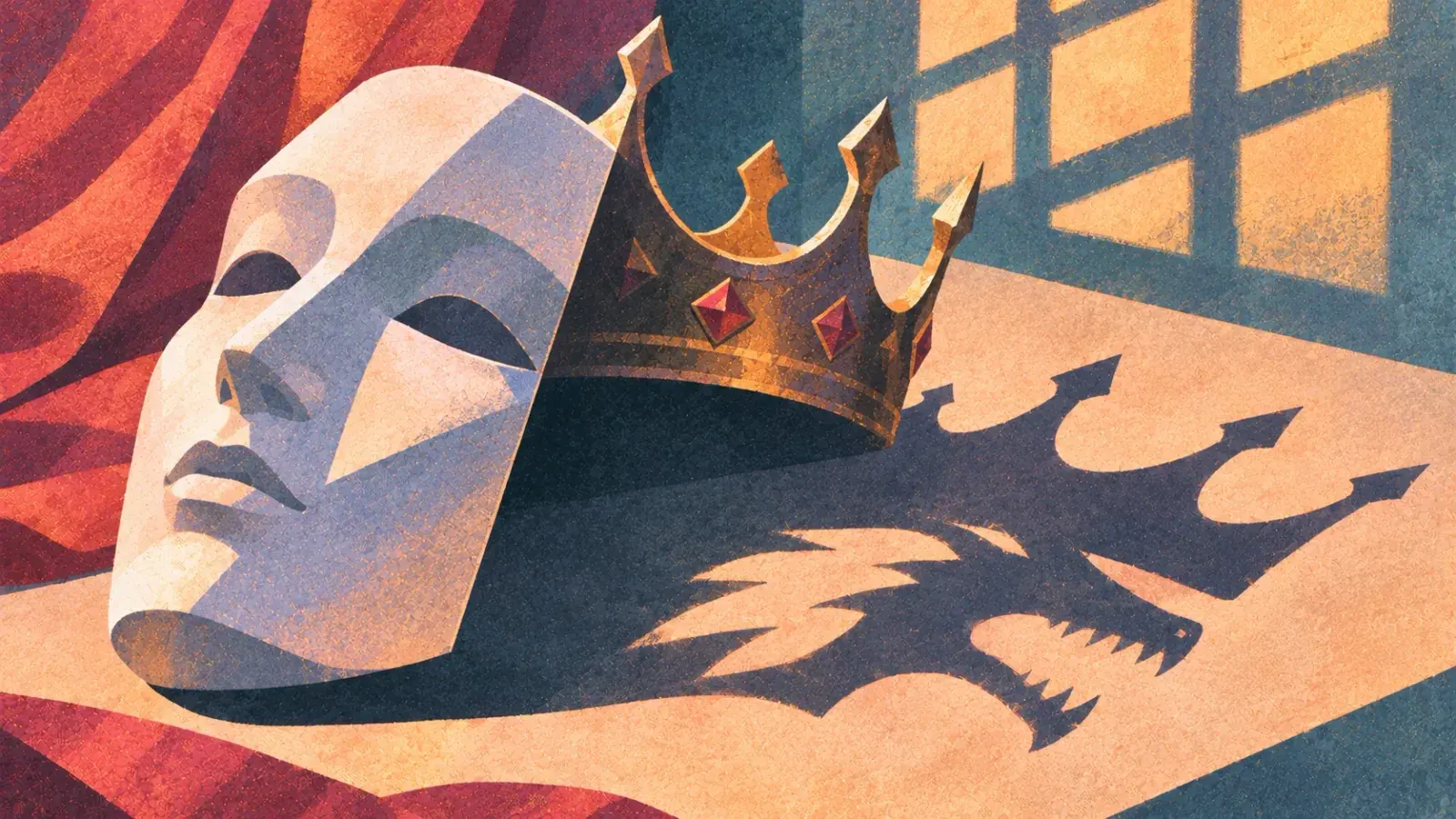
Villain characteristics are the qualities that make an opponent believable and dangerous: a motive the villain would defend, a goal you can stage, the competence to win, a presence the reader feels even when the villain is offstage, and a code, one line they won't cross until the story pushes them. The memorable villains add a personal tie to the hero, a weakness of their own making, and a face and voice that no one else in the book has. The 50 villain ideas below are sorted by motive, because motive is the part of a villain that survives a change of genre.
The ideas are premises, not finished characters: each gives you the villain, what they want, why it seems right to them and a choice that tests it, tagged with the genre it was imagined for. This page is about villains, the opponents with a mind and a motive; a rival with good reasons or a storm is a different kind of antagonist. To build a villain from scratch, step by step, see how to write a villain readers believe in.
| Section | What drives them | Ideas |
|---|---|---|
| SectionEight villain characteristics | What drives themWhat every villain below needs | Ideas— |
| SectionOne villain, three genres | What drives themHow to move an idea into your genre | Ideas— |
| SectionVillains who protect someone | What drives themLove, family, loyalty | Ideas1–7 |
| SectionVillains who want justice | What drives themAn old injury, revenge | Ideas8–14 |
| SectionVillains who keep order | What drives themControl, law, tradition | Ideas15–21 |
| SectionVillains with a cause | What drives themFaith, ideology, a better world | Ideas22–28 |
| SectionVillains who want more | What drives themMoney, status, power | Ideas29–36 |
| SectionVillains who want to survive | What drives themFear, hunger, appetite | Ideas37–43 |
| SectionVillains who want to be seen | What drives themEnvy, recognition, possessive love | Ideas44–50 |
Eight characteristics of a good villain
A villain needs what any major character needs, plus a few things only an opponent does. The examples come from classic novels and plays you can read free online.
- A motive they would defend. The villain thinks they are right, or at least owed. Edmund, the illegitimate son in King Lear (c. 1606), opens his first soliloquy with a grievance, “Why bastard? Wherefore base?”, and closes it with a plan: “Legitimate Edgar, I must have your land.” Every step of his reasoning is clear, which is what makes him frightening. If your villain can't argue their case for a paragraph, they aren't finished.
- A goal you can stage. Power can't be won or lost in a scene. A ship's captaincy can. In Alexandre Dumas's The Count of Monte Cristo (1844–46), three men betray Edmond Dantès, who is arrested at his own wedding feast, and each wants something you could photograph. Danglars wants the captaincy Dantès is about to be given, Fernand wants Dantès's fiancée, Mercédès, and the prosecutor Villefort wants to bury a letter addressed to his own father.
- Competence the reader has seen. A villain is as frightening as the evidence that they can win. In Dumas's The Three Musketeers (1844), Milady de Winter is locked in an English castle under the watch of John Felton, a Puritan officer who has been warned against her. She turns him into her rescuer, and then into the Duke of Buckingham's assassin.
- Presence when they're offstage. The plan should keep moving in chapters the villain doesn't appear in. Madame Defarge spends much of A Tale of Two Cities (1859) knitting in her husband's wine shop, and the knitting is a register of the people the revolution will kill. “Knitted, in her own stitches and her own symbols, it will always be as plain to her as the sun,” her husband explains (Book 2, Chapter 15). After that line, every scene with needles in it is a threat.
- A code. A line the villain won't cross shows that their logic has edges, and gives the climax a line to push them over. Captain Hook in J. M. Barrie's Peter and Wendy (1911) is so obsessed with good form that he worries whether it is “bad form to think about good form.” Beaten at last, he wants only to see Peter show bad form, and when Peter kicks him, he gets it: “‘Bad form,’ he cried jeeringly, and went content to the crocodile.”
- A tie to the hero. Strangers make weak enemies. Ralph Nickleby, the moneylender in Charles Dickens's Nicholas Nickleby (1838–39), is the hero's own uncle. The cruelty he aims at Nicholas's friend Smike turns out, near the end, to have been aimed at his own son. The closer the tie, the more every blow costs both sides.
- A weakness of their own making. The villain should lose because of who they are, not because of luck. Uriah Heep in David Copperfield (1850) hires the debt-ridden Mr. Micawber as his clerk because a desperate man seems easy to own, and Micawber is the one who exposes Heep's frauds (Chapter 52). Heep's contempt for other people is how he rises and how he falls.
- A face and a voice of their own. Count Fosco in Wilkie Collins's The Woman in White (1859–60) is “immensely fat,” impeccably polite and devoted to his pets, a cockatoo, two canaries and “a whole family of white mice” that crawl in and out of his waistcoat. He reads Marian Halcombe's private diary while she lies ill with fever, then adds a courteous postscript, signed: “The illness of our excellent Miss Halcombe has afforded me the opportunity of enjoying an unexpected intellectual pleasure.” No one else in the book could have written that sentence.
One villain, three genres
Each idea is tagged with the genre it started in, not the one it has to stay in. Here is idea 4 moved through three settings, to show what has to stay fixed when everything else moves.
Science fiction. Idea 4 as written: a chief engineer disables the evacuation ship so a failing Mars settlement can't be split up by work grade.
Fantasy. The castellan of a besieged hill town burns the only bridge the night before the duke's evacuation, because the duke's plan takes the nobles out by road and leaves the tanners' quarter to the enemy.
Contemporary. The clerk of a Gulf Coast fishing town loses the paperwork for a federal flood buyout one application at a time, because the buyout pays homeowners, not renters, and would scatter the families she grew up with across three states.
What stays fixed is the motive, in three parts. The want: keep the community together. The reason: the official rescue sorts people by their value to someone else. The test: in every version the sabotage puts at risk the people it is meant to keep together, so the climax can ask whether the villain will keep going. What moves is everything else: the century, the place and the tool, from docking clamps to a bridge to a stack of forms. The pace moves too. A lost form harms people more slowly than a disabled ship, so the clerk may hold a reader's sympathy longer than the engineer.
Villains who protect someone
The most sympathetic motive, and often the most dangerous: people will do for a child or a home what they would never do for themselves.
- The transplant coordinator. Ines Halvorsen, a transplant coordinator in Duluth, alters one patient's test results to move her son up the liver list before winter. To her, the list already decides who deserves to live, and she has made only one more decision. The test: the patient she pushed down the list is nineteen and won't last the winter either. Medical thriller.
- The queen regent. The queen regent of Varr hides her stepson, the true heir, in a mountain monastery and announces his death so that her own son can be crowned. To her, the boy's coronation would hand the army to the family that started the last civil war. The test: the monks send word that the boy has a fever only the court physician can treat. Fantasy.
- The councilman. Dale Fontenot, a parish councilman in Louisiana, frames a drifter for the hit-and-run his daughter committed on the levee road. To him, the drifter was headed for prison anyway, and one bad night shouldn't cost a seventeen-year-old her whole life. The test: his daughter wants to turn herself in, and only he can talk her out of it. Southern crime.
- The colony engineer. Funmi Oyelaran, chief engineer of a failing settlement on Mars, disables the evacuation ship's docking clamps so no one can leave. To her, Earth's evacuation plan splits families by work grade, and she has read the manifests. The test: a sick child can only be treated on the ship she has grounded. Science fiction.
- The older sister. Joanna Pryce quietly wrecks every relationship her younger sister starts: a forwarded email here, an anonymous tip there. To her, their mother lost the house and her health to a charming man, and Joanna promised at the funeral that it wouldn't happen twice. The test: her sister finally meets a man Joanna can find nothing wrong with. Romance, women's fiction.
- The silent priest. Father Anselm, priest of an Alpine village in 1951, keeps a boy's confession to the barn fire secret while a farmhand stands trial for it. To him, the seal of confession is absolute, and the man who died in the fire beat the boy's mother for years. The test: the farmhand's appeal fails, and the boy comes back to the confessional to ask what he should do. Historical, literary.
- The farm widow. Hattie Marsh, a widow on a Vermont hill farm, leaves the cellar door unbolted every March for the thing under the house, and makes sure a hired stranger sleeps nearest to it. To her, the one spring she bolted the door, it took her eldest. The test: this year's hired hand arrives with his small daughter. Horror.
Villains who want justice
These villains were wronged first. The injury is real. The response is out of all proportion, and they can no longer tell the difference.
- The drowned valley. Emmett Varga was nine when his village was flooded for a reservoir in 1963. Now he plans to breach the dam on the centennial weekend of the town below it. To him, the state took a living place with a signature, and the town has spent sixty years celebrating in its shadow. The test: the only other survivor of the village lives below the dam now, and asks him to stop. Thriller.
- The cartographer. Corvin Tesh, the king's cartographer, redraws the border maps so the next war begins on the duke's land. To him, the duke had his brother blinded on a poaching charge, and maps have always been weapons. He is only the first to admit it. The test: the first village the war will reach is the one his brother lives in. Fantasy.
- The sister-in-law. Claire Aldous marries her late sister's widower so she can take his life apart from the inside. To her, he let her sister die by refusing to drive to the hospital that night, and no court will ever call that a crime. The test: she finds her sister's diary, and the decision not to drive that night was her sister's own. Domestic suspense.
- The written-off miner. Rosa Tamm, left for dead on an asteroid when the mining company wrote off her crew, returns nineteen years later as the new owner's head of security. To her, the board valued six lives at less than the fuel to bring them home, and she has their signatures. The test: the board member who signed the order is on a ship in distress, and Rosa controls the rescue. Science fiction.
- The speakeasy widow. Della Kirwan, whose husband was shot in a 1926 raid on his Chicago speakeasy, uses his ledgers to blackmail the aldermen who ordered it. To her, the city took his life and kept drinking his gin, and she is only collecting the bill. The test: the alderman who ordered the raid offers her the name of the officer who fired, if she burns the ledgers. Historical crime.
- The transfer student. Priya Sethi transfers to the school where the boy who leaked her medical records two years ago is now swim team captain, and sets out to cost him his scholarship. To her, his school protected him then, so his school is fair game now. The test: she learns he was pushed into the leak by an older boy who has already graduated. Young adult.
- The medical examiner. Dr. Adaeze Okafor, the county medical examiner, rules three deaths accidental because she arranged them herself: each of the dead helped bury her sister's murder case in 1998. To her, the law had a quarter of a century to punish them and chose not to. The test: the last name on her list belongs to a clerk who was nineteen in 1998 and did what she was told. Mystery.
Villains who keep order
They believe that without them everything falls apart, and sometimes they're right. Their villainy is the price they've decided other people should pay.
- The archmagister. Ilse Brandt, head of the mages' guild, has every child with wild magic found and collared before the age of twelve. To her, one untrained child burned a city of forty thousand in her grandmother's time, and the collar only dulls a gift that would otherwise kill. The test: her own granddaughter shows the wild gift at eleven. Fantasy.
- The ship's captain. Captain Odile Marchetti of a generation ship hides the news that the destination world can't support life, and plans for her crew's grandchildren to find out. To her, the last time the ship heard bad news, riots killed a third of the crew. The test: the long-range scans find a world that could support them, and turning toward it means telling everyone why. Science fiction.
- The rancher. Josu Etxeberria, eighty, head of a Basque sheep-ranching family in Idaho, cuts his granddaughter out of the land when she marries a developer's son. To him, every family in the valley that split its land lost it to the bank within a generation. The test: the bank calls in the ranch's loan, and the developer's son is the only one offering to pay it. Family saga.
- The retired chief. Walt Brennan, a retired police chief, works to keep a 1987 murder conviction standing after a podcast turns up the real killer. To him, the man in prison was guilty of three things nobody could prove, and reopening the case would ruin the young officer who made the arrest: his son. The test: his son hears the podcast and wants to reopen the case himself. Mystery.
- The committee chair. Penelope Haig, who has chaired her Cotswold village's best-kept-village committee for eleven years, sends anonymous letters, poisons a hedge and finally does worse to stop a newcomer's garden center opening on the green. To her, the village is the last place in England that still looks like itself. The test: the parish records show a market garden stood on the green for two centuries, until her own father had it grassed over. Cozy mystery.
- The levee engineer. Maren Voss runs the levees of a sinking delta city and decides each spring which district to flood to save the rest. To her, someone has to choose, and a district that floods every year can be evacuated, while a city that floods once is gone. The test: this spring the numbers say the district to flood is her own. Climate fiction.
- The store's matriarch. Celia Ashworth, who owns the Charleston department store her great-grandfather founded, sets out to break her son's engagement to the woman organizing the store's union. To her, union drives closed every other family store downtown, and the store is the family. The test: the store can only survive a bad year if the staff agree to wait for raises, and only the fiancée can ask them. Romance.
Villains with a cause
True believers in a faith, a theory or a better world. They're the hardest villains to argue with, because they have already argued with themselves and won.
- The oceanographer. Dr. Halima Nour seeds the South Atlantic with an engineered algae to cool the planet, without anyone's permission. To her, the treaty process will take twenty years the reefs don't have, and every delay is a decision too. The test: her models show the bloom will wipe out a West African fishery her team never surveyed. Techno-thriller.
- The necromancer. The Gray Steward of Holm raises the dead to work the blighted fields through a famine winter, whatever their families say. To him, the dead don't mind, the living would starve, and grief is a luxury for a province that has food. The test: one of the dead begins to remember his name. Fantasy.
- The printer. Citizen Achille Moreau, a printer in Paris in 1793, denounces his neighbors to the Revolutionary Tribunal one name at a time. To him, the Republic is at war on every border, the neighbors hide priests, and mercy now will be paid for by everyone later. The test: the priest hidden next door is the one who buried his wife. Historical.
- The entomologist. Tomas Lind breeds a moth that eats only the opium poppy and releases it across three provinces. To him, it will end a trade that kills thousands a year, and the farmers who lose their only cash crop are a cost he has accepted on their behalf. The test: a farmer whose crop has failed asks him, face to face, what her children should eat this winter. Literary thriller.
- The revolutionary. Vida Szabo, a resistance fighter in an occupied city, plans to bomb the opera house on the night the governor attends, knowing the hero's sister sings in the chorus. To her, every month of occupation kills more people than one night at the opera. The test: the governor cancels at the last minute, and the bomb is already in place. Historical fantasy.
- The podcaster. Kenna Rowe, host of a true-crime podcast, names a suspect on air before the police will, and keeps naming him after his house is vandalized. To her, the police ignored the victim's family for twenty years, and exposure is always the lesser harm. The test: a listener sends evidence that clears him an hour before the next episode goes live. Contemporary thriller.
- The high priest. Selwyn Arn, high priest of the sea goddess, keeps his harbor city sacrificing a ship every tenth year, and wrecks one himself when the council votes to stop. To him, the goddess drowned half the city the last time they refused, and he would rather lie than watch it happen again. The test: in the tenth year, the only ship in harbor is the one bringing his son home. Fantasy.
Villains who want more
Money, status and power, the oldest motives. The interesting ones have a case for why the world would be better with them at the top.
- The developer. Graham Lusk, a self-made developer in Arizona, buys the town council one member at a time to get the valley's last water rights. To him, the farms waste the water growing alfalfa for export, and his towers would house twelve thousand people. The test: the last vote he needs belongs to a hydrologist who can prove the aquifer won't last twenty years. Contemporary thriller.
- The lady-in-waiting. Lady Isobel Faraday poisons her way through the queen's household, one rival at a time, toward the king. To her, the only road to power at that court runs through a man, and she refuses to apologize for taking it. The test: the queen, who knows what Isobel has done, offers her a seat on the council instead of the king. Historical.
- The founder. Sloane Kader, founder of a children's tutoring app, hides a data breach that exposed two million families until her company's sale closes. To her, the buyer will fix the security, the families will be better served by a bigger company, and her forty employees deserve their payout. The test: a father writes in to say a stranger knew his daughter's school schedule. Corporate thriller.
- The deputy mayor. Teodor Hrabal times a leak, a forged memo and a staged scandal to push his decent, useless boss out of city hall. To him, the city's water mains are failing, the mayor won't act, and Hrabal is the only one with a plan. The test: the mayor finally adopts his plan, and asks for one more term to carry it out. Political thriller.
- The fourth son. Prince Aurel, fourth in line to the throne, arranges for each of his elder brothers to fail the trials of kingship, one humiliation at a time. To him, they were born first and he was born better, and the kingdom deserves the better king. The test: the eldest brother passes the last trial anyway, and asks Aurel to be his chancellor. Fantasy.
- The art dealer. Celeste Imbert, a Paris art dealer, keeps selling her late husband's forgeries, and the young curator who spots one becomes her problem. To her, the paintings are as beautiful as the originals, and the market has only ever cared about signatures. The test: the curator offers to keep quiet if Celeste will show one painting under her husband's own name. Literary mystery.
- The coach. Ray Dunleavy, a high school football coach in a dying mill town, hides his quarterback's concussion test results through the playoffs. To him, the town has waited forty years for a state title, and the boy's only ticket out is a scholarship. The test: in the semifinal the boy comes off the field and says he can't see out of his left eye. Sports drama, young adult.
- The air company. Anika Lund, director of the company that terraformed a mining moon, sells the settlers their breathable air by subscription and raises the price each winter. To her, the company built the atmosphere, and nobody objects to paying for water. The test: a strike at the mine stops the settlers' wages, and the coldest week of the year is coming. Science fiction.
Villains who want to survive
Fear, hunger and appetite. Monsters belong here, and so do ordinary people who have decided their own life is worth someone else's.
- The boarding-house keeper. Old Tamsin has kept the same seaside boarding house for three hundred years by taking one year of life from every child who sleeps there. To her, it's only a year each, and they would have wasted it. The test: a child arrives who is dying and has no year to spare. Horror.
- The abbess. Mother Agnes, abbess of a walled convent in a plague year, shuts the gates with the village's sick children outside. To her, opening them would kill the forty nuns who are the only nurses left in the valley. The test: a novice climbs the wall at night to take the children bread. Historical.
- The accountant. Leon Fairweather, who has found out that his firm launders money for a cartel, frames his junior colleague so the cartel has someone to blame. To him, someone was always going to take the fall, and his daughter is six. The test: the cartel decides it wants the colleague dead, not arrested. Crime thriller.
- The thing in the lake. The creature under Ferris Lake wants what it has always had: one swimmer every August. To it, the town made the arrangement in 1912, when the summer camp was built, and the town is the one breaking it. The test: the town offers it a body from the morgue instead, and asks whether that keeps the bargain. Horror.
- The refugees. The Vael, refugees from a dying star, change the chemistry of Earth's oceans to suit their young, a fraction of a degree at a time, so humans notice too late. To them, they asked permission once, were refused, and will not watch their children die politely. The test: a human envoy offers them a dying sea no one else wants, if they'll leave the rest alone. Science fiction.
- The silo keeper. Hollis Gray runs the last working grain silo in a drought-ruined county and decides who eats. To him, there is grain for three hundred, the county holds nine hundred, and somebody has to do the arithmetic. The test: his own count puts his brother's family on the wrong side of the line. Post-apocalyptic.
- The surgeon. Dr. Paul Achterberg, who operated drunk and lost a patient, starts removing the people who saw it, beginning with the scrub nurse. To him, he has saved four thousand lives in twenty years, and one mistake shouldn't cost the next four thousand. The test: a child's emergency surgery comes in on a night he has been drinking. Medical thriller.
Villains who want to be seen
Envy, recognition and love that has turned possessive. These villains want to be looked at, and the hero is standing in their light.
- The understudy. Mara Kessler, understudy for the lead in a West End musical, arranges small accidents for the star until she can go on. To her, she has the better voice and the worse luck, and luck can be corrected. The test: the injured star tells the press that Mara was always the better voice. Contemporary suspense.
- The ghostwriter. Owen Talbot, who ghostwrote a celebrity chef's bestselling memoirs, plants errors and then a scandal so the world will ask who really wrote them. To him, he wrote the voice the country fell in love with, and his name isn't on the cover. The test: the chef offers him a cover credit on the next book if he'll stop. Literary suspense.
- The letter writer. Hester Quill, the plainer and cleverer sister, steals and burns the letters between her sister and a naval officer in 1812. To her, the letters he fell in love with were the ones she wrote in her sister's name. The test: the officer comes home and proposes to her sister, quoting a letter Hester wrote. Historical romance.
- The cofounder. Dev Malhotra, pushed out of the company he started in a dorm room, returns as an investor and starts taking it apart. To him, the company's famous origin story leaves him out, and he can prove which parts of it are invented. The test: the board offers to put his name back in the founding story if he'll stop. Business thriller.
- The library ghost. The ghost in the Harwood Public Library hides, misshelves and finally destroys the books of every poet but one: herself, a poet who died unpublished in 1897. To her, she was overlooked once, and she has a century of patience. The test: a librarian finds her one surviving notebook and wants to publish it. Ghost story.
- The influencer. Brynn Castellano, the most-followed student at her high school, invents a stalker to hold her audience, then frames the new girl as the stalker. To her, the new girl was taking her followers, and attention is the only currency anyone at school can spend. The test: Brynn's followers start sending the new girl real threats, and only Brynn can call them off. Young adult.
- The clone. The clone grown to replace Lieutenant Imre Sato after he fell sets out to destroy every trace of the original: the journals, the medals, and the brother who keeps calling him a copy. To him, he is the one who came home, and nobody will look at him while they're still mourning a dead man. The test: the brother finds a letter the original wrote, asking the family to love whoever comes home. Science fiction.
Turn an idea into a villain
A premise becomes a villain when it is fitted to one particular hero. These five steps do the fitting, and the character profile template holds the rest: age, history, voice.
- Start from your hero's flaw
Pick the idea whose belief attacks what your protagonist has to change. A hero who trusts too easily needs a villain who lies well. A hero who can't let go of the past needs one who offers to keep it for them. The character flaws list pairs each flaw with what it costs the character. The villain should be that cost, walking around.
- Keep the want, move the world
The genre tag only says where an idea started. Keep the villain's want and the reason behind it, and move everything else: the century, the setting, the weapon, as the three-genre example above the list does with idea 4.
- Make the reason harder to dismiss
Change one fact until a fair reader would half-agree. Give the developer's towers twelve thousand homes, or the abbess forty nurses. If the case can't get stronger without the villain becoming right, you've found the book's real argument, and the hero needs a case just as good.
- Write the villain's first move
Decide what the villain does before the hero knows there's a fight. It is often the inciting incident itself: the letter Danglars writes, the clamps the engineer disables. Then note what the villain does in each act, so the plan keeps moving while the story is looking elsewhere.
- Decide how it ends for them
Choose the weakness that beats them, or decide that they win. Plant the weakness early, in a scene where it helps them, so the ending reads as a consequence rather than a rescue. Heep's contempt wins him Micawber long before it loses him everything.
Mistakes with villain ideas
- A want too big to stage. “Rule the world” can't be lost in a single scene, so the villain never seems to be winning or losing. Shrink it to something with an address: a throne, a dam, a vote, a custody hearing.
- A villain who doesn't need the hero. If the plan works the same whether or not the protagonist exists, the two are in different books. Give the villain a reason to want something only the hero has, or to fear something only the hero knows.
- A famous villain in a new coat. A dark lord with a new name brings the original's expectations and none of its surprises. Start from a motive instead, and let the costume follow.
- A villain who is right by accident. When the villain's case is made in full and the hero's never is, readers finish the book on the wrong side. Give the hero an argument as good as the villain's.
- Illness as the explanation. “Insane” is not a motive, and it tells readers that mental illness makes people dangerous. Give the villain a reason, even a terrible one.
- A twist villain with nothing planted. If the kindly neighbor turns out to be behind everything, the reader should be able to go back and find the motive in the early chapters. The foreshadowing examples show how to hide a clue in plain sight, and a red herring can point the reader the other way.
A villain who is sharp in chapter 3 often drifts by chapter 20. Keep a villain file with the idea you started from, your answers to the eight characteristics, the test you plan to put them through, and one row per act for what the villain is doing while the hero is busy.
With that file attached, the Strokes Assistant can review a chapter and point to the villain's choices that don't follow from their motive or their code.
Frequently asked questions
What makes a villain scary?
Evidence that they can win. Show the villain beating someone capable before they meet the hero, keep their plan moving while they're offstage, and let them stay calm. A villain who shouts threats is often less frightening than one who has already done what the hero fears. Clear rules can help too: a reader who knows what the villain will do can dread it in advance.
What are good motives for a villain?
Ordinary wants pushed too far: protecting a child, avenging a real injury, keeping order, serving a cause, getting more money or status, surviving, or being seen. The 50 villain ideas on this page are sorted by those seven motives. A good motive is one a fair reader could half-agree with, even while hoping the villain fails.
Can a villain be likable?
Yes. Charm is one of the oldest villain methods. Count Fosco in The Woman in White is witty and gentle with his pets, and Milady de Winter talks her own jailer into setting her free. Likability can make a villain more dangerous, because the hero and the reader both lower their guard.