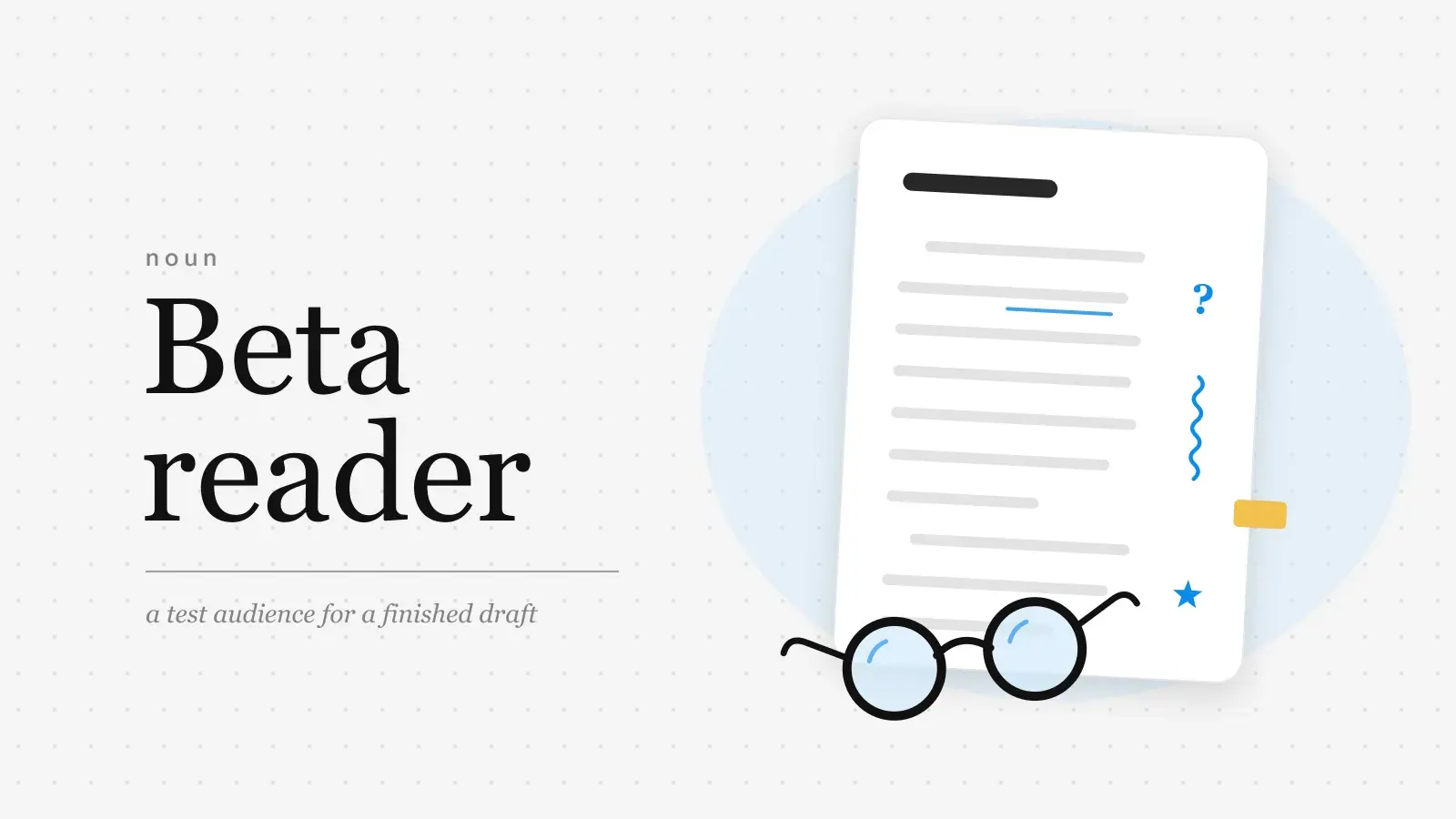
A beta reader is someone who reads a complete, revised draft of a book before it is published and reports how it reads: where they were hooked, confused, bored or unconvinced. They read as the book's eventual audience will, not as an editor, and most are unpaid.
The name comes from product testing. IBM staff were running "A" and "B" tests on new products by the 1950s, and software kept the habit: an alpha version is tried by the people who built it, a beta version by outsiders before release. A beta draft is the same thing, finished enough for strangers and still open to change. Fan fiction writers use the word too, often shortened to "beta." The job is much older than the word.
Examples from literary history
Nobody below was called a beta reader. Each read a draft before the public did and changed what the public got.
In Dickens's first ending, Pip is still single when he meets Estella by chance in a London street. She has been widowed and has remarried, and they part. The novelist Edward Bulwer-Lytton read the proofs, found the ending too sad and pressed for a change. Dickens told his friend John Forster that he had "put in as pretty a little piece of writing as I could," and the published book closes with the two meeting in the ruins of Satis House. George Gissing later called the change "the unhappy deference to Lord Lytton's judgment." A reader can be right about the audience and wrong about the book. The decision stays yours.
In July 1875 Twain wrote to Howells, then editor of The Atlantic Monthly, that his new novel was "not a boy's book, at all." Howells read the manuscript that autumn and called it "altogether the best boy's story I ever read." By November 23 Twain had come round: "Mrs. Clemens decides with you that the book should issue as a book for boys, pure and simple." The most useful note on the manuscript wasn't about any scene. It was about the shelf the book belonged on.
F. Scott Fitzgerald read Hemingway's draft before publication and advised trimming at least 2,500 words from the opening, which ran about 30 pages. Hemingway cut all 30. Fitzgerald read as a fellow novelist, closer to a critique partner than a beta reader, but the exchange shows how good notes work. The reader names the problem, a slow start. The writer picks the fix.
Ishiguro has said that his wife, Lorna, read an early draft and told him it wasn't working and he would have to start again from the beginning. He did, and the novel took ten years to finish. Few people close to a writer will say that. Most will call the draft wonderful, which is why friends and family make poor beta readers.
In your manuscript
Send beta readers the draft you would otherwise send to an agent or an editor: complete, revised at least once, and clean enough that typos don't pull focus. Pick people who read your genre for pleasure, and a few who don't know you well. Give each one a deadline, a short note on what you want (reactions, not corrections) and a handful of questions tied to places in the book. Then look for agreement. One reader who skimmed chapter 12 is an opinion. Three who skimmed it have found a problem.
Beta reading goes wrong in a few predictable ways:
- Too early. A first draft spends the read on problems you already know about. That's an alpha read, so ask for one by name.
- The wrong readers. A reader who never picks up thrillers will find yours too fast, and a relative will find it wonderful.
- Asking for a proofread. A reader hunting commas stops noticing whether they care what happens next.
- Arguing back. Explaining what a scene meant teaches you nothing. The reader only had the page, and so will everyone who buys the book.
The questions you ask decide the notes you get. Here is one reader and one invented manuscript, asked two ways.
You ask: "Did you like it? Any thoughts?"
They write: "Loved it. The middle dragged a little, but I couldn't put it down by the end."
You ask: "Mark where you started skimming and where you stopped for the night."
They write: "Skimmed from chapter 11 to the courthouse in 14. I'd guessed Nell would be cleared, so the trial prep felt like waiting. Stopped for the night at the end of 13, and not because it was late."
The second note gives you chapters, a cause (the verdict was predictable) and a way to test the fix with your next reader.
Freeze the draft you send. Notes will say "page 112," and page 112 needs to stay put while you revise. In Strokes, save a version before you export the PDF, Word or EPUB copies. Version history lets you open that exact draft later with your changes marked. Recruiting readers, a questionnaire to copy and how to sort the reports are covered in How to find beta readers and get feedback you can use.
Beta reader vs. other early readers
| Alpha reader | Beta reader | Critique partner | |
|---|---|---|---|
| Reads | Alpha readerA first or unfinished draft | Beta readerA complete, revised draft | Critique partnerChapters or drafts at any stage |
| Reads as | Alpha readerA first audience | Beta readerA reader of the genre | Critique partnerA fellow writer |
| Comments on | Alpha readerWhether the story works at all | Beta readerPace, clarity, belief, the ending | Critique partnerCraft: scenes, prose, technique |
| Usually | Alpha readerOne or two people you trust | Beta readerSeveral, some of them strangers | Critique partnerA swap that lasts for years |
Stephen King's wife, Tabitha, pulled the first pages of Carrie out of the trash and told him she wanted to know what happened next. That was an alpha read: the book didn't exist yet, and the question was whether to keep going. A critique partner reads as a writer and will tell you how a scene is built. A beta reader tells you what happened to them while reading it.
A sensitivity reader is a specialist beta reader who shares an identity or experience your book portrays and checks how it is drawn, usually for a fee. Editors do a different job. Developmental editing diagnoses structure and copy editing fixes the sentences. Both tell you what to change, and both cost money. In fan fiction the line blurs. There a beta usually edits and proofreads a chapter before it is posted, so if someone offers to beta your novel, ask which kind of reading they mean.
Once the book is finished and edited, the readers who see it before release get an ARC (advance reader copy). They write reviews, not revision notes. If your next step is querying agents, read How to get a literary agent.