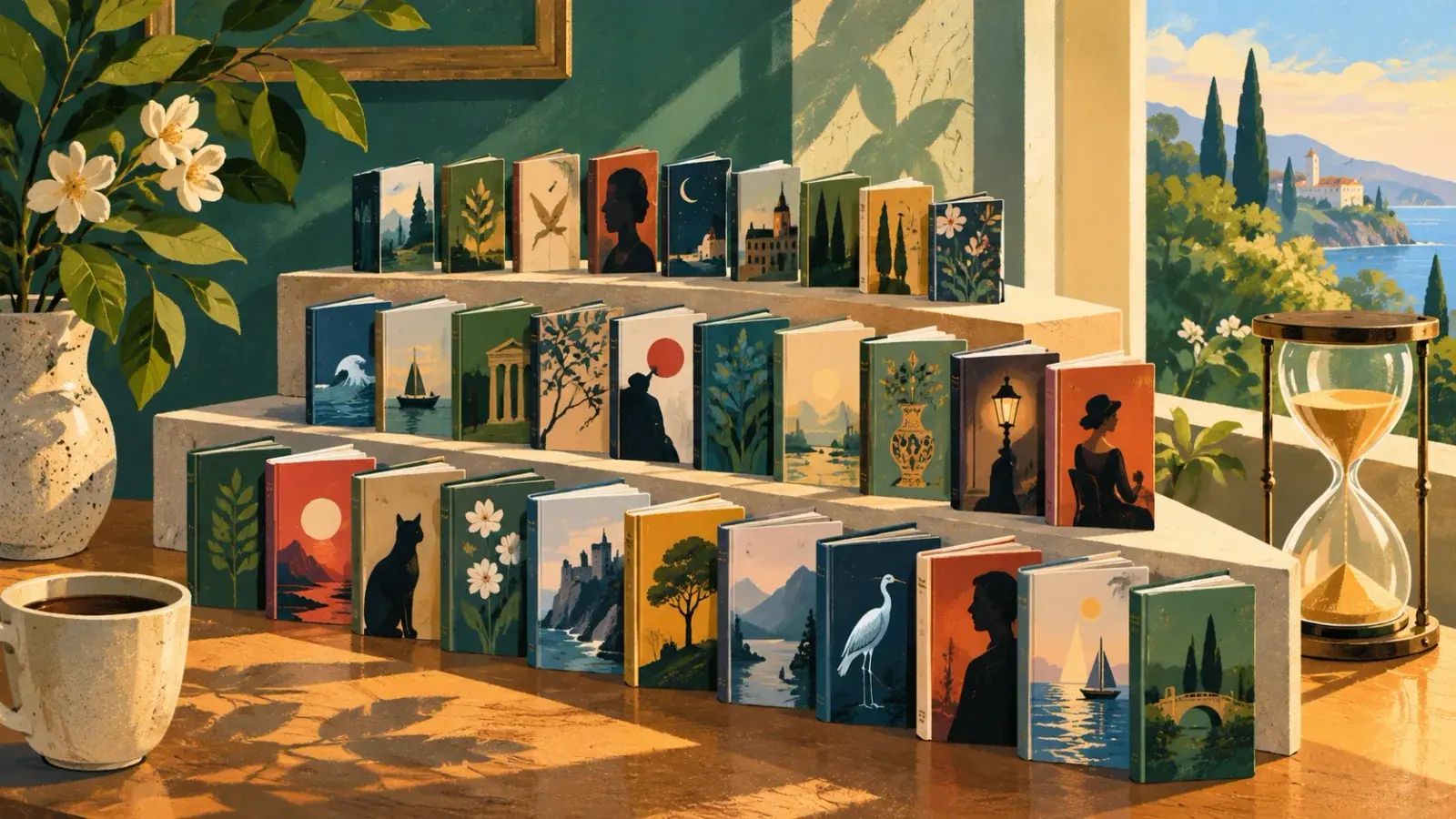
The shortest classics worth your time run from about 12,000 words to 50,000. At an average reading pace, that is under an hour for the shortest book on this list, Kahlil Gibran's The Prophet, and a little over three hours for the longest we could time, Kate Chopin's The Awakening. Below are 30 books under 200 pages in three groups, shortest first in each, with what each one is about and why it is worth an evening.
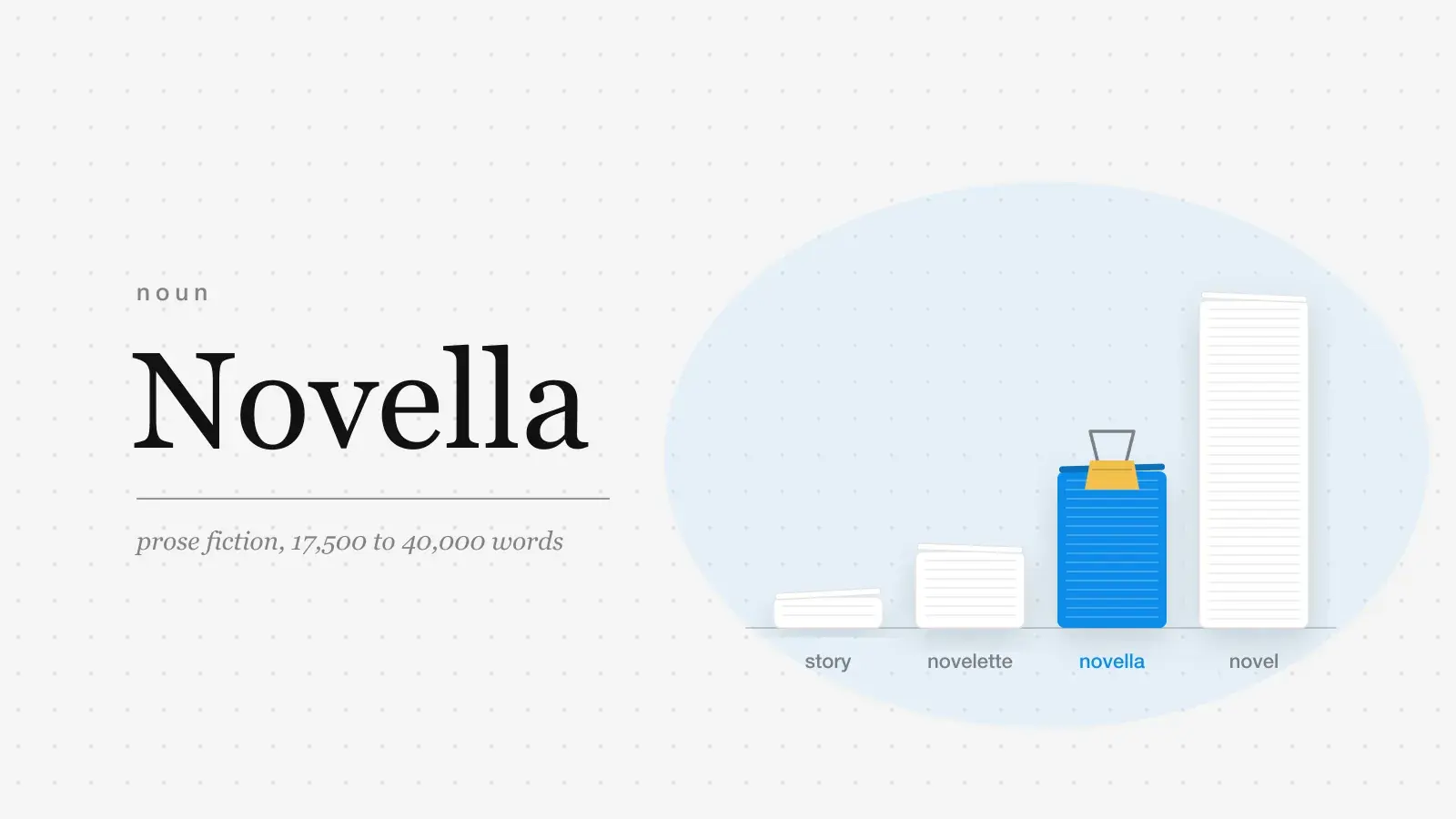
Short books are good for a reading goal that has slipped, a book club with a busy month, a flight, or a slump that a 600-page novel will only deepen. They are also the best way to study how a story is built, because you can hold the whole shape in your head at once. Twelve of the timed books fall in the novella range the Hugo Awards use, 17,500 to 40,000 words. Any three make a weekend.
Classics under two hours
Each of these takes under two hours at an average pace. Plays read slower than prose, so give Macbeth an extra half hour if the verse is new to you.
- The Prophet, Kahlil Gibran (1923)About 12,300 words · under an hourA prophet about to sail home is stopped by the people of the city, who ask him about love, marriage, children, work, freedom and death. He answers in 26 short talks of poetic prose. Read it straight through once, then keep it somewhere you can open it at random.
- Macbeth, William Shakespeare (c. 1606)About 18,200 words · about 70 minutesShakespeare's shortest tragedy, a little over half the length of Hamlet. A prophecy, a murder, and the speed at which a capable man and his wife come apart. It is even better read aloud with one other person.
- The Importance of Being Earnest, Oscar Wilde (1895)About 20,500 words · about 80 minutesTwo young men invent people to escape their obligations: one a wicked brother in town, the other an invalid friend in the country. By the second act both lies have reached the same country house, and two young women each believe they are engaged to a man named Ernest. If you think you don't like reading plays, start with this one.
- The Metamorphosis, Franz Kafka (1915)About 22,000 words · about 85 minutesA traveling salesman wakes up as an enormous insect, and his first worry is missing his train to work. The rest is his family adjusting to him and then giving up. The flat, practical tone is what makes it frightening.
- The Death of Ivan Ilyich, Leo Tolstoy (1886)About 23,700 words · about 1 hour 30 minutesIt opens with Ivan's colleagues reading his death notice and working out who gets promoted. Then it goes back to show how a correct, comfortable, ordinary life led him to that bed, and what he understands in his last hours.
- Strange Case of Dr Jekyll and Mr Hyde, Robert Louis Stevenson (1886)About 25,700 words · about 1 hour 40 minutesTold mostly through a lawyer trying to work out why his respectable friend has made a violent stranger his heir. Everyone knows the twist, so watch how Stevenson holds it back: the explanation arrives as two documents in the last two chapters.
- Alice's Adventures in Wonderland, Lewis Carroll (1865)About 26,700 words · about 1 hour 45 minutesTwelve chapters of logic puzzles and wordplay dressed as a children's book, and adults get more of the jokes. Find an edition with John Tenniel's illustrations; they were drawn for the first edition and they are part of the book.
- A Christmas Carol, Charles Dickens (1843)About 28,600 words · about 1 hour 50 minutesFive short chapters, which Dickens called staves, and a single night. It is funnier and angrier than most adaptations, and the prose was made for the voice: Dickens performed it at public readings for the rest of his life.
Classics for an afternoon
Two to three hours each, a long train ride or a Saturday afternoon. The last two, both just over three hours, are the longest books on this list.
- The Call of the Wild, Jack London (1903)About 31,800 words · about 2 hoursBuck, a big, comfortable house dog in California, is stolen and sold to haul sleds in the Klondike gold rush. Told from the dog's side without a trace of cuteness. London drew on the winter he spent in the Yukon in 1897.
- The Time Machine, H. G. Wells (1895)About 32,400 words · about 2 hours 5 minutesA Victorian inventor tells his dinner guests where he has been: the year 802,701, where humanity has split into two species. Wells puts a whole argument about class inside an adventure story and never stops for a lecture.
- Candide, Voltaire (1759)About 33,700 words · about 2 hours 10 minutesA naive young man, taught that this is the best of all possible worlds, is put through war, shipwreck, an earthquake and the Inquisition at a gallop. Thirty chapters, most of them a few pages long, and the disasters arrive faster than he can explain them away.
- Passing, Nella Larsen (1929)About 34,900 words · about 2 hours 15 minutesTwo women who knew each other as girls meet again as adults. Irene lives in Harlem; Clare passes as white and is married to a man who does not know. Larsen keeps the story inside Irene's head, which makes the ending impossible to settle. It entered the US public domain in 2025.
- Ethan Frome, Edith Wharton (1911)About 35,800 words · about 2 hours 20 minutesA visiting engineer pieces together the story of a broken farmer in a Massachusetts village: his sick wife, her young cousin, and one sled ride. It is set in winter and it stays cold to the last page.
- Heart of Darkness, Joseph Conrad (1899)About 38,500 words · about 2 hours 30 minutesOn a boat anchored in the Thames, Marlow tells four listeners about his journey up an African river to find an ivory agent named Kurtz. Dense, and better read slowly. Chinua Achebe's 1975 lecture attacking its portrayal of Africans is the essential companion.
- Siddhartha, Hermann Hesse (1922)About 39,200 words · about 2 hours 30 minutesA Brahmin's son in the Buddha's India leaves home and tries asceticism, then wealth and love, and finally learns what he needs from a ferryman. Simple sentences and a slow rhythm. It suits a quiet Sunday morning.
- The Turn of the Screw, Henry James (1898)About 42,800 words · about 2 hours 45 minutesA young governess takes charge of two children in a country house and starts seeing two figures nobody else admits to seeing. James never settles whether they are ghosts or her own mind, and readers have argued about it ever since. Best read in October.
- Narrative of the Life of Frederick Douglass, Frederick Douglass (1845)About 40,400 words · about 2 hours 50 minutes at a nonfiction paceDouglass's account of his life enslaved in Maryland, how he learned to read against his enslavers' wishes, and his escape north. He published it while still legally a fugitive and left out how he got away, so the route could stay open for others. The shortest of his three autobiographies.
- The Great Gatsby, F. Scott Fitzgerald (1925)About 48,500 words · about 3 hours 5 minutesNick Carraway rents a small house next to a mansion on Long Island and watches his neighbor's long campaign to win back a married woman. Nine chapters and hardly a wasted scene. It entered the US public domain in 2021, so free editions are everywhere.
- The Awakening, Kate Chopin (1899)About 49,900 words · about 3 hours 10 minutesOn a summer holiday on Grand Isle, Edna Pontellier, a wife and mother from New Orleans, begins to want a life of her own. Reviewers in 1899 were hostile, and Chopin never published another novel. It reads now as if it were written decades later.
Modern classics under 175 pages
These are still in copyright, so there is no free edition to count. The page counts are for common editions, mostly US paperbacks, and other printings differ by a few dozen pages either way.
- The Little Prince, Antoine de Saint-Exupéry (1943)91 to 97 pages (Harcourt), drawings includedA pilot stranded in the Sahara meets a boy from a tiny asteroid, who tells him about his rose and the grown-ups he met on other planets. Read as an adult, it is a book about love and loss that happens to have pictures. It was first published in New York, while the author was living there in exile.
- Of Mice and Men, John Steinbeck (1937)107 pages (Penguin)Two migrant ranch hands, quick George and huge, gentle Lennie, share a dream of a place of their own. Steinbeck built it like a play, six chapters that each stay in one place, and a Broadway version opened the same year.
- The House on Mango Street, Sandra Cisneros (1984)110 pages (Vintage)Esperanza Cordero grows up in a Latino neighborhood in Chicago, told in short vignettes, some under a page. It reads as a novel and a book of prose poems at once, and it fits into two commutes.
- Small Things Like These, Claire Keegan (2021)116 pages (Faber); 128 in the US hardcoverIn a small Irish town in 1985, a coal merchant making deliveries in the weeks before Christmas finds something at the convent he cannot forget. The newest book here. When it made the Booker Prize shortlist in 2022, it was the shortest book ever nominated for the prize.
- Night, Elie Wiesel (1958; English 1960)120 pages (Hill and Wang)Wiesel's memoir of being deported as a fifteen-year-old from Sighet to Auschwitz and then Buchenwald, with his father. Short because it was cut hard from a longer Yiddish memoir he published in 1956. Read the 2006 translation by Marion Wiesel.
- Chronicle of a Death Foretold, Gabriel García Márquez (1981)120 pages (Vintage)The title gives away the ending, and the first sentence names the victim and the day he dies. What is left is how a whole town knew the murder was coming and nobody stopped it, pieced together by a narrator years later. A mystery with no question about who did it.
- The Stranger, Albert Camus (1942)123 to 144 pages (Vintage), by printingMeursault, a clerk in Algiers, buries his mother, starts an affair and shoots a man on a beach, all in the same flat voice. Part one is the life; part two is the trial, where his manner is judged more harshly than the killing. Matthew Ward's 1988 translation is the common US one.
- The Old Man and the Sea, Ernest Hemingway (1952)127 pages (Scribner)An old Cuban fisherman who has gone 84 days without a catch hooks a marlin bigger than his skiff. It ran complete in a single issue of Life magazine before it was a book, and it won the Pulitzer Prize the next year.
- Animal Farm, George Orwell (1945)About 140 pages (Signet Classics)The animals drive out the farmer and run the farm themselves, and by the end the pigs are walking on two legs. Orwell's subtitle was A Fairy Story, and it reads like one, which is why the politics land so hard.
- We Have Always Lived in the Castle, Shirley Jackson (1962)160 pages (Penguin Classics)Eighteen-year-old Merricat Blackwood lives with her sister and her uncle in a big house the village hates, six years after the rest of the family died of arsenic at dinner. Jackson's last finished novel, told by a narrator you should not trust.
- Sula, Toni Morrison (1973)174 pages (Vintage)Two girls grow up inseparable in the Bottom, the Black neighborhood in the hills above a small Ohio town. Then one leaves and comes back. It covers 1919 to 1965 in under 200 pages by jumping between years, and its chapters are titled by year.
Three books for one weekend
Thirty books is a list. Three is a plan. Each row is a Friday night, a Saturday and a Sunday, built so the books talk to each other.
| Weekend | Friday night | Saturday | Sunday |
|---|---|---|---|
| WeekendGothic, for October | Friday nightDr Jekyll and Mr Hyde | SaturdayThe Turn of the Screw | SundayWe Have Always Lived in the Castle |
| WeekendRead aloud | Friday nightA Christmas Carol | SaturdayThe Importance of Being Earnest | SundayMacbeth |
| WeekendStrange worlds | Friday nightThe Metamorphosis | SaturdayAlice's Adventures in Wonderland | SundayThe Time Machine |
| WeekendAmerican lives | Friday nightEthan Frome | SaturdayThe Awakening | SundayThe Great Gatsby |
| WeekendBig questions | Friday nightThe Death of Ivan Ilyich | SaturdayCandide | SundaySiddhartha |
| WeekendTwo friends | Friday nightPassing | SaturdayOf Mice and Men | SundaySula |
What short books teach writers
If you write, short classics are the easiest books to study. You can read one twice in a weekend, and the decisions that make it short are easy to see once you look for them.
One clock. A Christmas Carol takes a single night. The Old Man and the Sea stays with one fish. The Death of Ivan Ilyich starts at the funeral, so the whole book runs toward an ending you already know. Chronicle of a Death Foretold gives the ending away in its title. Each picks one span of time and leaves out everything around it.
A frame that does the cutting. In Heart of Darkness, Ethan Frome and The Turn of the Screw, someone tells or reconstructs the story for someone else. That frame story lets the author skip whatever the teller could not know, which is often most of a novel's worth of scenes.
A voice that would wear out at 400 pages. Merricat in We Have Always Lived in the Castle and the governess in The Turn of the Screw are unreliable narrators whose intensity is the point. Kafka's deadpan, Camus's flatness and Voltaire's gallop all work because they stop before they tire you.
A short classic is not a long book with pages missing. It picks one clock and stops when the clock runs out.
Few people, few rooms. Of Mice and Men has four settings across six chapters. Sula runs from 1919 to 1965 by letting most of those years pass between chapters. The cast and the map stay small so the change in one person can be large.
If you are drafting something short yourself, the length bands are in how many words is a novel. A novella is also a manageable first book. In Strokes it can be a project folder with one document per chapter, with version history keeping each draft and export to EPUB or PDF when it is ready for a reader.
To get more from the books themselves, keep notes as you go with a reading journal template: the passage, the page and what the author did there. For where the reading-time figures come from, see average reading speed. And when you want the other end of the shelf, there is the longest book ever written.