
When to use it
- Company blog posts that need to rank for a phrase people search for
- Tutorials and how-to articles with several steps to keep in order
- Opinion pieces where the argument has to hold together
- Newsletter issues and long social posts, with the SEO notes removed
- Briefing a writer or an AI assistant on a post before it is drafted
How to use this template
- Fill in the reader before the title
Start with Audience and goal. Write down who the reader is, what they typed into a search box or asked a colleague, and what they should know or do when they finish. Every later decision, from the hook to the call to action, follows from that paragraph.
- Collect points and evidence
Fill the Key points table before you touch the headings. Each row is one claim the post makes and the example, number, screenshot or story that backs it. An empty evidence cell means the point is an opinion, which is fine if you say so, or a gap to fill before you draft.
- Turn points into headings
Order the points so each one sets up the next, then write a heading for each as a promise to the reader: "Why outlines fail" rather than "Background". Give each heading one line on what it covers, so the draft has somewhere to go.
- Draft, then come back for the SEO notes
Write the post from the outline, section by section. Only then finish the SEO notes: the target phrase belongs in the title and the first paragraph, and the meta description is easier to write once you know what the post actually says. Run the checklist last.
What good looks like
- The hook is the answer. If the reader searched for something, the first paragraph gives it to them. The rest of the post earns the right to go deeper.
- Headings pass the skim test. Read only the headings. If they tell the story, the outline is done. If they read "Introduction, Background, Conclusion", keep working.
- One point, one piece of evidence. A post that cites nothing reads as opinion; a post that cites everything reads as a literature review. One good example per point is the balance.
- One call to action. Two asks compete with each other, so pick the one that matters for this post and give it the last paragraph.
From outline to draft with AI
An outline is a strong prompt for an AI assistant, because it already holds the structure, the claims and the evidence. The mistake is to paste it in and ask for the whole post. You get a thousand smooth, generic words that sound like nobody. Work one section at a time instead.
Give the assistant the outline as context and ask it to draft a single section from its heading, its one-line summary and the matching row in the Key points table. Read the result, cut the padding, and move to the next section. If the draft drifts from how you write, hand it a paragraph of your own as a sample and ask it to match that tone of voice.
The assistant is useful again at the end. Ask for a one-sentence summary of the finished draft and use it as the starting point for the meta description. Ask it to point out the sentences a hurried reader would stumble on, which is the cheapest readability check there is. Do not ask it to invent evidence; the evidence column exists so that you never have to.
Frequently asked questions
How long should a blog post outline be?
One page. A working title, a paragraph on the reader, three to six key points with evidence, a heading for each, and the call to action. If the outline runs past a page, the post is probably two posts.
Should I write the title first or last?
Both. Write a working title first so the post has a direction, then rewrite it after the draft, when you know what the post actually argues. Keep the target phrase in it either way.
Does this work for a newsletter or a LinkedIn article?
Yes. Drop the SEO notes if nobody will search for the piece, and keep the hook, the key points and the single call to action. Those three carry any format.
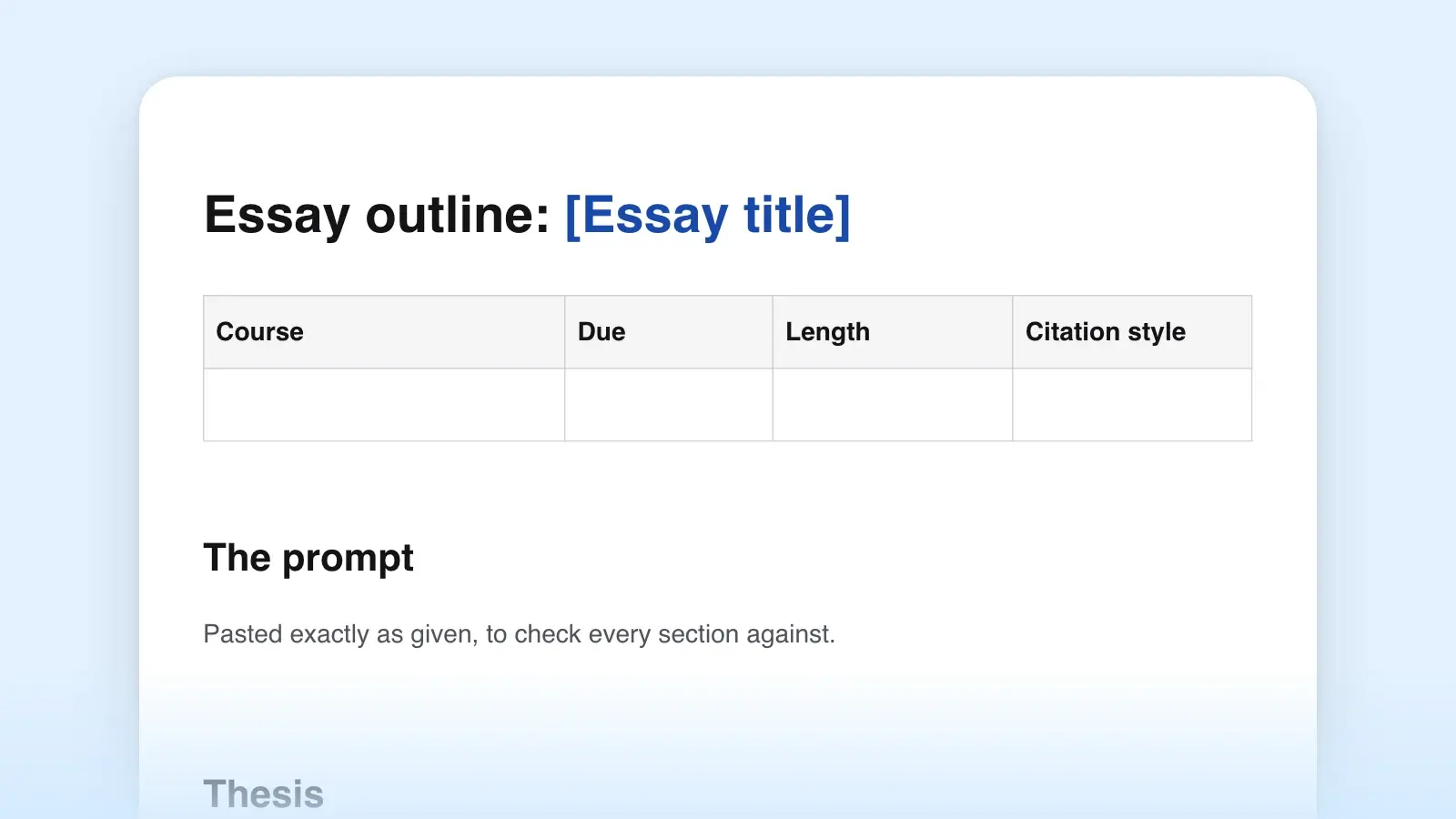
How is this different from the essay outline template?
An essay outline is built around a thesis and the argument that proves it. This one is built around a reader's question and the phrase that brings them to the post. Use the essay outline for coursework and long-form argument.