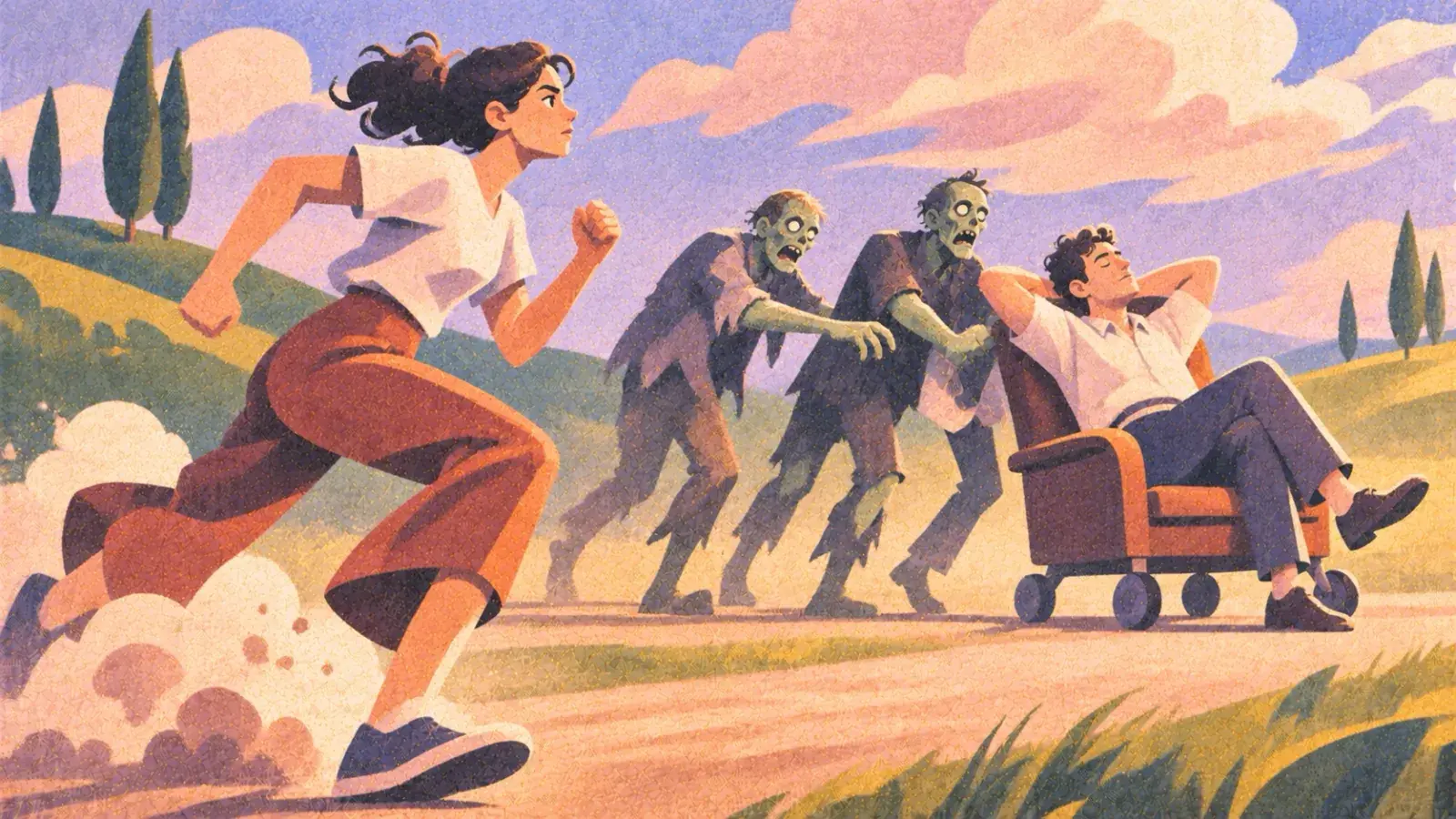
A strong verb names one exact action, so it doesn't need an adverb to finish the job: ambled instead of walked slowly, gulped instead of drank quickly, glared instead of looked angrily. The 290 verbs below are grouped by the kind of action, from movement and looking to thinking, conflict and work, and each comes with the weak verb and adverb it replaces and an example written for this list.
Plain verbs such as walked, looked and said are still the right choice whenever the manner doesn’t matter. Reach for the list when it does, and look for weak verbs hiding inside nouns too. This report-style sentence has six of them:
Before: The committee made a decision to carry out a review of the admissions process, in the expectation that the implementation of changes would lead to an improvement in student retention.
After: The committee decided to review the admissions process, expecting the changes to keep more students enrolled.
The first version buries six verbs in nouns (decision, review, expectation, implementation, improvement, retention) and props them up with filler: made, carry out, lead to. The revised verbs add two things the nouns had blurred: who is acting (the committee decides, reviews and expects) and what the improvement means in plain terms (more students stay enrolled). In fiction the gain is often a new fact: trudged up the drive tells the reader she is tired, which walked slowly up the drive leaves out.
After the list: how to find the weak verbs in a draft, how to dig out hidden verbs in reports and essays, two classic passages built on verbs, and the places where the plain verb is still the right one.
| If the action is… | Look under | Verbs |
|---|---|---|
| If the action is…Walking, running, climbing, falling | Look underMovement | Verbs1–44 |
| If the action is…Talk you summarize instead of quoting | Look underTalk | Verbs45–67 |
| If the action is…Looking, seeing, searching | Look underLooking | Verbs68–90 |
| If the action is…Holding, pulling, throwing | Look underHands and touch | Verbs91–120 |
| If the action is…Food and drink | Look underEating and drinking | Verbs121–134 |
| If the action is…A feeling that shows in the body | Look underEmotion and the body | Verbs135–164 |
| If the action is…Thinking, remembering, choosing | Look underThinking and deciding | Verbs165–192 |
| If the action is…Growing, shrinking, breaking, decaying | Look underChange and growth | Verbs193–216 |
| If the action is…A fight, a push, a struggle | Look underConflict and force | Verbs217–246 |
| If the action is…Building, cleaning, carrying, office work | Look underWork and making | Verbs247–270 |
| If the action is…An essay, a report, a business document | Look underReports and arguments | Verbs271–290 |
Strong verbs for movement
Walked and ran are fine when the movement doesn't matter. When it does, the verb can carry speed, mood and the state of the body at once. More movement words, and adjectives for how people look, are in the descriptive words list.
- ambled — walked slowly, at ease: ambled along the canal with nowhere to be
- trudged — walked slowly, worn out: trudged up the drive with four bags of shopping
- shuffled — walked without lifting the feet: shuffled forward in the passport line
- plodded — walked slowly and steadily: plodded through the last six miles of the marathon
- dawdled — walked slowly to put something off: dawdled outside the dentist's door
- strode — walked fast with long, sure steps: strode into the meeting with the signed contract
- marched — walked fast with purpose or anger: marched back to the counter with the cold soup
- stalked — walked stiffly, angry or menacing: stalked off without paying
- stomped — walked heavily, in a temper: stomped upstairs and turned the music up
- tiptoed — walked quietly on the toes: tiptoed past the baby's room
- crept — moved slowly and silently: crept along the hedge toward the open window
- sneaked — went secretly (snuck is common in US English): sneaked out through the laundry room
- slunk — moved away quietly, ashamed: slunk back to his desk after the reprimand
- prowled — moved around stealthily, as if hunting: prowled the empty office after midnight
- sauntered — walked casually, unbothered: sauntered past the bouncer as if he owned the club
- wandered — walked without a goal: wandered the aisles of the hardware store
- limped — walked unevenly, injured: limped off the field holding his knee
- hobbled — walked with pain and difficulty: hobbled to the door on crutches
- staggered — walked unsteadily, nearly falling: staggered out of the pub into the rain
- lurched — moved suddenly and unsteadily: the bus lurched away from the curb
- waddled — walked with short, swaying steps: waddled across the ice in three coats
- paced — walked back and forth, anxious: paced the hospital corridor until the doors opened
- jogged — ran slowly and steadily: jogged the last block to the station
- sprinted — ran as fast as possible: sprinted for the closing elevator doors
- dashed — ran quickly, for a short time: dashed out for milk between calls
- raced — ran fast against the clock: raced the storm back to the car
- bolted — ran off suddenly: bolted the moment the alarm went off
- fled — ran away from danger: fled the building with the alarm still ringing
- scurried — ran with short, quick steps: scurried between the tables with a tray of drinks
- scrambled — moved fast and clumsily, often uphill: scrambled up the bank on all fours
- clambered — climbed awkwardly with hands and feet: clambered over the fence into the orchard
- scaled — climbed all the way up: scaled the scaffolding to the third floor
- vaulted — jumped over, pushing off with the hands: vaulted the turnstile
- leapt — jumped high or far (also leaped): leapt the ditch without breaking stride
- hopped — jumped lightly, or got on quickly: hopped onto the back of the truck
- tumbled — fell, rolling over: tumbled down the last six stairs
- toppled — fell over from being top-heavy or pushed: the bookcase toppled into the hall
- plunged — fell or dived steeply: plunged off the end of the jetty into the lake
- slumped — sat or fell heavily, out of energy: slumped onto the sofa still in his coat
- sprawled — lay with arms and legs spread: sprawled across the bed diagonally
- swerved — changed direction suddenly: swerved around the pothole
- careened — moved fast and out of control: careened down the hill on a borrowed bike
- drifted — moved slowly, as if carried: drifted toward the buffet
- edged — moved slowly and carefully, bit by bit: edged along the cliff path with his back to the rock
Strong verbs for talk
These summarize a conversation in the narration, when you don't quote the words. For a tag on a quoted line, plain said usually wins, and the words to use instead of said cover the cases where it doesn't.
- chatted — talked lightly and easily: chatted with the barber about the playoffs
- bickered — argued about small things: bickered over who left the gate open
- haggled — argued over a price: haggled the rug down to forty euros
- gossiped — talked about other people's business: gossiped about the new manager over lunch
- rambled — talked a long time without a point: rambled about his ex for an hour
- droned — talked on and on in a dull voice: droned through forty slides on compliance
- prattled — talked foolishly and at length: prattled about the seating plan all evening
- blurted — said suddenly, without thinking: blurted out the surprise before the cake arrived
- confided — told a secret in trust: confided that she had applied for the job in Denver
- bragged — talked proudly about oneself: bragged about his golf handicap through dinner
- lectured — told off at length, from above: lectured the intern on the dress code
- scolded — told off angrily: scolded the dog for the chewed shoe
- berated — criticized angrily and at length: berated the waiter in front of the whole room
- grilled — questioned hard and long: grilled the candidate about the gap in her résumé
- badgered — asked again and again: badgered his parents for a phone
- nagged — reminded over and over, annoyingly: nagged him about the gutters all summer
- heckled — interrupted a speaker with jeers: heckled the comedian from the back row
- vented — talked out anger or frustration: vented to her sister about the landlord
- briefed — told the essentials, formally: briefed the night shift on the new patients
- recounted — told the story of something: recounted the flight delay in painful detail
- coaxed — persuaded gently and patiently: coaxed her grandfather into seeing a doctor
- sweet-talked — persuaded with flattery: sweet-talked the clerk into an upgrade
- conferred — talked something over before deciding: conferred with her lawyer before answering
Strong verbs for looking
Looked is one of the verbs first drafts lean on hardest. These say how long, how hard and with what feeling.
- glanced — looked quickly: glanced at the clock for the third time
- glimpsed — saw briefly or partly: glimpsed the sea between two hotels
- peeked — looked quickly and secretly: peeked at the last page
- peered — looked hard at something hard to see: peered into the fog for the ferry lights
- squinted — looked with eyes half shut: squinted at the menu without her glasses
- stared — looked long and fixedly: stared at the ceiling until three
- gazed — looked long, with wonder or longing: gazed at the house she grew up in
- gaped — looked open-mouthed, astonished: gaped at the size of the bill
- gawked — stared rudely or stupidly: gawked at the crash from the shoulder
- ogled — looked at with open desire: ogled the dessert cart
- leered — looked at someone with nasty intent: leered at her from the end of the bar
- glared — looked angrily: glared at the man talking through the film
- eyed — looked at warily or with interest: eyed the last slice of pie
- studied — looked carefully, to understand: studied the map for a long minute
- scrutinized — examined in close detail: scrutinized every clause of the contract
- inspected — looked closely for faults: inspected the rental car for scratches
- scanned — looked quickly over an area: scanned the arrivals board for her flight
- surveyed — looked over the whole of something: surveyed the damage from the doorway
- skimmed — read quickly for the gist: skimmed the report on the train
- spotted — picked out by sight: spotted her brother in the crowd
- monitored — watched over time: monitored the patient's breathing through the night
- combed — searched every part of: combed the beach for her lost ring
- pored over — read or studied closely, absorbed: pored over the old letters for a name
Strong verbs for hands and touch
Took, put, held and touched cover a hundred different movements. These name one each.
- grabbed — took quickly and roughly: grabbed her keys off the hook
- snatched — took quickly, often rudely: snatched the letter out of his hand
- seized — took hold suddenly and firmly: seized the rail as the boat rolled
- clutched — held tightly, afraid or desperate: clutched the ticket all the way to Lyon
- gripped — held very firmly: gripped the wheel with both hands
- clasped — held closely, hands together: clasped her hands in her lap
- cradled — held gently and protectively: cradled the old cat in a towel
- fumbled — handled clumsily: fumbled with the keys in the dark
- groped — felt around blindly: groped for the light switch
- rummaged — searched untidily by hand: rummaged in her bag for a pen
- fished — pulled out after searching: fished a coin out of his pocket
- plucked — took between finger and thumb: plucked a hair from his sleeve
- pinched — squeezed between finger and thumb: pinched the dead flowers off the geranium
- squeezed — pressed hard from both sides: squeezed the last of the toothpaste
- massaged — rubbed to ease pain: massaged the knot in her shoulder
- caressed — touched gently and lovingly: caressed the worn spine of the book
- patted — touched lightly with a flat hand: patted his pockets for his phone
- tapped — hit lightly, often for attention: tapped her glass with a spoon
- prodded — poked to push or urge: prodded the fire with a stick
- nudged — pushed gently, often with the elbow: nudged her husband awake
- tugged — pulled with short, hard pulls: tugged at his collar
- yanked — pulled suddenly and hard: yanked the plug out of the wall
- wrenched — pulled with a hard twist: wrenched the lid off the paint can
- twisted — turned with force: twisted the cap off the jar
- flicked — moved with a quick finger movement: flicked the crumbs off the table
- tossed — threw lightly, casually: tossed the keys onto the counter
- hurled — threw with great force: hurled the phone across the room
- lobbed — threw in a high arc: lobbed the ball back over the fence
- smoothed — pressed flat with the hand: smoothed the creases out of the map
- wrung — twisted to squeeze out water: wrung out the dishcloth
Verbs for eating and drinking
How a character eats is characterization at the dinner table. Ate and drank say nothing about appetite, manners or mood.
- gulped — swallowed quickly in big mouthfuls: gulped the water after the run
- sipped — drank in small amounts: sipped her tea while it was still too hot
- slurped — drank or ate noisily: slurped the noodles straight from the pan
- swigged — drank in long swallows from a bottle: swigged cola from the bottle
- guzzled — drank greedily: guzzled a liter of lemonade
- nursed — drank slowly to make it last: nursed one beer all evening
- nibbled — ate in small bites: nibbled the edge of a cracker
- munched — chewed steadily and audibly: munched popcorn through the trailers
- crunched — chewed something hard, noisily: crunched an ice cube
- gnawed — chewed at, persistently: gnawed on a pencil through the exam
- wolfed — ate fast and greedily: wolfed a sandwich between meetings
- picked at — ate little, without interest: picked at her salad
- savored — ate slowly, enjoying it: savored the first oyster of the season
- polished off — finished all of: polished off the leftover curry
Verbs for emotion and the body
“She was scared” is a label. A verb that shows the fear in the body is evidence, which is much of what show, don't tell means in practice. Each one is precise once; repeated every page, it turns into a tic.
- flinched — moved back suddenly, from fear or pain: flinched at the slam of the door
- winced — made a face at sudden pain: winced as the nurse found the vein
- cringed — shrank back, embarrassed: cringed at the sound of his own voicemail
- recoiled — drew back in disgust or shock: recoiled from the smell in the fridge
- shuddered — shook briefly with fear or disgust: shuddered at the thought of the bridge
- trembled — shook slightly with fear or emotion: her hands trembled as she opened the letter
- bristled — reacted with sudden, defensive anger: bristled at the word “assistant”
- stiffened — went rigid, alarmed or offended: stiffened when his name was called
- seethed — was silently furious: seethed through the rest of the meeting
- fumed — showed anger openly: fumed in the line for the customs desk
- sulked — was silently resentful: sulked in the back seat all the way to Leeds
- pouted — pushed out the lips, sulking: pouted when the ice cream ran out
- moped — was listless and sad: moped around the apartment after the breakup
- glowered — stared angrily and sullenly: glowered at the referee
- scowled — frowned in anger: scowled at the parking ticket
- beamed — smiled broadly with joy: beamed at her daughter on the stage
- smirked — smiled smugly: smirked when his rival missed the putt
- blushed — went red with embarrassment: blushed when his mother read the poem aloud
- blanched — went pale with fear: blanched at the size of the estimate
- flushed — went red with heat or anger: flushed to the roots of his hair
- gasped — breathed in sharply, shocked: gasped as the car slid toward the edge
- sighed — let out a long breath, tired or sad: sighed and reached for the next file
- sagged — drooped, losing hope or energy: his shoulders sagged at the length of the line
- sobbed — cried noisily, with gasps: sobbed in the car before going in
- giggled — laughed lightly and nervously: giggled through the whole rehearsal
- snickered — laughed slyly, half hidden: snickered at the teacher's typo
- chuckled — laughed quietly, to oneself: chuckled at the cartoon in the paper
- guffawed — laughed loudly and heartily: guffawed at his own joke
- fidgeted — moved restlessly, nervous: fidgeted with her ring through the interview
- squirmed — wriggled, uncomfortable: squirmed while the teacher read his essay aloud
Verbs for thinking and deciding
Thought and realized are filter words in most scenes, so cut them where you can. When the thinking itself is the action, these name what kind it is. Three come straight from Strunk; more on that below.
- pondered — thought carefully for a while: pondered the offer over the weekend
- weighed — compared options: weighed the job against the commute
- deliberated — thought or argued carefully before deciding: the jury deliberated for two days
- brooded — thought darkly about something: brooded over the review for a week
- dwelt on — kept thinking about (also dwelled): dwelt on the one bad comment in forty good ones
- fixated on — couldn't stop thinking about: fixated on the typo in the invitation
- daydreamed — let the mind drift pleasantly: daydreamed through the budget presentation
- mused — thought idly, sometimes aloud: mused that the town hadn't changed in thirty years
- figured — worked out or guessed (informal): figured the shop would be closed
- deduced — reasoned from evidence: deduced from the tan line that he had been married
- inferred — concluded from hints: inferred from her silence that the deal was off
- surmised — guessed from little evidence: surmised that the house had been empty for years
- gathered — understood from what was said: gathered that the meeting had gone badly
- suspected — thought likely, without proof: suspected the dog had eaten the steak
- doubted — didn't quite believe: doubted the bus would come at all
- recalled — brought back to mind: recalled the name of her first teacher
- forgot — did not remember: forgot her mother's birthday for the first time
- ignored — did not pay any attention to: ignored the warning light for a week
- distrusted — did not have much confidence in: distrusted anyone who smiled that much
- grasped — understood fully: finally grasped why the numbers didn't add up
- dismissed — decided it wasn't worth a thought: dismissed the noise as the wind
- resolved — decided firmly: resolved to call his father on Sunday
- settled on — decided after looking at the choices: settled on the cheaper apartment
- opted — chose one option: opted for the night train
- wavered — was unsure, swaying between choices: wavered at the door of the clinic
- dithered — couldn't decide, fussily: dithered over the wine list
- reconsidered — thought again about a decision: reconsidered after reading the contract
- schemed — planned in secret, usually to deceive: schemed to get the corner office
Verbs for change and growth
For things that get bigger, smaller, older or different: weather, objects, bodies, towns and numbers. Got bigger and went down are the weak versions.
- swelled — got bigger from inside: her ankle swelled in the heat
- ballooned — grew fast, as if inflated: the budget ballooned to twice the estimate
- mushroomed — spread suddenly in numbers: coffee shops mushroomed along the high street
- sprouted — appeared suddenly, as if growing: cranes sprouted over the old docks
- surged — rose suddenly and strongly: the river surged over the weir
- soared — rose fast and high: rents soared after the station opened
- doubled — grew to twice the size: the waiting list doubled in a year
- dwindled — got smaller little by little: the crowd dwindled to a few dozen
- shrank — got smaller: the sweater shrank in the wash
- waned — grew weaker: her interest waned by the third chapter
- tapered — narrowed toward an end: the path tapered to a sheep track
- faded — lost color or strength slowly: the bruise faded to yellow
- dimmed — grew less bright: the house lights dimmed before the film
- wilted — drooped from heat or thirst: the basil wilted on the windowsill
- withered — dried up and shrank: the vines withered in the drought
- crumbled — broke into small pieces: the plaster crumbled under her thumb
- rotted — decayed: the porch steps rotted through
- rusted — wore away with rust: the gate rusted shut
- frayed — wore into loose threads: the rope frayed where it rubbed the rock
- cracked — broke without coming apart: the windshield cracked in the frost
- shattered — broke into many pieces: the glass shattered on the tiles
- buckled — bent and gave way under weight: the shelf buckled under the encyclopedias
- thawed — warmed from frozen (also of people): the pond thawed in March
- ripened — became ready to eat: the tomatoes ripened on the windowsill
Verbs for conflict and force
Fight scenes go flat when every blow is “hit”, and they tire the reader when every verb is spectacular. Mix these with plain ones; short sentences usually help.
- struck — hit hard (formal): struck the table with his fist
- punched — hit with a closed fist: punched the wall and broke two knuckles
- slapped — hit with an open hand: slapped the mosquito on her arm
- swatted — hit quickly with something flat: swatted the wasp with a magazine
- jabbed — poked or punched quickly: jabbed a finger at the map
- elbowed — pushed with the elbow: elbowed his way to the front
- shoved — pushed roughly: shoved the door open with her shoulder
- jostled — pushed against in a crowd: jostled for space at the bar
- barged — pushed rudely in or through: barged into the meeting without knocking
- rammed — hit with force, on purpose: rammed the gate with the truck
- tackled — brought down by grabbing: tackled the thief on the courthouse steps
- grappled — struggled at close quarters: grappled with the intruder in the hall
- wrestled — struggled to move or hold: wrestled the suitcase into the overhead bin
- pinned — held down so they couldn't move: pinned his brother to the carpet
- pummeled — hit again and again with fists: pummeled the pillow into shape
- battered — hit repeatedly, doing damage: waves battered the sea wall
- pounded — hit repeatedly and heavily: pounded on the door until the neighbors came out
- lashed — hit as if with a whip: rain lashed the windows all night
- hacked — cut roughly with heavy blows: hacked at the brambles with a machete
- slashed — cut with a long, sweeping blow: slashed all four tires
- lunged — moved forward suddenly to attack or grab: lunged for the knife
- dodged — moved quickly aside to avoid: dodged the snowball
- ducked — dropped the head quickly to avoid: ducked under the low beam
- parried — turned aside a blow or a question: parried the reporter's question with a joke
- ambushed — attacked from hiding: ambushed the patrol at the ford
- cornered — trapped with no way out: cornered the cat behind the boiler
- overpowered — beat by greater strength: overpowered the guard
- subdued — brought under control: subdued the man with help from two passengers
- retreated — moved back, withdrew: retreated to the kitchen when the shouting began
- surrendered — gave up, stopped resisting: surrendered his keys at the door
Verbs for work and making
Made, did and fixed hide the skill. Name the job, and the reader sees the hands doing it.
- assembled — put parts together: assembled the crib with one screw missing
- forged — shaped hot metal by hammering: forged the gate hinges by hand
- welded — joined metal by melting: welded a new bracket onto the trailer
- carved — cut a shape from wood or stone: carved their initials into the bench
- whittled — shaved wood into shape with a knife: whittled a spoon from a birch branch
- sculpted — shaped with care and art: sculpted the hedge into a peacock
- molded — shaped soft material: molded the clay around a wire frame
- stitched — sewed by hand: stitched the torn hem on the train
- knitted — made from yarn with needles: knitted a scarf on the commute
- kneaded — worked dough with the hands: kneaded the dough for ten minutes
- brewed — made tea, coffee or beer: brewed a pot strong enough to stand a spoon in
- hammered — hit with a hammer: hammered a nail into the doorframe
- sanded — smoothed with sandpaper: sanded the table back to bare wood
- scrubbed — cleaned by rubbing hard: scrubbed the oven with a wire brush
- polished — rubbed until it shone: polished his shoes for the interview
- hauled — pulled or carried with effort: hauled the boat up the slipway
- lugged — carried something heavy, awkwardly: lugged the suitcase up four flights
- hoisted — lifted with effort or a rope: hoisted the sail
- stacked — piled neatly: stacked the chairs after the meeting
- sorted — arranged by type: sorted the mail into three piles
- tallied — counted up: tallied the votes on a whiteboard
- drafted — wrote a first version: drafted the speech on the train
- patched — mended with a piece over the hole: patched the tire by the roadside
- tinkered — made small repairs or changes, experimenting: tinkered with the engine all Saturday
Verbs for reports and arguments
In essays, reports and business writing the weak verb is often a phrase: is about, looks at, makes better. These replace the phrase with the verb inside it.
- examines — instead of “is about”: This chapter examines the 1926 general strike.
- analyzes — instead of “looks closely at”: analyzes ten years of rainfall data
- traces — instead of “follows the history of”: traces the recipe from Naples to New York
- measures — instead of “finds out how much”: measures noise levels at three schools
- tests — instead of “does a test of”: tests the claim against court records
- supports — instead of “gives support to”: The diaries support her account.
- contradicts — instead of “goes against”: The receipts contradict his timeline.
- refutes — instead of “proves wrong”: refutes the idea that the canal was built for trade
- undermines — instead of “makes weaker”: The missing month undermines the whole argument.
- clarifies — instead of “makes clear”: clarifies who owns the copyright
- shapes — instead of “has an influence on”: The river shapes every street in the town.
- triggered — instead of “brought about”: The memo triggered a strike.
- devised — instead of “came up with”: devised a cheaper way to test the water
- proposed — instead of “put forward”: proposed a four-day week
- founded — instead of “set up”: founded the clinic in 1987
- eliminated — instead of “got rid of”: eliminated two steps from checkout
- halved — instead of “cut by half”: halved the wait for a first appointment
- expanded — instead of “made bigger”: expanded the program to four cities
- tracks — instead of “keeps track of”: tracks every change to the policy
- summarizes — instead of “gives a summary of”: Table 3 summarizes the results.
How to find weak verbs
A weak verb isn't wrong. It's general, so it needs help to say what happened: an adverb, an adjective, a noun or a “not”. That help is what you search for in revision. In a first draft, walked slowly is a placeholder that keeps you moving, and stopping to find the right verb can cost you the next paragraph, so fix weak verbs in a separate pass.
| Pattern | Weak | Stronger |
|---|---|---|
| PatternVerb + adverb | Weakwalked slowly, ate quickly, looked angrily | Strongerambled, wolfed, glared |
| PatternBe + adjective | Weakwas nervous, was angry | Strongerfidgeted with her ring, slammed the drawer |
| PatternLight verb + noun | Weakmade a decision, took a look, gave a shrug | Strongerdecided, looked, shrugged |
| PatternStarted to, began to | Weakstarted to cry, began to run | Strongercried, ran |
| PatternNot + verb | Weakdid not remember, did not pay attention to | Strongerforgot, ignored |
| PatternThere was, there were | WeakThere was a smell of smoke in the hall. | StrongerSmoke hung in the hall. |
| PatternFilter verbs | WeakShe heard the door slam. | StrongerThe door slammed. |
| PatternWas + -ing | WeakHe was running for the bus. | StrongerHe ran for the bus. |
| PatternPhrasal verbs | Weakput up with, got rid of, came up with | Strongertolerated, removed, devised |
Two caveats. Was plus -ing is right when the ongoing action matters (“He was running for the bus when the phone rang”). And phrasal verbs aren't weak by nature: put up with is better than tolerated in most dialogue, so swap one only where the precise verb fits the voice.
For a whole chapter, ask the Strokes Assistant to review it for the patterns in the table (verb plus adverb, started to and began to, was plus -ing, nouns ending in -tion with made or gave in front) and to list each one with the sentence it sits in.
The “not” pattern is an old target. William Strunk Jr. made it a rule in The Elements of Style (1918), and three of his examples are in the thinking group above:
- He was not very often on time. → He usually came late.
- did not remember → forgot
- did not pay any attention to → ignored
- did not have much confidence in → distrusted
A “not” sentence tells the reader what didn't happen and leaves them to work out what did. The positive verb says it outright, in fewer words. When a sentence turns on “not”, look for the verb that means the opposite.
Dig out hidden verbs
The weak verbs in academic, legal and business prose are often hiding inside nouns. The US government’s plain-language guide on digital.gov puts it this way: “A hidden verb (or nominalization) is a verb converted into a noun. It often needs an extra verb to make sense.” Its own example turns “We conduct an analysis of the data” into “We analyze data.”
| Hidden verb | Dug out |
|---|---|
| Hidden verbmake a decision | Dug outdecide |
| Hidden verbconduct an analysis of | Dug outanalyze |
| Hidden verbgive consideration to | Dug outconsider |
| Hidden verbreach an agreement | Dug outagree |
| Hidden verbprovide assistance to | Dug outhelp |
| Hidden verbcarry out an investigation of | Dug outinvestigate |
| Hidden verbhave a discussion about | Dug outdiscuss |
| Hidden verbmake a recommendation | Dug outrecommend |
| Hidden verbperform an assessment of | Dug outassess |
| Hidden verbachieve a reduction in | Dug outreduce |
| Hidden verbis in violation of | Dug outviolates |
| Hidden verbare responsible for the management of | Dug outmanage |
The committee sentence at the top of this page is a typical case: six hidden verbs, held up by made, carry out and lead to, in a sentence about twice as long as its revision. George Orwell named that padding in “Politics and the English Language” (Horizon, April 1946): “verbal false limbs,” stock phrases such as give rise to that spare the writer the work of choosing a real verb. Hidden verbs and the passive often travel together, so the active and passive voice examples are the natural next pass.
Keep the noun when the thing itself is your subject. “The decision surprised everyone” is about the decision; “an investigation” is sometimes exactly what happened, with a name, a budget and a report.
Strong verbs in classic prose
Two passages show what strong verbs look like when they carry a description on their own.
Oh! But he was a tight-fisted hand at the grindstone, Scrooge! a squeezing, wrenching, grasping, scraping, clutching, covetous, old sinner! Hard and sharp as flint, from which no steel had ever struck out generous fire; secret, and self-contained, and solitary as an oyster.
Dickens builds his adjectives out of verbs: squeezing, wrenching, grasping, scraping, clutching, five participles, each something a hand does to money. By the end of the run you can feel Scrooge's grip, and the plain adjective that follows, covetous, only names what the verbs have already shown.
…and now you'd hear the thunder let go with an awful crash, and then go rumbling, grumbling, tumbling, down the sky towards the under side of the world, like rolling empty barrels down stairs—where it's long stairs and they bounce a good deal, you know.
The thunder lets go, rumbles, grumbles and tumbles, and the simile is built on two more verbs, rolling and bounce. None of them is a thesaurus word. Huck narrates in his own unschooled voice, and every verb is one he'd use, which is the point: strong doesn't mean fancy. It means exact.
When the plain verb is better
A list like this one invites over-correction. These are the usual ways a verb pass goes wrong:
- Choosing for color, not meaning. Sauntered means unbothered. If your character is late and anxious, it's the wrong verb however good it sounds. Every near-synonym above carries a reason, and the reason has to fit the scene.
- Making every verb vivid. A page where nobody walks, only strides, stalks and saunters, is purple prose. Keep plain verbs for routine actions (she went to the car, he sat down) so the strong ones land where the scene turns.
- Replacing said. In dialogue tags, said and asked stay invisible, which is their job. Strong verbs belong in the action around the line.
- Using words the narrator wouldn't. A nine-year-old doesn't scrutinize anything. In close point of view, the verb has to come from the character's vocabulary.
- Dressing up instructions. In technical writing the plain verb wins: click, select, use. Utilize is the classic false strong verb, longer than use and no more precise.
Weak: She walked quickly to the window and looked out. There was a car parked across the street.
Overdone: She hurtled to the window and scrutinized the street, where a car lurked menacingly.
Right: She crossed to the window. The gray car was back across the street, engine running.
The overdone version swaps every verb for a bigger one and adds an adverb anyway. The version that works uses a plain verb for the walk and puts the tension where it belongs, in two details: the car came back, and its engine is running.
Frequently asked questions
Does strong verb mean the same thing in grammar?
No. In grammar, a strong verb changes its vowel to form the past tense (sing, sang, sung) and a weak verb adds -ed (walk, walked). Writing advice uses the words differently: a strong verb is a precise one, such as sprinted rather than ran fast, and a weak verb is a general one that needs help. Trudged is grammatically weak and stylistically strong.
Are action verbs the same as strong verbs?
Not quite. An action verb names something done rather than a state like be or seem, so run is an action verb even though it's general. A strong verb is an action verb chosen for precision: sprint, jog, scurry or flee, depending on how and why. Résumé advice uses action verbs to mean words like led, built and negotiated, which is the same idea applied to work.
Is was a weak verb?
It's general, but it isn't wrong. Was is the right verb for states (the house was empty), for background, and for an ongoing action that something interrupts (she was locking the door when the phone rang). Check it when it sits next to an adjective a strong verb could show, as in was nervous, or an -ing form the simple past would cover.