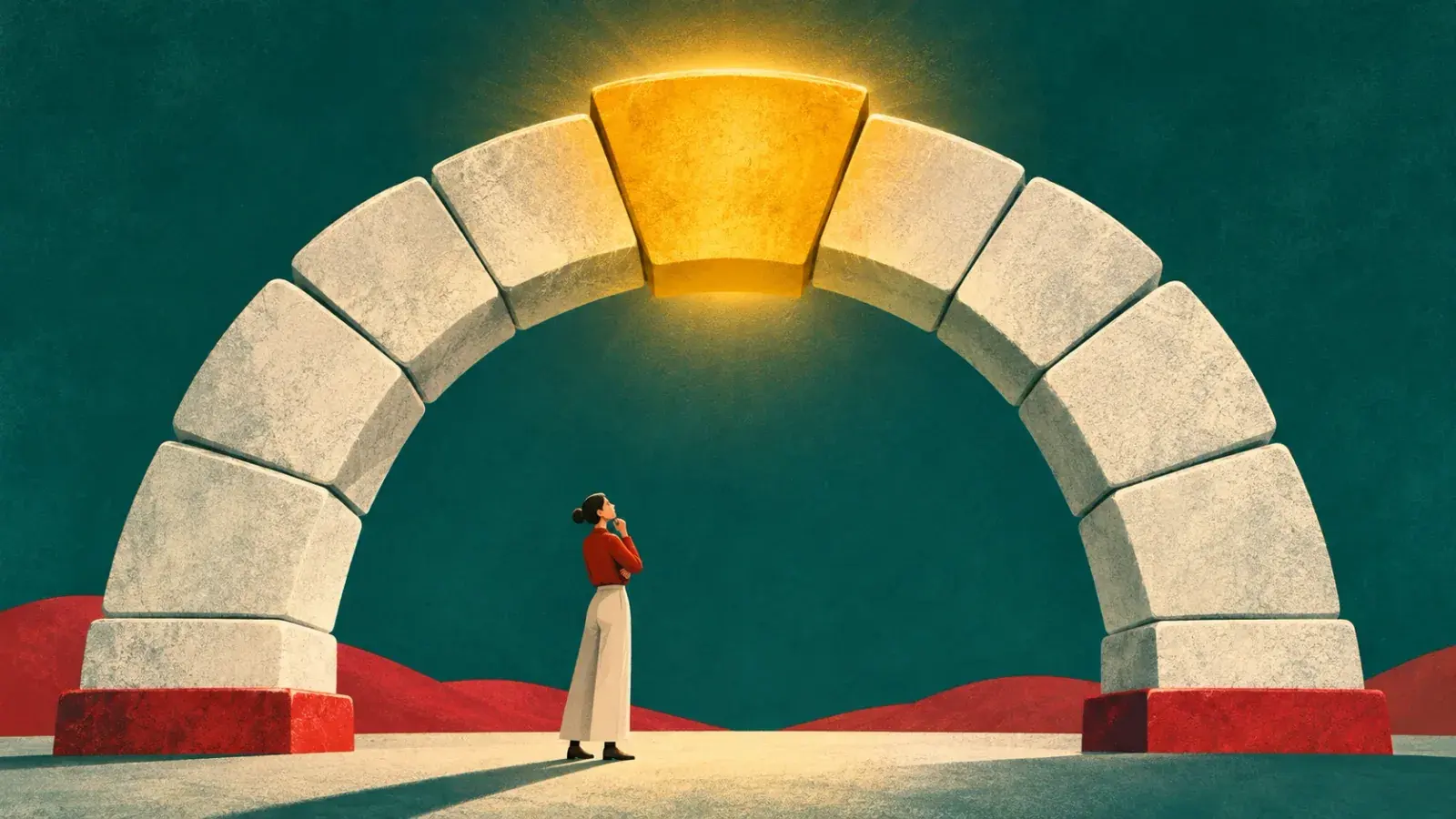
The main idea is the most important point a piece of writing makes about its topic: the one thing the writer wants you to take away, put into a sentence. In a paragraph it is often stated in a topic sentence. In a longer passage or a story it may be implied, and you find it by asking what all the details have in common. The facts, examples, reasons and events that explain or prove it are the supporting details.
Main idea and central idea overlap, and teachers draw the line in slightly different places; the usual difference is scale. This page is for practice: finding a main idea and the details that hold it up in a paragraph, a passage and a story, with exercises and answers. For how a whole essay, speech or book develops its point, the term used from middle school on, see central idea.
Topic, main idea and supporting details
Every paragraph that works has three layers. The topic is what the paragraph is about, in a word or two. The main idea is what it says about the topic. The supporting details are what make you believe it. Here they are in one paragraph.
Mrs. Adeyemi's bakery on Corran Street survives on habits. She opens at 5:40, not six, because the bus drivers change shifts at ten to six and want coffee before their routes. She bakes rye on Thursdays, when the Polish church holds its evening mass. She keeps the window table for Mr. Hollis, who has ordered the same cheese scone since 1994, and when he is ill she sends one home with his daughter.
| Layer | In the paragraph |
|---|---|
| LayerTopic | In the paragraphMrs. Adeyemi's bakery |
| LayerMain idea | In the paragraphThe bakery survives by fitting itself to its customers' habits (stated in the first sentence) |
| LayerMajor details | In the paragraphEarly opening for the bus drivers; rye for the church crowd; the window table for Mr. Hollis |
| LayerMinor details | In the paragraph5:40, not six; the shift change at ten to six; the scone since 1994; the scone sent home |
Major details support the main idea directly. Minor details support the major ones and make them specific. The test is deletion. Cut a minor detail and the paragraph gets vaguer but still stands; cut a major one and the main idea loses a leg. A detail that supports neither belongs in another paragraph.
Now notice what a broader main idea would lose. “Small businesses depend on their customers” is true of every shop on Corran Street. It drops the word that makes this paragraph specific, habits, and with it the reason the bakery opens at 5:40 and bakes rye on Thursdays. A sentence that broad leaves the details with nothing to prove.
Where the main idea goes
Textbooks often say the main idea is the first sentence, and it often is. But writers move it, and each position does something different.
First: the topic sentence
I went to the woods because I wished to live deliberately, to front only the essential facts of life, and see if I could not learn what it had to teach, and not, when I came to die, discover that I had not lived. I did not wish to live what was not life, living is so dear; nor did I wish to practise resignation, unless it was quite necessary. I wanted to live deep and suck out all the marrow of life…
The first sentence states the main idea: Thoreau went to the woods to learn what life is when it is stripped to its essentials. Everything after it restates the reason more vividly. Main idea first is the default for explaining and arguing, because the reader knows what each detail is for as it arrives.
After an opening
Now when I had mastered the language of this water and had come to know every trifling feature that bordered the great river as familiarly as I knew the letters of the alphabet, I had made a valuable acquisition. But I had lost something, too. I had lost something which could never be restored to me while I lived. All the grace, the beauty, the poetry had gone out of the majestic river!
The first sentence is a setup. The main idea arrives with “But”: learning the river as a pilot cost Twain its beauty. Turn words such as but, yet, however and still often mark the spot where a paragraph's real point begins. When a first sentence seems too easy, read on to the turn.
Last: the conclusion
It is interesting to contemplate an entangled bank, clothed with many plants of many kinds, with birds singing on the bushes, with various insects flitting about, and with worms crawling through the damp earth… […] There is grandeur in this view of life, with its several powers, having been originally breathed into a few forms or into one; and that, whilst this planet has gone cycling on according to the fixed law of gravity, from so simple a beginning endless forms most beautiful and most wonderful have been, and are being, evolved.
Darwin starts with a scene, lists the laws that produced it, and ends on his point: life explained by natural laws is grand, not diminished. Saving the main idea for the end builds toward it, which suits conclusions and persuasion. The risk is a reader who can't tell where the paragraph is going until it gets there.
Nowhere: the implied main idea
…It had a black canal in it, and a river that ran purple with ill-smelling dye, and vast piles of building full of windows where there was a rattling and a trembling all day long, and where the piston of the steam-engine worked monotonously up and down, like the head of an elephant in a state of melancholy madness. It contained several large streets all very like one another, and many small streets still more like one another, inhabited by people equally like one another, who all went in and out at the same hours, with the same sound upon the same pavements, to do the same work, and to whom every day was the same as yesterday and to-morrow, and every year the counterpart of the last and the next.
No sentence says what Coketown is like overall. Dickens piles up details and leaves the conclusion to the reader: Coketown is a dirty, mechanical town where every street, person and day is the same. To find an implied main idea, list the details and ask what they share. Here the answer is the word Dickens keeps repeating: same.
The main idea of a passage
A passage's main idea is built from its paragraphs' main ideas. Twain's Chapter 9 sets two paragraphs side by side. The first says the river became a book that only a pilot could read:
The face of the water, in time, became a wonderful book—a book that was a dead language to the uneducated passenger, but which told its mind to me without reserve, delivering its most cherished secrets as clearly as if it uttered them with a voice.
The second is the one above: learning to read it cost him its beauty. Then Twain proves the point with a sunset, described first as he saw it when steamboating was new to him and then as a pilot reads it, for signs of weather and danger in the water. Main idea of the passage: learning to read the river made it useful to Twain and took away its beauty. No single paragraph says all of that. To summarize a passage, write one sentence per paragraph, then one that joins them, and keep the turn.
The main idea of a story
A story's main idea is what the story is mostly about: who wants or faces what, what happens, and what it comes to, in one sentence. It names this story's people and events. The theme is the general idea about life behind it, and it leaves the names out. The main idea is the summary. The theme is the meaning.
One story states its main idea in its first sentence:
This is the story of the great war that Rikki-tikki-tavi fought single-handed, through the bath-rooms of the big bungalow in Segowlee cantonment.
The rest fills that sentence in. A summer flood washes a young mongoose into a family's garden, the family takes him in, and he fights the cobras Nag and Nagaina, who want the house emptied of people so the garden will be theirs. He seizes Nag in the bathroom and hangs on until the father's shotgun finishes him, smashes the eggs hidden in the melon bed and follows Nagaina down her hole. Most stories make you build the main idea yourself, from the plot.
| Story | Main idea (with names) | Theme (no names) |
|---|---|---|
| Story“Rikki-Tikki-Tavi,” Rudyard Kipling (1894) | Main idea (with names)A young mongoose saves the family that took him in by defeating the two cobras who want their garden. | Theme (no names)Courage and watchfulness can defeat a stronger enemy. |
| Story“The Legend of Sleepy Hollow,” Washington Irving (1820) | Main idea (with names)Ichabod Crane, a superstitious schoolmaster courting Katrina Van Tassel, is chased out of Sleepy Hollow by what seems to be the Headless Horseman, and his rival Brom Bones marries her. | Theme (no names)A mind that feeds on superstition is easy prey for anyone who knows its fears. |
| Story“The Open Window,” Saki (1914) | Main idea (with names)Vera, fifteen, tells a nervous visitor that her aunt still waits at the open window for a husband and two brothers lost in a bog, and when the three walk up to the window from their shooting, he runs. | Theme (no names)A confident storyteller can make people believe almost anything. |
The main idea of “The Legend of Sleepy Hollow” needs a hedge, “what seems to be,” because Irving never says who the rider was. He leaves a shattered pumpkin beside Ichabod's hat and has Brom Bones laugh whenever the pumpkin is mentioned. The main idea reports what the story shows; the theme is where the reader decides what it means. A main idea in this form, who, what, and what it comes to, is also the core of a logline and the place to start a synopsis.
How to find the main idea
- Name the topic
Ask who or what the paragraph, passage or story is about. Repeated words and names point to it.
- Look for a sentence that says it
Check the first sentence, the sentence after a turn word such as but or however, and the last sentence. If one of them makes a point that covers the rest, that is the main idea.
- If none does, find what the details share
List the details in a few words each and ask what they have in common. For a story, list what the main character wants, what stands in the way and how it ends.
- Write it in one sentence
Use your own words and a complete sentence with a subject and a claim. For a story, include the main character and the outcome.
- Check the size
Too broad and it would fit a hundred paragraphs. Too narrow and it is just one detail. Every major detail should fit under it.
| Too broad | Too narrow | Right size |
|---|---|---|
| Too broadSmall businesses depend on customers. | Too narrowThe bakery opens at 5:40. | Right sizeMrs. Adeyemi's bakery survives by fitting itself to its customers' habits. |
| Too broadGood defeats evil. | Too narrowRikki-tikki fights a cobra in the bathroom. | Right sizeA young mongoose saves the family that took him in by defeating the two cobras who want their garden. |
Main idea, central idea and theme
The three terms overlap, and teachers use them in slightly different ways. The working difference is scale and kind:
| Term | Scale | Example |
|---|---|---|
| TermMain idea | ScaleA paragraph, a passage or a story's plot | ExampleLearning to read the river cost Twain its beauty. |
| TermCentral idea | ScaleA whole text, especially nonfiction | ExampleThoreau argues that a just person must refuse to support an unjust government. |
| TermTheme | ScaleA whole literary work, stated without names | ExampleCourage and watchfulness can defeat a stronger enemy. |
The central idea guide has the full comparison, including how school standards use each term, and theme examples has 40 theme statements to test your own against.
Practice: find the main idea
Find the main idea of each passage, list the details that support it, and say whether it is stated or implied. For the story, give a theme too. Answers follow.
The old ferry terminal looks abandoned from the road. Up close, it isn't. Someone has swept the waiting room and set out folding chairs in rows. A hand-lettered sign on the door lists a Tuesday chess club, a Thursday choir and a Saturday repair café, and the radiator under the ticket window has been painted bright green.
At 7:02 the first alarm went off. At 7:11, the second. At 7:20 Leo was still in bed, reading about a band he didn't even like. The bus left at 7:35, and he made it with his shoes untied and his lunch on the kitchen counter.
A sourdough starter is only flour and water. It needs feeding every day, a warm shelf and a week of patience before it bubbles. My grandmother named hers Wilbur, carried it across the Atlantic in a jam jar in 1961 and left it to my mother in her will. A starter is less an ingredient than a pet that happens to make bread.
Every winter Mr. Petrossian shoveled the whole street before dawn, and nobody knew who did it. The year his back gave out, he watched from the window as the snow piled up. At six the next morning he heard scraping. The boy from number 9 was clearing his steps first.
| Passage | Main idea | Key supporting details | Stated or implied |
|---|---|---|---|
| Passage1 | Main ideaThe old ferry terminal only looks abandoned; up close it is full of community life. | Key supporting detailsThe swept waiting room; folding chairs in rows; the sign for chess, choir and repair café; the green radiator | Stated or impliedStated after an opening: “Up close, it isn't.” |
| Passage2 | Main ideaLeo's putting things off turns an easy morning into a scramble. | Key supporting detailsTwo alarms ignored; still reading in bed at 7:20; untied shoes; lunch left on the counter | Stated or impliedImplied by the times and what he forgets |
| Passage3 | Main ideaA sourdough starter is treated more like a pet than an ingredient. | Key supporting detailsDaily feeding; a name, Wilbur; carried across the Atlantic; left in a will | Stated or impliedStated in the last sentence |
| Passage4 | Main ideaWhen the man who secretly shovels the street can't, a neighbor's boy shovels for him. Theme: kindness given quietly comes back. | Key supporting detailsYears of shoveling before dawn, unseen; his back gives out; scraping at six; his steps cleared first | Stated or impliedMain idea implied by the plot; theme left to the reader |
Check each paragraph's main idea
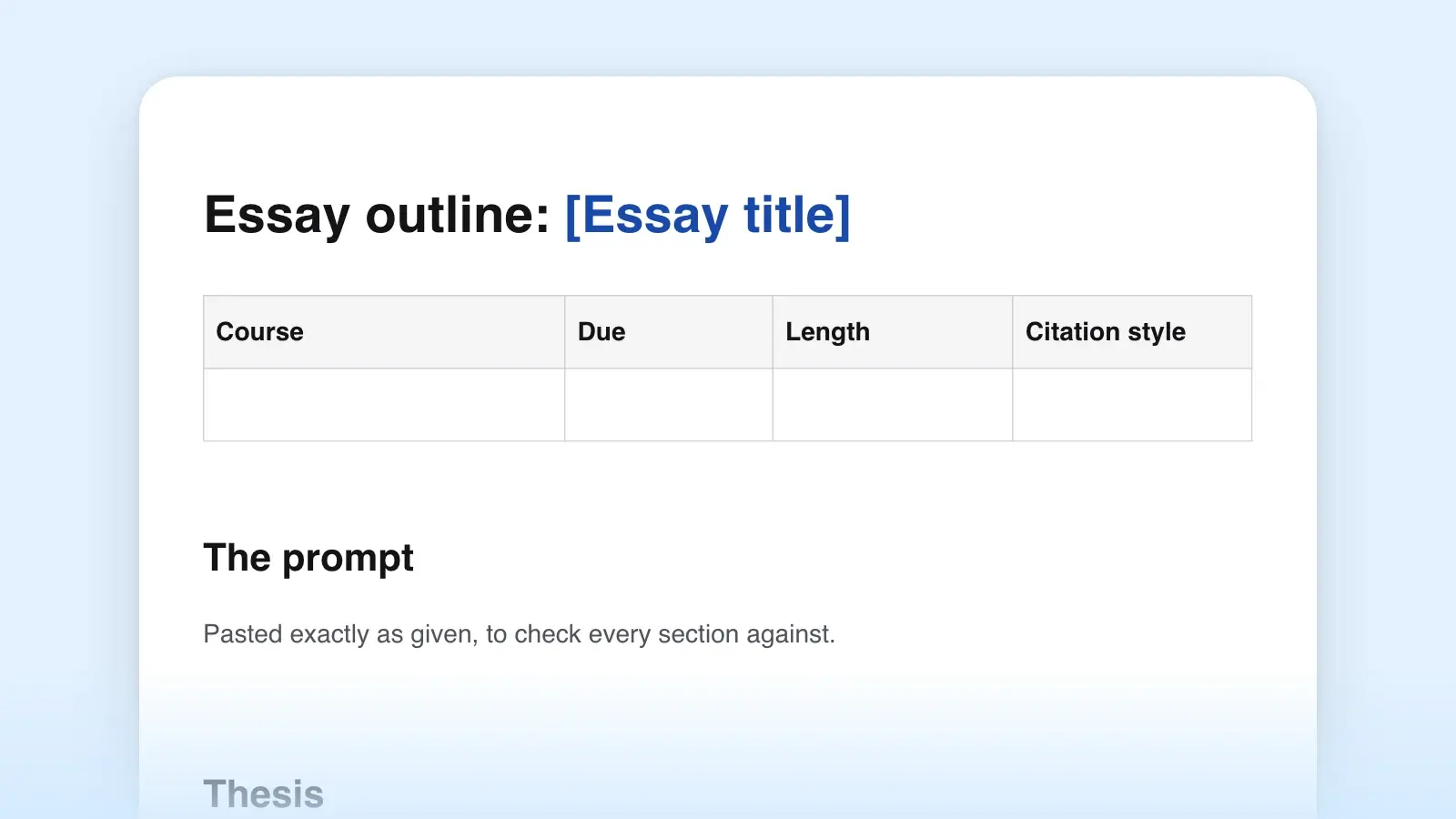
If you write reports, essays, articles or nonfiction chapters, the same test works in reverse. Every paragraph should have one main idea, and you should be able to say it. A paragraph with two usually needs splitting. A paragraph with none needs a point, or a cut. An essay outline that gives each paragraph its main idea in one line makes the check quick.
For a second reader, ask the Strokes Assistant to state the main idea of each paragraph in one sentence. Where its sentence differs from what you meant, that paragraph is worth a second look.
Frequently asked questions
What is the difference between the main idea and supporting details?
The main idea is the point; supporting details are the evidence. In a paragraph about a bakery that survives on its customers' habits, the habits it serves, early coffee for bus drivers and rye for the church crowd, are the supporting details. Major details support the main idea directly, and minor details make the major ones specific.
Is the main idea always the first sentence?
No. The first sentence is the most common place, especially in textbooks and essays, but the main idea can come after an opening sentence, often marked by but or however, at the end of the paragraph, or nowhere at all. Descriptive writing often leaves it implied. Check the first and last sentences, then any sentence after a turn.
What is an implied main idea?
An implied main idea is one the writer never states in a single sentence; the reader infers it from the details. Dickens never says Coketown is monotonous. He describes streets like one another, people like one another and every day the same as yesterday, and the reader concludes it. To state an implied main idea, list the details and name what they share.
What is the difference between main idea and theme?
The main idea of a story says what this story is about, with its own characters and events: a young mongoose saves his family from two cobras. The theme is the general truth about life behind it, with no names: courage and watchfulness can defeat a stronger enemy. A main idea can be checked against the plot; a theme has to be argued.