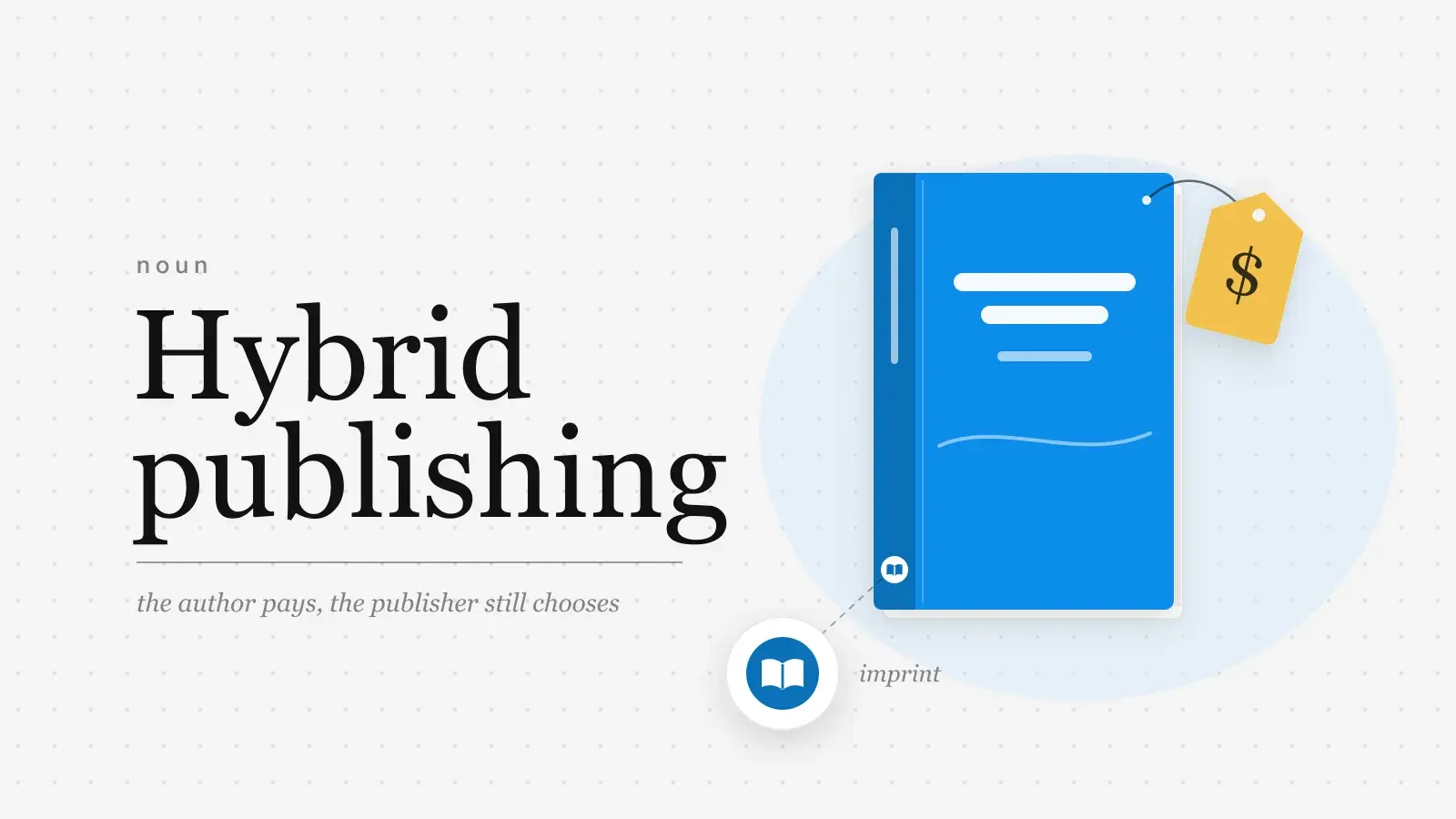
Hybrid publishing is a model in which the author pays some or all of the cost of producing a book, and the publisher still decides which books it takes, edits and distributes them, releases them under its own imprint, and pays the author a higher royalty than a traditional house would.
A vanity press also charges the author, but it publishes almost anyone who pays and makes its money from those fees rather than from readers. An imprint is the brand a book is published under, the name and logo on the spine and title page. The first two can look identical from outside, and both put an imprint on the spine, which is how writers end up learning the difference after they have paid.
Four ways a book gets published
| Route | Who pays to produce it | Who decides | Whose imprint | What the author earns |
|---|---|---|---|---|
| RouteTraditional | Who pays to produce itThe publisher, which often pays an advance too | Who decidesThe publisher, usually through agents | Whose imprintThe publisher's | What the author earnsA royalty, classically 10–15% of list price on hardcovers |
| RouteHybrid | Who pays to produce itThe author, for part or all | Who decidesThe publisher, which turns books down | Whose imprintThe publisher's | What the author earnsA higher royalty, no advance |
| RouteVanity press | Who pays to produce itThe author, for all of it and often more | Who decidesNobody, in practice | Whose imprintThe press's | What the author earnsLittle, after fees and required purchases |
| RouteSelf-publishing | Who pays to produce itThe author, for services they choose | Who decidesThe author | Whose imprintThe author's, or the platform's | What the author earnsThe largest share of each sale |
The hardcover scale comes from the Authors Guild's model trade contract: 10% of list price on the first 5,000 copies, 12.5% on the next 5,000, 15% after that. Ebook royalties at traditional houses are usually 25% of net receipts.
One more name to keep apart: a hybrid author is a writer who publishes some books traditionally and self-publishes others. That is a career pattern, not a business model, and it costs nothing.
Examples
Austen's first published novel was not bought by its publisher. Thomas Egerton took it on commission: Austen, with money and help from her brother Henry, paid for printing and advertising and carried the risk, while Egerton sold the book and she kept her copyright. The title page records the deal in its imprint line: "Printed for the author," by C. Roworth, published by T. Egerton, Whitehall. The first edition sold out, and Austen made a profit of £140. Author money, a publisher's name and a publisher's sales network: that is most of what a hybrid sells today.
In November 2009 Harlequin, the romance publisher, launched a self-publishing service run with Author Solutions and gave it its own name: Harlequin Horizons. Writers' organizations objected to a traditional publisher lending its name to a service authors pay for. Romance Writers of America declared Harlequin ineligible for its conference resources, and on November 25 the service became DellArte Press. In December, Mystery Writers of America removed Harlequin and its imprints from its list of approved publishers anyway.
Harlequin was not the only big publisher in the author-pays business. In 2012 Pearson, Penguin's parent, bought Author Solutions for $116 million. Authors sued in 2013, the cases ended in a confidential settlement with no finding of wrongdoing, and Penguin Random House sold the company at the end of 2015.
Kingsnorth wrote his novel in an invented "shadow tongue" of old and modern English and expected mainstream publishers to pass. Unbound, a UK publisher that acquires books and then raises the money for them through reader pledges, published it. In 2014 it became the first crowdfunded novel on the Man Booker Prize longlist. The publisher still chose the book. The money to produce it simply came from somewhere other than the publisher's own budget, which is why crowdfunding is often filed under hybrid.
She Writes Press was founded in 2012 by Kamy Wicoff and Brooke Warner, who later chaired the IBPA committee that wrote the first hybrid publisher criteria. It reviews submissions and declines some, charges authors a publishing fee and is distributed to the trade by Simon & Schuster. In 2022 its package cost $8,500, not counting editing, printing or publicity. Warner told Friedman that about 10 to 15% of its authors earn out once all costs are counted, and that most earn around $2 per print book. At $2 a copy, earning back the package fee alone takes 4,250 sales.
How to tell hybrid from vanity
Writers have long relied on Yog's Law, coined by the author James D. Macdonald: money should flow toward the author. Hybrid publishing breaks that rule on purpose, so it needs a sharper test. The Independent Book Publishers Association (IBPA) published one in 2018, nine criteria a reputable hybrid meets, and expanded it to eleven on September 1, 2022. IBPA's position is that a company meeting most but not all of them isn't a hybrid publisher and would be better described as a self-publishing service.
| IBPA criterion | What to ask for |
|---|---|
| IBPA criterionA defined mission and list | What to ask forWhich books do you publish, and which do you turn down? |
| IBPA criterionVets submissions | What to ask forHow many manuscripts did you decline last year? |
| IBPA criterionTruthful, transparent dealings | What to ask forEvery fee in writing, plus an honest sales estimate |
| IBPA criterionA negotiable, plain contract | What to ask forThe contract before any payment, with a rights reversion clause |
| IBPA criterionIts own imprints and ISBNs | What to ask forWhose name and ISBN go on the copyright page? |
| IBPA criterionIndustry standards | What to ask forCover price, format and page count in line with similar books |
| IBPA criterionEditorial, design and production quality | What to ask forWho edits and designs? Three recent books to hold |
| IBPA criterionManages a range of rights | What to ask forWho sells audio, translation and film rights, and how is that money split? |
| IBPA criterionDistribution | What to ask forWhich distributor, and who pitches the book to bookstores? |
| IBPA criterionRespectable sales | What to ask forSales figures for recent titles, not badges |
| IBPA criterionHigher-than-standard royalty | What to ask forThe rate, and whether it is on list price or net receipts |
Not everyone thinks the label can be rescued. Victoria Strauss of Writer Beware has argued that so many exploitative companies now call themselves hybrid that the word reliably tells you only one thing: the author pays. In the UK, the Society of Authors and the Writers' Guild of Great Britain surveyed authors who had paid to publish and released the results in April 2022 as Is it a steal?, with 15 principles they want paid-for publishers to follow.
Signs of a real hybrid
- It turns manuscripts down and says roughly how many.
- Fees are itemized, and the contract arrives before any payment.
- It names its distributor and has sales reps who pitch to stores.
- It earns money from selling books, not only from authors.
- Its books are in libraries, and its authors will talk to you.
Signs of a vanity press
- It accepted your book within days, with praise that could fit any book.
- The price appears after the congratulations, with a deadline.
- You must buy copies or a marketing package.
- "Available to bookstores" means a database listing, nothing more.
- Reviews, awards and film pitches are sold as extras.
Dear Dana, congratulations. Our acquisitions board has reviewed The Salt Year and sees real commercial potential. We'd like to offer you a place on our spring list through our partnership program. Your investment of $6,900 covers editing, cover design, an ISBN and worldwide distribution, with a 50% royalty. Spring places are limited, so we can hold this offer for seven days. Most partner authors also add our Bestseller Launch package ($2,400).
What to notice: the praise names nothing in the book. "Investment" means you are the customer. 50% of what, after which costs? Whose ISBN? "Worldwide distribution" with no distributor named often means a wholesaler listing and printing on demand. The deadline and the upsell are sales tactics. One of these alone proves nothing. All of them together describe a company that makes its money from authors.
What an imprint is
The word does three jobs, and all of them matter here.
- A brand inside a publisher. Penguin Random House says it has more than 300 imprints worldwide, each with its own editors and list. Knopf, with its borzoi on the spine, is an imprint of the Knopf Doubleday Publishing Group, a division of Penguin Random House. The spine says Knopf. The company behind it is Penguin Random House.
- The publication line. In bibliography and the rare book trade, the imprint is the publisher, place and date at the foot of the title page, like Austen's "Printed for the author." On a modern book that information sits on the title page and copyright page, part of the front matter.
- Your own imprint. A self-publishing author can name an imprint and buy ISBNs registered to it. In the US, Bowker sells one ISBN for $125 or ten for $295 at the time of writing. Canadian residents get them free from Library and Archives Canada. Use Amazon KDP's free ISBN instead and the imprint shows as "Independently published." Use your own and KDP checks that the imprint matches the ISBN agency's record.
This is why IBPA asks that a hybrid publish under its own imprints and ISBNs: the company whose ISBN is on the book is the publisher of record, and it is putting its name on your book in public. It is also why an imprint name proves nothing about money. Harlequin Horizons had one of the best-known names in romance on it, and the author paid.
Before you pay a publisher
- Decide what the money buys. Hybrid makes most sense when you can sell books yourself (a speaker who sells at events, a consultant with a client list) and you want a publisher's editing, design and bookstore distribution without waiting for a deal. If you want a traditional deal, query agents first. Paid options will still be there later.
- Do the arithmetic. Divide everything you will pay by what you earn per copy. If the number is more copies than you can picture selling, the fee is the product.
- Get three quotes and one self-publishing estimate. Price a freelance editor, a cover designer and your own ISBNs, and compare. The Alliance of Independent Authors rates paid services in its directory, from Excellent down to Watchdog Advisory, and Writer Beware posts warnings about specific companies.
- Read the contract for rights and extras. Check which rights you grant, for how long, how you get them back, and any annual, warehousing or hourly editing fees on top of the main one. The Authors Guild publishes a hybrid publisher checklist. None of this is legal advice. Have a lawyer or an authors' organization review the contract before you sign.
- Talk to two authors the publisher did not pick for you. Ask what they paid in total and how many copies they have sold.
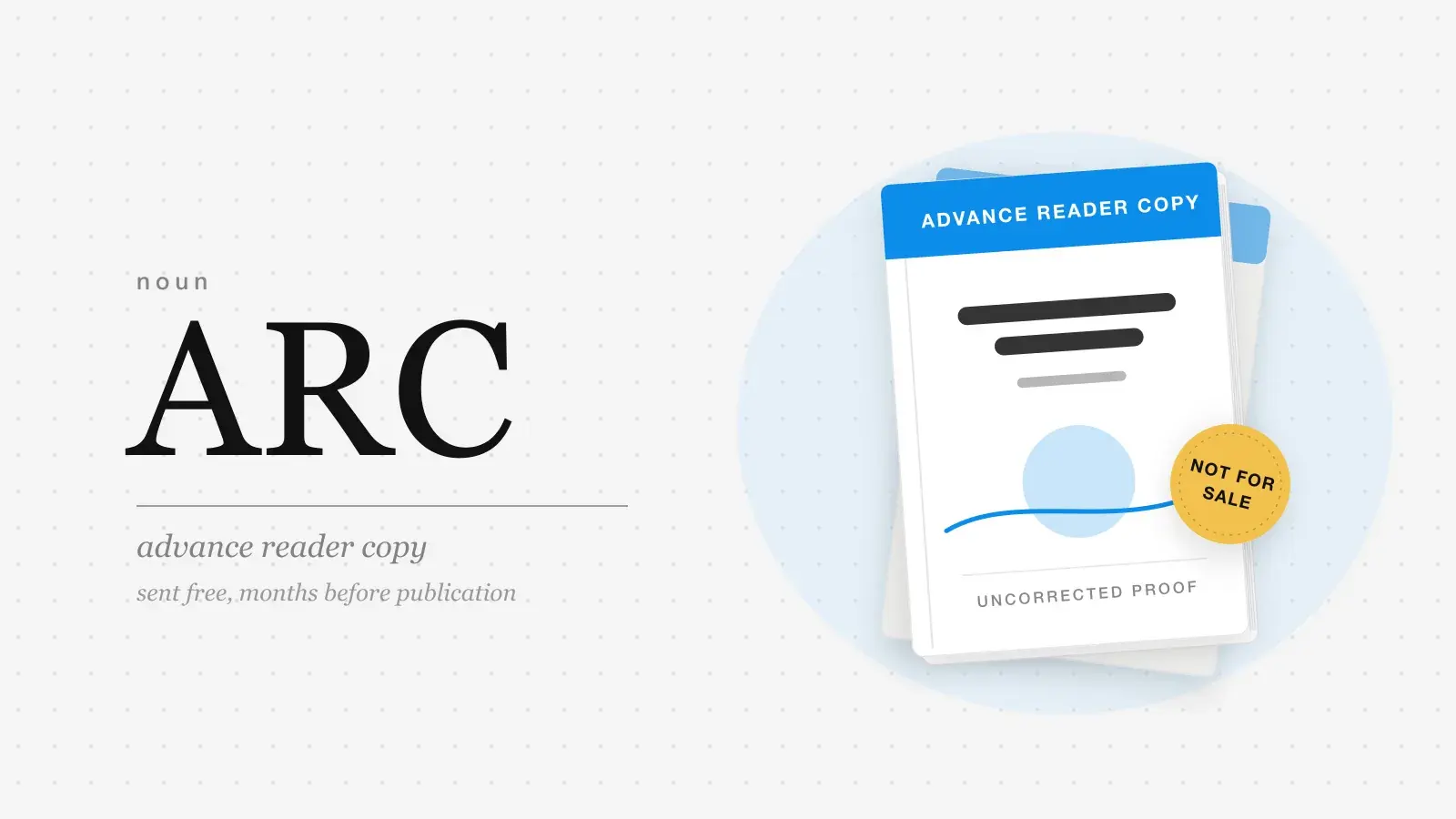
A hybrid deal starts where every route starts, with a finished manuscript and a pitch. Traditional publishing adds agents and the slush pile, and a reputable publisher of any kind follows acceptance with editing, proofs and early copies such as an ARC. If you want to try for an agent before you spend anything, start with how to get a literary agent and the query letter template.