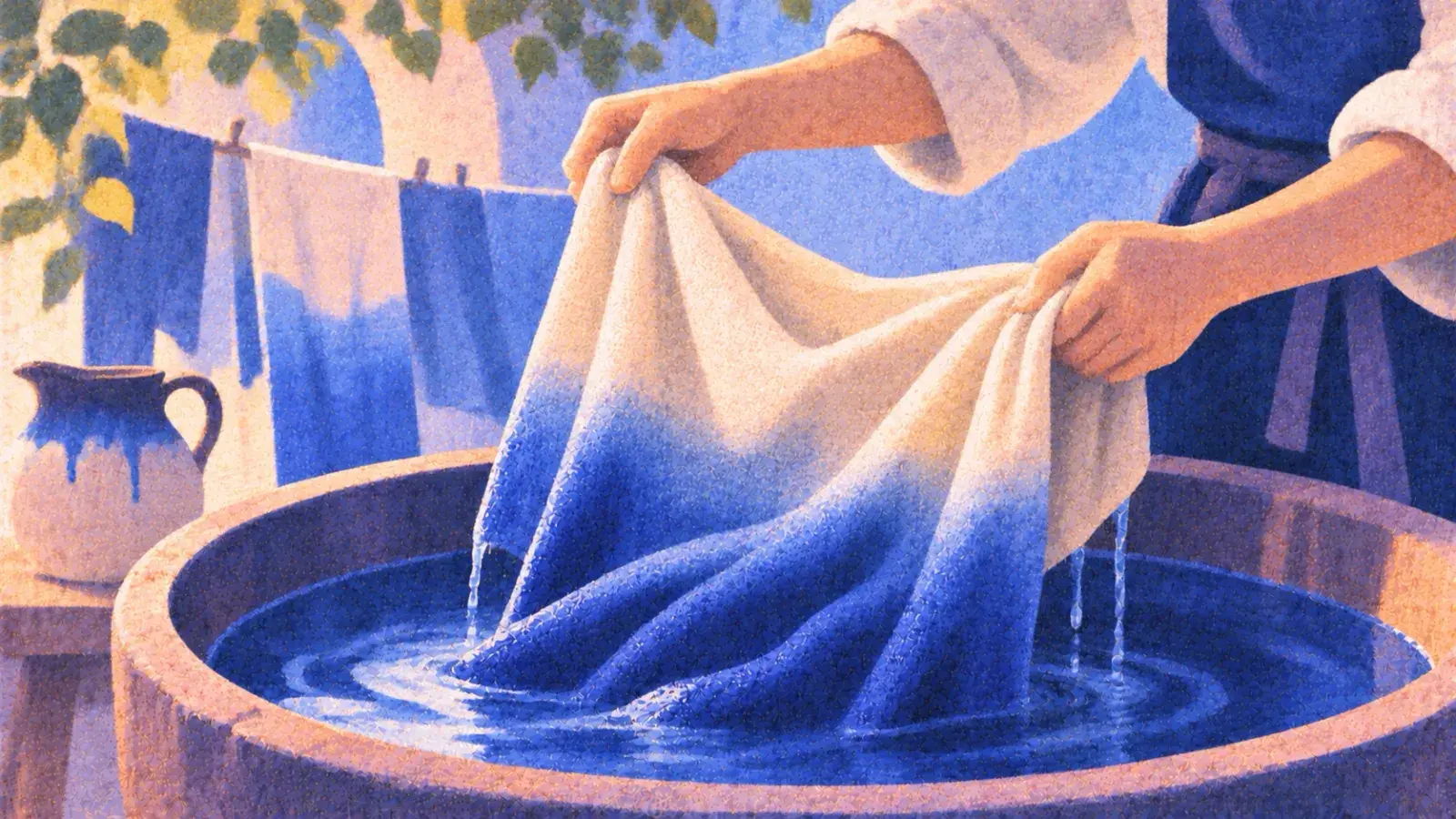
Ingrained means fixed so deeply that it is hard to change or remove, and it is the spelling to use: After twenty years of night shifts, the habit of eating dinner at 3 a.m. was ingrained. Engrained is a less common spelling of the same word; dictionaries accept it, but ingrained is the usual choice. The word describes habits, beliefs and attitudes built up over years, such as a deeply ingrained distrust of doctors, and, more literally, dirt worked into a surface. The memory trick: what's ingrained is in the grain, worked into the fibers.
Ingrained implies time and repetition, which is what separates it from innate, present from birth. A newborn's grip on your finger is innate. Checking the stove twice before bed is learned: nobody is born doing it, and after years of repetition it becomes ingrained.
Ingrained at a glance
| Ingrained | |
|---|---|
| Means | IngrainedFirmly fixed and hard to change; of dirt, worked deep into a surface |
| Spelling | Ingrainedingrained (standard); engrained (less common variant) |
| Pronunciation | Ingrainedin-GRAYND, /ɪnˈɡreɪnd/; Merriam-Webster also gives IN-graynd |
| Part of speech | IngrainedAdjective; also the past tense and past participle of the verb ingrain |
| Usual partners | Ingraineddeeply ingrained; become or remain ingrained; ingrained in someone or something |
| Often describes | Ingrainedhabits, beliefs, attitudes, prejudice, fear, culture, dirt, stains |
| Origin | IngrainedDyeing: cloth dyed in grain held its color; Merriam-Webster's first known use is 1599 |
What ingrained means
Dictionaries give two senses. Merriam-Webster's first is “forming a part of the essence or inmost being,” with deep-seated as its synonym: ingrained prejudice, a deeply ingrained distrust of authority. The second is literal, worked into the grain or fibers of a material, as in ingrained dirt or ingrained stains. Oxford's learner's dictionary adds the reason a habit or attitude counts as ingrained: it has existed for a long time, and that is why it is difficult to change.
An ingrained habit was practiced until it stopped feeling like a choice; an ingrained belief was absorbed, usually young, and rarely questioned. Innate is what you were given; ingrained is what was built into you afterward, which is also why an ingrained habit can, slowly, be unlearned.
Ingrained or engrained?
Both spellings are in the dictionaries, and neither is a typo. Merriam-Webster lists engrained as a less common variant of ingrained, and Oxford's learner's dictionary lists it as a variant too. The verb has the same pair, ingrain and engrain. It came into English in the late 14th century from the French phrase en graine, and the en- spelling has never quite disappeared.
Ingrained is the form both dictionaries put first, and engrained can look like a slip to readers who have never seen it. Unless your house style says otherwise, write ingrained, change an inherited engrained everywhere or nowhere, and note the decision on your style sheet. For other words with a standard form and an accepted variant, see judgement vs judgment and learnt vs learned.
Ingrained vs innate, inherent and entrenched
These words overlap, and the difference matters when you are describing a person or an institution.
| Word | Means | Example |
|---|---|---|
| Wordingrained | MeansBuilt in over time by habit or repetition; hard to change | Examplean ingrained habit of checking the locks twice |
| Wordinnate | MeansPresent from birth, not learned | Examplean innate sense of rhythm |
| Wordinherent | MeansPart of the basic nature of a thing | Examplethe risks inherent in any surgery |
| Wordentrenched | MeansFirmly established and defended, often of systems or positions | Exampleentrenched interests on the city council |
| Worddeep-seated, deep-rooted | MeansFirmly established, often of feelings | Examplea deep-seated fear of water |
| Wordinveterate | MeansFixed by long persistence, of a person and a habit | Examplean inveterate gambler |
| Wordengraved | MeansCarved into a surface; figuratively, vivid in memory | ExampleThe date is engraved on the ring. |
Engraved is easy to confuse with engrained, because the two look and sound alike. A date engraved on a ring is cut into the metal; a belief ingrained in you has soaked in over time.
Examples of ingrained in sentences
Habits and routines:
- Checking the stove twice before bed is so ingrained that she does it in hotels.
- The habit of writing before breakfast became ingrained during his first novel.
- Saluting was so ingrained in him that he once saluted a crossing guard.
Beliefs and attitudes:
- Her distrust of banks was ingrained in the years her family lost its savings.
- The belief that hard work is always rewarded is deeply ingrained in the town.
- He had an ingrained suspicion of anyone who said “synergy.”
- Ingrained assumptions about who does the cooking showed up in every interview.
Cultures and institutions:
- A culture of long hours had become ingrained at the firm.
- The Sunday lunch is ingrained in the family's calendar.
- Changing an ingrained process takes more than a memo.
- Fear of failure was so ingrained in the company that nobody proposed anything new.
Dirt and surfaces:
- The ingrained dirt in the grout took a stiff brush and a whole afternoon.
- The baker's hands had flour ingrained in every crease.
- A soft cloth won't lift ingrained stains from old marble.
- The varnish had worn away, and decades of grime were ingrained in the oak.
Show an ingrained habit in fiction
“Her frugality was deeply ingrained” asks the reader to take it on trust. An ingrained trait is ideal for showing instead of telling, because it is by definition something the character does without deciding to. Put it in an action she doesn't notice, at a moment when it costs her something or no longer makes sense.
Telling: Marta's frugality was deeply ingrained after forty years of making do.
Showing: Marta rinsed the foil from the lasagna, smoothed it flat with the side of her hand and folded it into the drawer with the others. The drawer would not quite close. She had won the lottery on Tuesday.
The last line does the work: the habit outlives the reason for it. That gap between circumstance and behavior is what ingrained means, and on the page it usually convinces more than the word itself. For more ways to show a habit, see the list of mannerisms; for traits that harden into weaknesses, the character flaws list.
A habit is also more convincing when it keeps turning up. A character who checks the locks twice in chapter 2 and never again has a trait on paper rather than a habit, unless the story shows why it stopped. With the novel kept as one document per chapter, ask the Strokes Assistant to review the project and tell you where Marta's frugality shows and where it is inconsistent.
In nonfiction, “deeply ingrained” often stands in for evidence. If a culture of overtime is ingrained at a company, show it: the meeting invitations sent at 9 p.m., the manager who left at six and was asked if she was ill.
Quick quiz: which word fits?
Choose ingrained, innate, inherent, entrenched or engraved.
- After thirty years in the navy, his habit of making the bed with tight corners was ____.
- Some risk is ____ in any investment.
- The town's two founding families held ____ positions on the council.
- She seemed to have an ____ ear for music, even as a toddler.
- Their initials were ____ on the back of the watch.
- The red wine stain was ____ in the linen tablecloth.
- A distrust of strangers had been ____ in the village for generations.
- ingrained: built up by long habit
- inherent: part of the nature of investing
- entrenched: established and defended
- innate: present from early childhood, not learned
- engraved: cut into metal
- ingrained: worked into the fibers
- ingrained: absorbed over time (entrenched works if you mean defended)
Where ingrained comes from
The grain in ingrained wasn't wood grain to begin with. In medieval English, grain was the name of a scarlet dye made from kermes, insects so like small seeds that the dye was long thought to come from a plant. Cloth dyed in grain had been colored with it, and it held its color. The verb ingrain first meant to dye fabric this way. The word was later tied to grain in its other sense, the fibers of wood, leather or cloth, which is where ingrained dirt comes from, and by the 1590s it was also being used figuratively for anything rooted deep. From the mid-1800s it was applied to habits, principles and prejudices.
Shakespeare's audiences knew the dyer's meaning:
OLIVIA: 'Tis in grain, sir; 'twill endure wind and weather.
Viola has just teased that Olivia's beauty might be painted on. Olivia's answer is a dyer's joke: her color is in grain, fast-dyed, and it won't wash off in the rain.
GERTRUDE: O Hamlet, speak no more:
Thou turn'st mine eyes into my very soul;
And there I see such black and grained spots
As will not leave their tinct.
A tinct is a color or a dye. Gertrude's guilt is dyed in, and like grain-dyed cloth it won't come out. The same workshop gave English dyed-in-the-wool, thoroughgoing and uncompromising, from wool dyed before it was spun so the color would last.
Ingrained in classic writing
William James used the word twice in his chapter on habit:
There is no more miserable human being than one in whom nothing is habitual but indecision, and for whom the lighting of every cigar, the drinking of every cup, the time of rising and going to bed every day, and the beginning of every bit of work, are subjects of express volitional deliberation. Full half the time of such a man goes to the deciding, or regretting, of matters which ought to be so ingrained in him as practically not to exist for his consciousness at all.
For James, ingrained is a compliment: these habits free your attention for better things. He urges any reader with daily duties “not yet ingrained” to “begin this very hour to set the matter right,” and warns that “by the age of thirty, the character has set like plaster.” What makes a good habit reliable makes a bad one hard to break.
Frequently asked questions
What does deeply ingrained mean?
Deeply ingrained means very firmly established, so much a part of someone or something that changing it would take real effort: deeply ingrained habits, beliefs, prejudices or traditions. In formal writing, back the phrase with evidence, since it is easy to assert and hard to prove.
What is the difference between ingrained and innate?
Innate means present from birth, not learned: an innate sense of rhythm. Ingrained means built in over time through habit, upbringing or repetition: an ingrained habit of saving string. An innate trait was never learned; an ingrained one was, which is also why it can, slowly, be unlearned.
Is ingrained positive or negative?
Neither in itself. It often describes things people would like to change, such as ingrained prejudice or ingrained dirt, so it can sound negative. But honesty or discipline can be ingrained too, and William James praised habits so ingrained that we no longer have to think about them.