A protagonist is the main character whose goal drives the story: the person who wants something, acts to get it and makes the choice that decides the climax. Elizabeth Bennet, Jane Eyre, Sherlock Holmes and Jean Valjean are protagonists, and so are anti-heroes like Moll Flanders, reluctant heroes like Hamlet and unreliable narrators like Barry Lyndon. The word comes from the Greek prōtagōnistēs, built from prōt-, first, and agōnistēs, a “competitor at games” or “actor”: in classical Greek drama, the protagonist played the leading part.
Below: three tests for finding the protagonist, how the protagonist differs from the main character and the narrator, and examples by type, mostly from classic books you can read free online. For the character on the other side of the conflict, see antagonist examples.
Who counts as the protagonist
Three questions settle most cases:
- Whose want drives the plot? Take the character out and the story should stop, not just lose a point of view.
- Who makes the decisive choice? The climax turns on what the protagonist does, not on what happens to them.
- Whose change does the ending measure? The last chapters answer a question about this person: did they change, refuse to, or change the world around them? The character arc guide covers the three answers.
The second test is easiest to see in a small example: the same news, handled two ways.
Passive. The letter from the bank came on Tuesday. Corinne read it twice and put it in the drawer. On Friday her brother called to say the farm would be auctioned in May.
Active. The letter from the bank came on Tuesday. Corinne read it twice, then drove to the county office and asked who else had bid on the land. By Friday she knew the buyer's name, and she called her brother before the bank could.
Same news, same week. The decision that makes Corinne drive the next scene is the trip to the county office: nobody asked her to go, and it puts her in a room the plot didn't prepare. The call to her brother, made before the bank can make it, opens the scene after that. In the passive version the plot moves only when someone else acts.
Most of the time one character passes all three tests. When the answers split between two characters, you have one of the cases below, and in an ensemble you ask the questions of each lead.
Protagonist vs main character vs narrator
The three words overlap, which causes most of the confusion. The protagonist drives the plot. The main character is the person the story is about, usually the same one. The narrator is whoever tells it, and can be the protagonist, a witness, or a voice outside the story altogether (see point of view).
The Sherlock Holmes stories show the difference cleanly. Dr. Watson narrates all but four of them. Holmes is the main character, since the stories are about him, and the protagonist, since his decisions crack each case and decide its climax. The witness narrator lets Conan Doyle keep the detective's reasoning hidden until the reveal.
| Book | Narrator | Protagonist | Why they split |
|---|---|---|---|
| BookPride and Prejudice (1813) | NarratorA third-person narrator | ProtagonistElizabeth Bennet | Why they splitThey don't: the narration stays close to her |
| BookMoby-Dick (1851) | NarratorIshmael | ProtagonistCaptain Ahab, in most readings | Why they splitIshmael survives to tell it; Ahab's hunt drives it |
| BookJulius Caesar (1599) | NarratorNone: it's a play | ProtagonistBrutus, in most readings | Why they splitThe title character is killed in Act 3 |
| BookTo Kill a Mockingbird (1960) | NarratorScout Finch, looking back | ProtagonistScout, with Atticus driving the trial plot | Why they splitA child's coming of age wrapped around an adult's fight |
The Great Gatsby (1925) is the hard case. Nick Carraway narrates, and the book is named for and about Gatsby, but the protagonist depends on which test you apply: Gatsby's want drives the plot, while Nick's disillusionment is the change the ending measures. The distinction matters while you write, not just in a literature class. If the protagonist is Gatsby, each chapter has to move his plan to win Daisy forward. If it is Nick, each chapter has to change what Nick believes about the people around him. Fitzgerald's witness narrator lets the book do both. Decide which kind of book you are writing before you plan the middle. For how witness narrators work on the page, see first-person narrative.
Protagonist examples by type
The types overlap. Jean Valjean is a classic hero who enters the novel as a newly released convict, and Hamlet is both a reluctant hero and a tragic one. Treat the types as ways of reading a protagonist, not as boxes.
The classic hero
Brave, capable and in the right: the protagonist readers cheer for without reservation. The risk is a hero with nothing to lose, so the strong ones pay for their courage. Jean Valjean in Victor Hugo's Les Misérables (1862) carries the wounded Marius, the young man who will take away the daughter he raised, through the sewers of Paris. In the opening chapters of Dumas's The Three Musketeers (1844), d'Artagnan reaches Paris on a yellow pony and, within a single morning, blunders into quarrels with Athos, Porthos and Aramis, the three men who become his friends. Modern classic heroes include Katniss Everdeen in The Hunger Games (2008) and Harry Potter.
The anti-hero
A protagonist without the usual heroic virtues: selfish, dishonest, cowardly or cruel, and still the person the reader follows. Defoe's Moll Flanders (1722) is a thief and a bigamist who tells her own story, and the reader keeps turning pages to see what she'll get away with next. Becky Sharp climbs English society by charm and deceit in Thackeray's Vanity Fair (1847–48). Modern: Scarlett O'Hara in Gone with the Wind (1936), who saves her family's plantation by marrying her sister's suitor for his money. The anti-hero guide covers the type in depth.
The reluctant hero
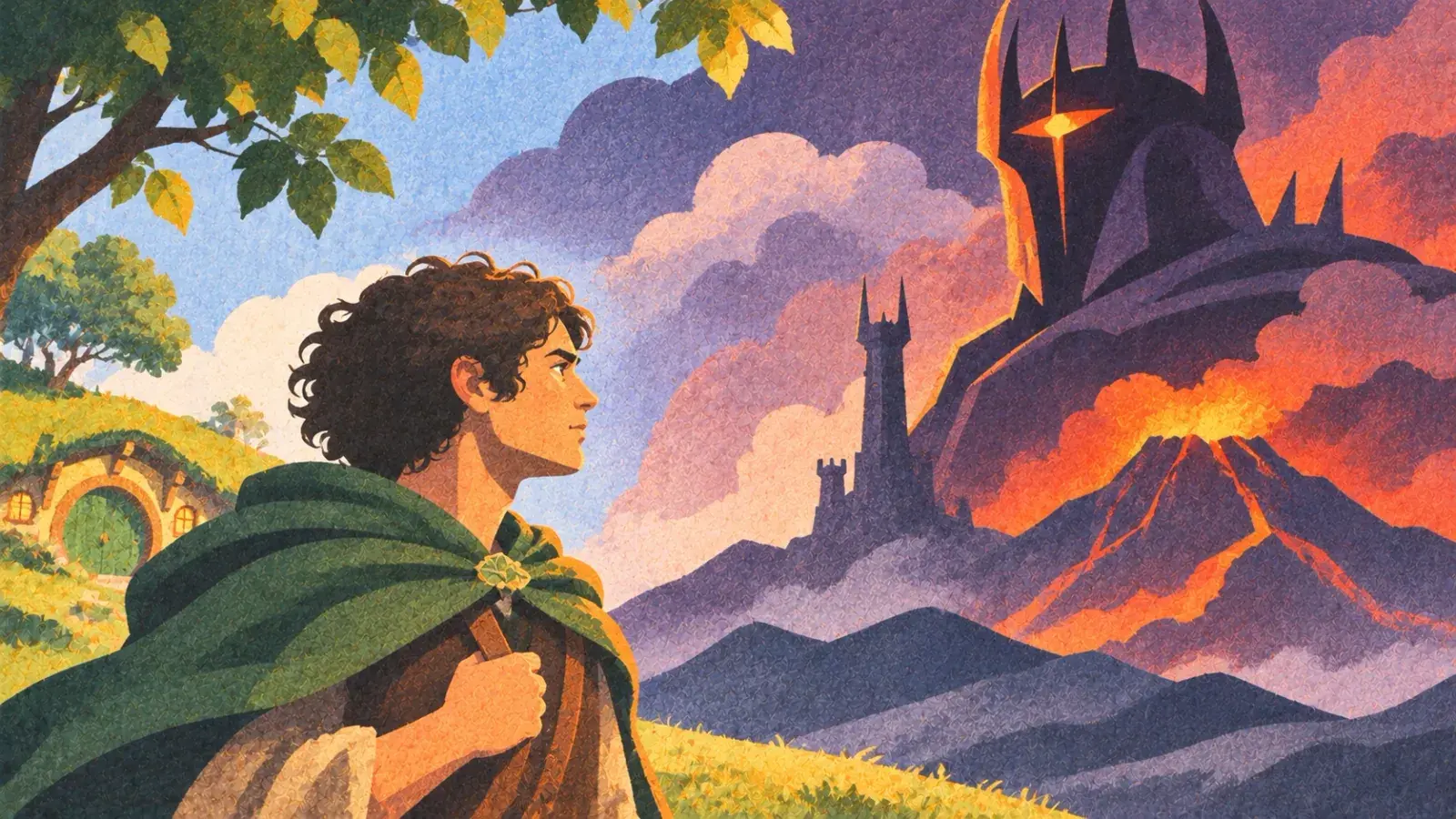
A protagonist who doesn't want the story. The resistance fills the first act, and the moment they stop resisting is often the turn. Hamlet ends the scene in which his father's ghost demands revenge with a complaint, not a battle cry: “The time is out of joint. O cursed spite, / That ever I was born to set it right.” Richard Hannay, the narrator of John Buchan's The Thirty-Nine Steps (1915), is “the best bored man in the United Kingdom” and has nearly decided to go back to the veld when an American who confided in him is stabbed to death in his London flat. From then on Hannay is running, and the story is his. Modern: Bilbo Baggins in The Hobbit (1937), who has to be talked out of his own front door.
The everyman
An ordinary person in an ordinary job, whose ordinariness is the point: the reader stands in their shoes. Charles Pooter, a City clerk who lives at “The Laurels,” Brickfield Terrace, Holloway, records his small social disasters in George and Weedon Grossmith's The Diary of a Nobody (1892). Leopold Bloom, an advertising canvasser, walks through a single Dublin day, 16 June 1904, in James Joyce's Ulysses (1922). Lemuel Gulliver, a ship's surgeon, is Jonathan Swift's everyman abroad in Gulliver's Travels (1726). Modern: Arthur Dent in The Hitchhiker's Guide to the Galaxy (1979), who loses his house and his planet on the same Thursday.
The unreliable protagonist
A protagonist who tells the story and can't be trusted, through self-deception, ignorance or design. Redmond Barry, who narrates Thackeray's The Luck of Barry Lyndon (1844), boasts his way through a life of gambling, fortune hunting and cruelty to his wife, and the facts he reports condemn him in every chapter. The unnamed narrator of Henry James's The Aspern Papers (1888) takes rooms in a Venetian palazzo under a false name to get a dead poet's letters from the old woman who keeps them, and calls his scheming scholarship. Ford Madox Ford's The Good Soldier (1915) is the classic case of a narrator who missed for years what was happening in front of him, and the unreliable narrator entry explains how readers catch one. Modern: Pi Patel in Life of Pi (2001), who offers two versions of his story and asks his listeners which one they prefer.
The ensemble lead
In a book with several protagonists, agency is shared: each lead makes decisions that drive their own strand, and one often frames the whole. Little Women (1868–69) follows four March sisters. Meg chooses John Brooke over Aunt March's money, and Jo, the one who writes, carries the book's central question, whether a woman can choose her own life, when she turns down Laurie. George Eliot's Middlemarch (1871–72) splits its weight between Dorothea Brooke and Tertius Lydgate, a young doctor: two idealists whose marriages go wrong in different ways, each through choices of their own. Modern ensembles, such as George R. R. Martin's A Song of Ice and Fire, rotate viewpoint characters chapter by chapter, and each of them needs decisions of their own.
Two more: the tragic hero and the villain protagonist
A tragic hero is a protagonist of high standing brought down by their own error, as Oedipus, Macbeth and Lear are. The tragic hero guide covers Aristotle's terms for it. A villain protagonist is a villain the story follows from the inside. Shakespeare's Richard III (c. 1593) opens with Richard telling the audience, “I am determined to prove a villain,” and the play's grim comedy comes from his invitation to watch him do it.
Active and passive protagonists
A familiar note on a protagonist in a manuscript critique is “too passive”: things happen to them and they react. Quiet isn't the same as passive. Fanny Price in Jane Austen's Mansfield Park (1814) is timid, poor and dependent on her uncle, Sir Thomas Bertram, and spends much of the novel watching other people act. But when the charming Henry Crawford proposes, she refuses him against the wishes of nearly everyone around her, and Sir Thomas sends her back to her family in Portsmouth to think again. She doesn't change her answer, and she won't give her uncle the real reason, what she saw of Henry with his daughter Maria, because it would expose her cousin. One refusal, kept under pressure, decides the book.
Fanny's refusal and Corinne's drive to the county office, above, are the same kind of act: a choice the plot didn't force. A quick audit for your own draft is to list the protagonist's decisions chapter by chapter, with what each one costs them. A chapter with none is either a breather the book has earned or a chapter that needs a decision of its own.
The Strokes Assistant can do the first pass: ask it to list every decision the protagonist makes in a chapter and every event that simply happens to them.
Test your protagonist
The last question is the fastest. A logline puts the protagonist, the goal and the opposition in one sentence, and if the sentence works better with someone else's name in it, that person may be your protagonist. The character profile template holds the want, need and wound behind the answers, and the antagonist examples help with the third question.
Frequently asked questions
Can the protagonist be the villain?
Yes. A villain protagonist is a villain the story follows from the inside. Richard III announces in his first speech that he is determined to prove a villain, and Macbeth becomes one over five acts. The reader doesn't need to approve of such a protagonist, only to understand them and want to see what happens next.
Is the protagonist always the narrator?
No. Many protagonists narrate their own stories, as Jane Eyre does, but a witness narrator can tell someone else's: Dr. Watson narrates most of the Sherlock Holmes stories and Ishmael narrates Moby-Dick. Third-person novels have a narrator outside the story altogether. The protagonist is whoever drives the plot, no matter who tells it.
Can a story have two protagonists?
Yes. Romances usually give both leads a goal and a point of view, and ensemble novels such as Middlemarch divide the weight between several characters. Even then, readers tend to look for whose choice decides the ending, so make sure each protagonist has a decisive moment of their own.